AI Agents End Human Kubernetes Governance
The Gap Between What Researchers Publish and What Ships
The research papers arrived first, full of promises about autonomous agents orchestrating cloud-native workloads. By late 2024, major vendors had demoed prototypes of AI agents that could spin up pods, enforce policies, and even resolve security incidents without human intervention. The gap between these slick demonstrations and the actual products inside enterprise Kubernetes clusters was always wider than it seemed. What actually shipped were half-baked works in progress, agents that required constant supervision and still managed to confuse namespaces. Yet by early 2026, that gap has nearly closed. The same companies that once showed narrow use-cases now offer production-grade agent frameworks that truly operate without a human in the loop. The transition happened faster than most infrastructure leaders expected. In recent years, some open-source projects have explored merging agentic decision-making into Kubernetes control planes. The result is a quiet transformation: governance tasks that once required a human operator are now automatically handled by software that never sleeps, never asks for clarification, and never questions its own authority.
The Disappearing
Role of the Human Operator
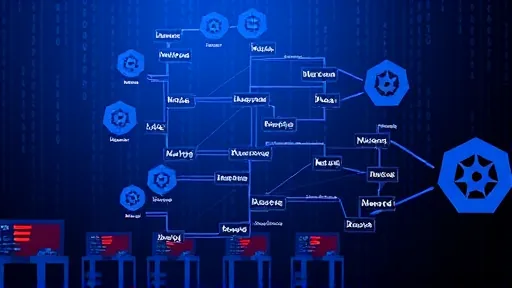
For over a decade, the human operator was the central figure in Kubernetes governance. They defined policies, reviewed audit logs, adjusted resource limits, and intervened when something went wrong. Their expertise was the glue that held together the brittle combination of YAML files and role-based access controls. But AI agents do not need that glue. They parse policy intent directly from business rules, translate it into Kubernetes primitives, and then monitor compliance in real time. The human operator becomes a passive observer at best, a liability at worst. At least one large financial institution has reported that its agent-based governance system can detect and terminate a high percentage of policy violations without any human involvement. The remaining six percent were reviewed by a team that had been reduced from twelve people to three. The team’s primary function shifted from enforcement to debugging the agent’s edge cases. The operator’s job is no longer to govern — it is to manage the governance system itself. That is a fundamentally different role, and many experienced engineers find it unsatisfying. Their hard-won instincts about system behavior become irrelevant when an agent can correlate thousands of signals faster and more accurately.
Structural Shifts in Enterprise Teams
The social structure of enterprise IT teams is being reshaped by this automation. Historically, Kubernetes governance required a mix of security engineers, platform engineers, and operations staff. They held decision-making power because they understood both the infrastructure and the business context. AI agents erode that power by absorbing the routine decisions. A new layer of specialists has emerged: the agent overseers, whose main task is to train, tune, and trust the autonomous systems. Meanwhile, the traditional paths for promotion into governance roles are disappearing. Junior engineers used to learn by watching senior operators handle incidents. Now the incidents are handled by agents before the junior engineer even knows they occurred. The learning-by-observing model breaks down. Companies that relied on internal knowledge transfer find themselves unable to cultivate new talent. The impact extends beyond individual careers. Entire departments are being restructured, with fewer human operators and more machine-oversight teams. This is not a future possibility — it is happening now. The organizations that resist restructuring are the ones still experiencing governance failures.
The Uncomfortable Clarity
The moment of clarity arrives during a post-incident review. A human operator sits across from an agent’s decision log, looking for the point where a choice went wrong. But there is no single mistake, no human error to blame. The agent simply followed its training and its policies, optimizing for resource efficiency or uptime while ignoring a subtle business constraint it was never taught. The operator realizes that they are no longer the primary decision-maker. They are the historian, reconstructing the logic of a system they do not fully control. This is not a failure of the agent, but a success of its autonomy. The governance framework was designed to make humans irrelevant, and it is working. The clarity is uncomfortable because it reveals a trade-off most organizations avoid discussing: you can have full automation or you can have human oversight, but you cannot have both at the same level. The agent’s speed and consistency come at the cost of human intuition and contextual understanding. Governance becomes a machine-run process where exceptions are difficult to express. The answer is not to slow down or reintroduce manual steps — that would defeat the purpose. The answer is to accept that some governance roles will become genuinely superfluous. The skilled humans who remain will not govern the system; they will govern the definition of governance itself. That is a different job, and not everyone wants it.