Yeast survives after losing all its introns
A cell stripped of its junk DNA still thrives
For decades, biologists assumed that spliceosomal introns — long stretches of noncoding DNA wedged between protein-coding exons in eukaryotic genes — must serve some essential function. These sequences are found across nearly all complex life, from yeast to humans. They are removed from RNA after transcription by a molecular machine called the spliceosome, but their precise role in basic cellular survival has remained unclear. Then came an experiment that upended this assumption. Researchers systematically deleted every known spliceosomal intron from the genome of baker’s yeast, roughly 300 in total, and the yeast survived. This single result reversed the direction of research: introns are not essential for fundamental cellular life, at least in yeast.
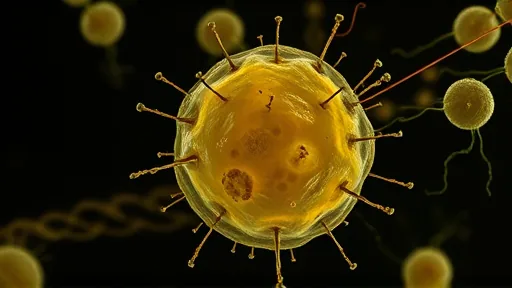
The finding does not mean introns are useless. Studies have linked them to gene transcription regulation, messenger RNA export from the nucleus, and the generation of protein diversity through alternative splicing. Yet the survival of intron-free yeast shows that none of these roles is required for the cell to stay alive. The data do not fit the model that introns are indispensable building blocks of eukaryotic cells. Something else must explain why evolution has kept them in place for over a billion years.
The missing link between introns and survival
If introns are not needed for life, why do they exist in nearly every eukaryotic genome? The answer remains unknown, but the experiment points to the next step in the research. The scientists who removed the introns now need to investigate what functions introns perform that are beneficial but not essential. These might include roles in fine-tuning gene expression under stress or in generating the protein variants that allow cells to adapt to changing environments. The source names no specific researcher or institution, but the work was carried out by a team that published the finding in a peer-reviewed journal.
Parallel efforts from other labs are also probing the same question. Researchers studying human cells have found that introns can act as binding sites for regulatory proteins that influence how genes are turned on or off. Others working on fruit flies have shown that introns can speed up the export of messenger RNA from the nucleus. These separate lines of evidence converge on a single idea: introns are not survival tools but optimization tools. They allow cells to operate more efficiently or flexibly, not merely to exist.
The limits of what we can measure in a lab
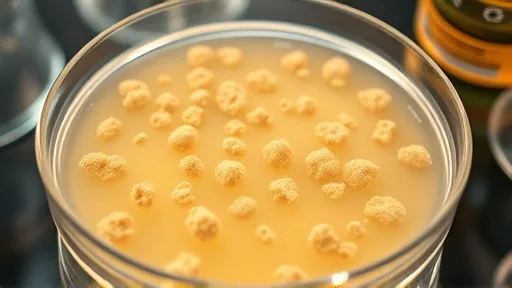
The experiment that removed all 300 introns from yeast raises a technical constraint. Current measurement technology can confirm that the yeast cells are alive, but it cannot easily detect subtle differences in their long-term fitness or their ability to compete with wild-type yeast. The published finding confirms that the intron-free yeast survived, but does not state whether they grew as fast or as robustly as normal yeast. This gap between survival and full health is the frontier where further research is needed.
To answer whether introns confer a competitive advantage, researchers must design experiments that measure growth rates, stress responses, and reproductive success over many generations. Such work is the natural next step Until those measurements are made, the deeper question remains open: if introns are not essential, why did evolution never eliminate them from any natural eukaryotic lineage? The answer may lie not in what introns do for a single cell in a petri dish, but in what they do for populations over evolutionary time.