Electricity To Food Farming Without Sunlight
Why Sunlight Is a Wasteful Way to Make Food
In 2022, a team led by Robert Jinkerson at the University of California, Riverside, calculated that converting sunlight into acetate and then into yeast was almost 18 times as efficient as standard farming. For algae, the figure was nearly four times.
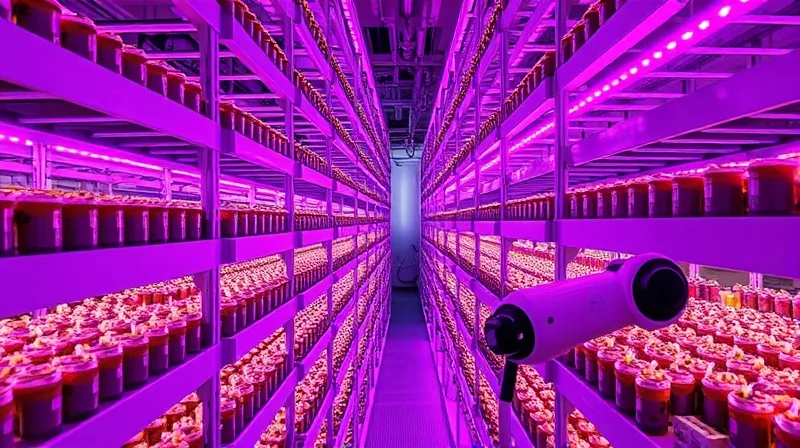
Standard solar panels turn more than 20 percent of the energy hitting them into electrical energy, and some experimental panels achieve more than double that. Plants, by contrast, typically convert less than 1 percent of incoming solar energy into the food we eat. When sunlight is free, that waste doesn’t matter. When electricity has to be paid for, it becomes a massive issue. Vertical farming — stacking crops under artificial lights — stumbles here, because every hectare of growing area requires around 13 hectares of solar panels to power the lights. Overall land use per unit of food increases, not decreases.
Gas Fermentation Has Already Been Scaled
Solar Foods in
Finland grows bacteria in vats, supplying hydrogen — produced by electrolysing water — as an energy source, CO2 as a carbon source, and ammonia as a nitrogen source. The bacteria are dried into a yellow powder called Solein that is up to 80 percent protein. Products containing Solein are already available in the US and Singapore. Co-founder Pasi Vainikka says the company’s small demonstration factory is working better than expected: “It has scaled really well. It’s almost five times more productive than we thought early on.” [1] Solar Foods now aims to build a second factory with a capacity of 6400 tonnes a year, targeting a cost of a few dollars per kilogram.
This is not a laboratory curiosity. Between 1999 and 2005, a Norwegian company called Norferm produced 110,000 tonnes of microbial protein from methane, used as fish food. Norferm halted production because it wasn’t profitable at the time. But with protein prices rising, several companies are now making microbial proteins this way for animal feed. US firm Calysta has built a 20,000-tonne-a-year factory in China. Unibio in Denmark is constructing a 50,000-tonne-a-year plant in Saudi Arabia. The green question is unavoidable: these companies use methane from fossil fuel sources, so all the fossil carbon ends up in the atmosphere. Making hydrogen, methane, and ammonia from renewable energy costs more, for now at least.
Norferm’s shutdown was a price problem, not a physics problem. If protein prices keep rising, the incentive to go green shifts. Calysta says it is looking at using biogas instead.
Why Hydrogen Is Hard to Feed to Microbes
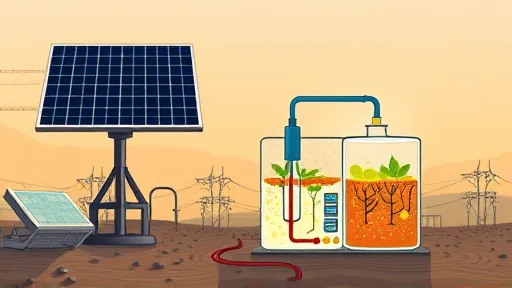
Hydrogen hardly dissolves in water. Remko Boom at the University of Copenhagen in Denmark explains: “Hydrogen hardly dissolves at all in water, so it is very difficult for microorganisms to get hold of.” [1] This limits growth. Methane is only a bit more soluble. The alternative is to turn CO2 into simple carbon compounds that are highly soluble, such as acetate.
Boom is part of the Acetate Consortium, a project that has already shown some microbes can be grown on acetate. “In principle, we can go to quite large scales,” he says. “So, it could be a significant source of proteins over the world, and that would mean that we can decouple this type of food production from the use of land.” One route uses the microbes as a food ingredient with minimal processing, as Solar Foods does. The other route uses genetically modified microbes to produce specific proteins, such as the casein proteins found in cheese.
“”
Crops That Grow Without Light
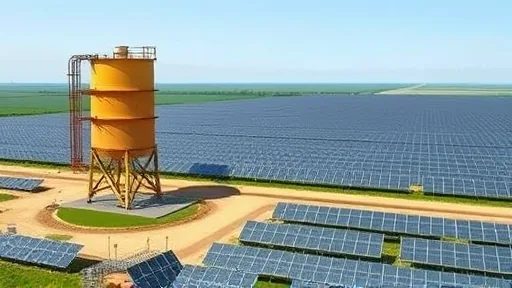
The same team estimated that with technological improvements, the efficiency of plant production could be boosted tenfold. The vision: crops grown in buildings covered in solar panels, with the electricity used to make acetate on-site, supplied to plants in the dark below via their roots. Growing food this way would help prevent food shocks caused by extreme weather and allow food to be produced anywhere. Closed systems can largely prevent pest and disease outbreaks, which massively reduce yields worldwide.
Nothing in the chemistry rules this out.
A further option is growing plant cells on acetate rather than entire plants or microbes.
Sources
1. Newscientist — Quote source (original article)
Mentioned organisations (context, not sources)
- University of California, Riverside — Organisation (homepage)
- Solar Foods — Organisation (homepage)
- Calysta — Organisation (homepage)