The Long Way Around Is Sometimes the Only Way
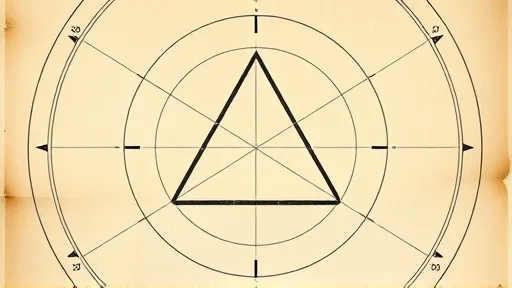
One takes the ridge; the other follows the river valley. Both arrive, and neither route invalidates the other. Mathematics works the same way, and the proof is older than most of the field’s textbooks. Around 350 BC, Aristotle described an argument that an isosceles triangle — a triangle with two equal sides — always has two equal angles at its base. The proof ran lines from the center of a circle out to its circumference. The person who first devised it is lost to history. Roughly fifty years later, Euclid published a version that needed only triangles, no circles at all. That was not redundancy for its own sake. It sidestepped a live disagreement about how to define the angle where a straight line meets a curved one — a definitional quarrel that stayed open for thousands of years. Euclid’s detour was, in effect, a bridge built to avoid a swamp.
Euclid shows up again in the case that made the whole practice unavoidable. He recorded a proof that there are infinitely many prime numbers — numbers divisible only by one and themselves. If q is prime, it was not on your list, because it is larger than P. If q is not prime, it must be divisible by some prime. That prime cannot be on the list either, because any prime dividing both P and q would have to divide their difference, which is 1 — impossible. Either way, a new prime appears. The list was always incomplete.
That argument has been rebuilt from scratch many times over the centuries. Surveys of the literature have catalogued numerous distinct proofs and grouped them into families according to the methods they use — among them Euclid’s own divisibility idea, Goldbach’s pairwise-coprime sequences, algebraic number theory, Euler’s analytic machinery, combinatorial counting, and even a topological proof due to Hillel Furstenberg in 1955 and its later modifications. [1] A theorem proved two millennia ago is still generating new arguments. The list is not a museum; it is a construction site.
The payoff is not sentimental. In 1737 Leonhard Euler found a formula linking the sum of all numbers to the product of all primes, and used it to describe not just how many primes there are but how they thin out as you climb the number line. That formula seeded Bernhard Riemann’s hypothesis about prime structure — still one of the great open problems. One re-proof of an ancient result opened a door nobody had known was there. Each of these proofs is not a repetition of the others. Euler’s formula, for instance, did more than restate Euclid: it hinted at how the primes thin out as you climb the number line.
When the Network Fails, and Why It Usually Doesn’t
Here is the uncomfortable arithmetic. If a proof is a chain of logical steps, and each step carries a small chance of error, then a long enough chain is more likely to be wrong than right. By that reasoning, mathematics should collapse. It doesn’t. Scott Viteri at Stanford University and Simon DeDeo at Carnegie Mellon University in Pennsylvania addressed exactly this in a 2022 paper. [1] Their answer is that a proof is not a chain but a network. Truth travels along paths between steps, and its strength fades over long paths. But proofs have structure, and claims get reinforced by multiple routes. The network undergoes what the pair call an “epistemic phase transition” — a threshold past which you can be extremely certain the proof is correct. The model is not universally accepted among mathematicians, but it explains the thing that needs explaining: why a discipline built on fallible steps produces results that hold.
The model also predicts the failure mode. In 1933 Wilhelm Grunwald published a proof that a number with a certain property relative to all primes can always be written as some other number raised to the nth power. George Whaples gave a second proof using different mathematics in 1942 — which, under the network picture, should have been a reinforcing route. It wasn’t. In 1948 Shianghao Wang found the claim fails at 16, because 16 is not equal to x to the eighth power for any x. Two proofs, one shared blind spot. The corrected result is now called the Grunwald-Wang theorem, and the name carries the correction inside it. Redundancy guards against error only when the routes are genuinely independent.
Euclid’s argument does not actually require contradiction, despite the habit of calling it indirect. Given any finite set of primes, it hands you a definite procedure for constructing a new one. Whether every prime eventually appears in it remains unanswered. It has been conjectured, on probabilistic grounds, that it does, and computation has been reported to support the conjecture up to the 43rd term. A related sequence, built by taking the largest prime divisor instead of the smallest, has been studied as well, and it has been reported that it omits infinitely many primes, in line with a conjecture attributed to C. D. Cox and A. J. Van der Poorten. The re-proofs did not merely restate Euclid. They generated objects nobody had thought to ask about.
The Precedent That Tells Us What Comes Next
The pattern has a recent and uncomfortable precedent. Earlier this month, OpenAI inadvertently produced two versions of its proof of the Navier-Stokes problem, the fluid-dynamics question, after mistranslating mathematics into code.
The constructive reading is the one the history supports. Every time mathematicians have returned to a settled theorem, the return has paid out — a new sequence, a new formula, a new hypothesis, a new field. Euler went back to Euclid and got the Riemann hypothesis in embryo. That is a result more than two thousand years old still yielding fresh arguments today. The confidence we place in mathematics was never built on a single flawless chain. It was built on many roads to the same place, each one walked by someone who did not trust the others — and, as AI begins to produce mathematics humans do not fully understand, those extra routes may be what keeps us certain.