Tumors Hijack Bone Eating Cells at Brains Edge
The Bone-Eating Cells Nobody Expected at the Brain’s Edge
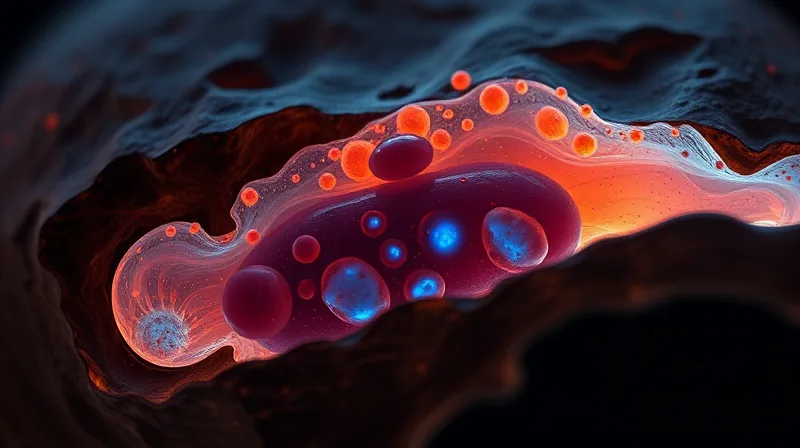
Dural metastases — tumors that spread to the outermost membrane wrapping the brain — were long treated as passive squatters. They sit at the border. They press. They cause symptoms through sheer mass. That picture just cracked. Zeng and colleagues report in Nature that these tumors actively recruit osteoclasts, the very cells the body uses to break down bone, and put them to work reshaping the neighborhood. [1] The finding reverses a century of assumptions about what metastatic tumors do when they reach the dura mater, the leathery sheath between skull and brain. The dura is not neutral ground. It is a construction site, and the tumor is the general contractor. Osteoclasts, which normally remodel bone during growth and repair, get conscripted into a demolition crew that serves the tumor’s interests, not the body’s.
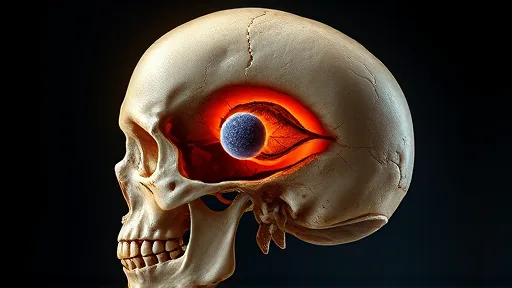
The skull is not a wall the tumor merely leans against. It is a resource. The tumor reaches into it, extracts what it needs, and leaves structural damage in its wake. The result is a microenvironment rebuilt to favor tumor survival and suppress the immune cells that might otherwise attack.
The discovery adds a new actor to a cast that researchers have been assembling for years. The brain’s borders are not immunological wasteland. They are patrolled, surveilled, and — when tumors arrive — corrupted. Zeng’s work shows the corruption has a specific mechanism: bone degradation as a tool of immune evasion.

The Lymphatic Pipes That Get Clogged
Running alongside the brain’s venous sinuses are meningeal lymphatic vessels — fluid channels that drain waste and carry immune cells away from the central nervous system.
This is the counterargument that has not yet been refuted: maybe the immune suppression at dural metastasis sites is not primarily about the tumor secreting inhibitory signals. Maybe it is about the plumbing.
Jonathan Kipnis, at the Brain Immunology and Glia Center and the Department of Pathology and Immunology at Washington University in St. Louis School of Medicine, has spent years mapping these vessels and their role in neurological disease. [1] His laboratory’s prior work established that meningeal lymphatics are essential for draining fluid and for allowing immune cells to survey the brain’s borders. [1] Zeng’s finding extends that map into cancer territory. The same pipes that keep the brain healthy become the tumor’s leverage point.
If osteoclasts are the demolition crew, can they be called off? If the lymphatic vessels are the blocked highway, can they be reopened?
What makes this finding particularly striking is the economy of it. The tumor does not invent a new biological process. It hijacks an existing one — bone remodeling — and redirects it. Osteoclasts already know how to degrade bone. The tumor just gives them a new address.
Sources
Mentioned organisations (context, not sources)
- Department of Pathology and Immunology at Washington University in St. Louis Sch — Organisation (homepage)
- Washington University in St. Louis School of Medicine — Organisation (homepage)
- Nature — Organisation (homepage)