
Three Scientific Findings That Overturn Old Beliefs
Headbutting Goats Reveal Hidden Injury
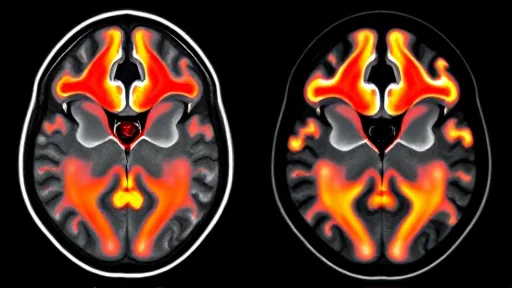
Three young goats were allowed to headbutt freely for six months. [1] Researchers scanned their brains at the start and at the end of that period. The scans showed no signs of serious brain damage. [1] But they did reveal hints of mild injury. [1] The team suggests that these subtle problems could worsen as the animals age. This challenges the assumption that goats are immune to harm from their own behavior. Headbutting has long been seen as a normal, harmless act for goats. Now it appears that even a routine habit may carry a risk. The finding opens a new possibility: using goats as an animal model to study how repeated head trauma connects to neurodegeneration (the progressive loss of structure or function of neurons, leading to diseases like Alzheimer’s or Parkinson’s) in people. Human athletes who suffer concussions sometimes develop long-term brain disease. A reliable animal model could help researchers understand that link. The goat study is a first step in that direction.
Transmissible Cancer Rewrites Disease Rules
A mysterious disease in brown bullhead catfish has been identified as a type of transmissible cancer (a cancer that can spread directly from one individual to another, like an infectious disease). The fish live in a lake that straddles the border between Canada and the United States. The cancer is a melanoma (a serious form of skin cancer that starts in pigment-producing cells) that shows up as inky black skin lesions. Surveys suggest that about one-third of the lake’s catfish carry these tumours. This is only the fourth example ever found of a cancer that can spread from one animal to another. Most cancers are not contagious. They arise from mutations within an individual. Transmissible cancers break that rule. They are tumour cells that can pass directly between animals. The catfish cancer appears in both young and old fish. This suggests that it does not cause rapid death. The finding forces a revision of the model that says cancers are not infectious. Scientists must now consider how such a cancer spreads through a wild population.
Repeated Oversight Failures Reshape Compliance

Two virologists (scientists who study viruses) at the U.S. National Institutes of Health, Vincent Munster and Claude Kwe, face criminal charges. [2] They are accused of smuggling non-infectious monkeypox virus (a virus that causes mpox, formerly monkeypox; related to smallpox) DNA samples into the United States. [2] These DNA samples do not need an import permit (official authorization needed to bring certain items across a border). But they must be declared to federal officials. The complaint alleges that Munster and Kwe did not complete that step. Both scientists have pleaded not guilty. This case is the latest in a series of prosecutions of researchers for smuggling biological samples since early 2025. Some U.S. lawmakers are trying to introduce severe sentences for such offences. The comparison with the headbutting goats and the catfish cancer shows a pattern: unexpected findings force a re-examination of long-held assumptions. Here, the assumption was that scientists could be trusted to follow import rules without strict enforcement. That assumption is now being revised. What remains open is how to design oversight that protects both national security and scientific collaboration. The answer is not yet clear.