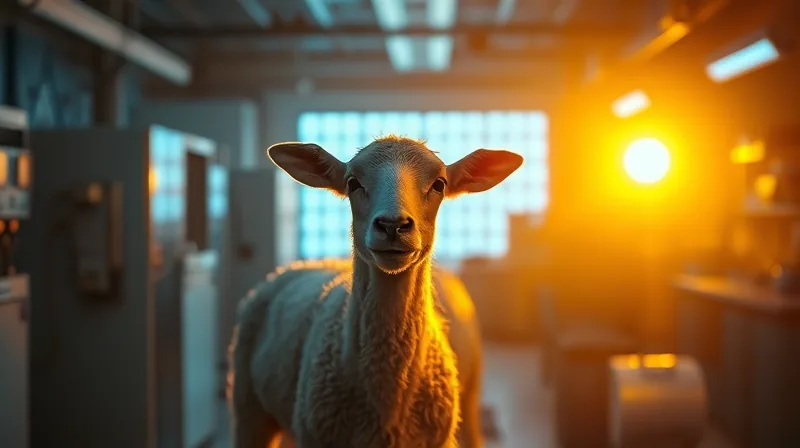
Dolly Parton and the Sheep She Inspired
A chart-topping country ballad and a cloned mammal seem worlds apart. Yet both rely on the same principle: a familiar melody or a known genetic code, replicated with precision. Just as a cover version can introduce an old song to a new generation, Dolly the sheep introduced the possibility of cloning to the modern world. The connection between the singer and the science was so strong that the name became inseparable from the sheep’s story.
The scientific community had long assumed that adult cells could not be reprogrammed to create a new organism. That assumption collapsed in 1996 when a team in Scotland produced a lamb from a mammary gland cell of a six-year-old ewe. [1] The birth proved that a specialized cell could be returned to a primitive state and develop into a complete animal. The breakthrough was so unexpected that the researchers named the lamb after the singer Dolly Parton, in a nod to the mammary gland cells that made her possible.
The world’s most famous sheep died at age six in 2003, but her legacy endures in laboratories worldwide. [1] Researchers continue to study the techniques she helped pioneer, refining methods that could one day treat human diseases. The scientific community now celebrates not only the animal but also the artist whose name the sheep carried. Dolly Parton’s name remains permanently linked to one of biology’s most famous achievements, a connection researchers continue to acknowledge.
A Name That Bridged Two Worlds
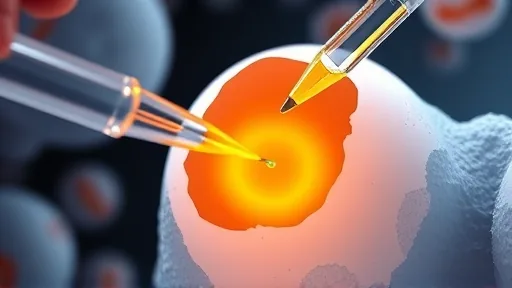
The name Dolly now bridges two very different worlds: country music and cellular biology. Few cultural figures have been so directly linked to a scientific milestone. The sheep’s creation demonstrated that cloning from adult cells was possible, overturning decades of biological dogma. The singer’s music, meanwhile, crossed cultural boundaries in ways that mirrored the scientific crossing of cellular boundaries.
The original Dolly lived from 1996 to 2003, a relatively short life that included arthritis and lung disease. She was euthanized after a progressive lung condition, a decision that veterinarians made to prevent further suffering. Her preserved body now rests in the National Museum of Scotland in Edinburgh. Visitors can see her there, a tangible reminder of a scientific first.
Researchers at the Roslin Institute, where Dolly was created, have continued to build on her legacy. [2] The institute has since focused on genetic modification and stem cell research, areas that grew directly from the cloning work. The team that produced Dolly did not stop with one success; they refined their techniques and explored new applications. Their work has influenced regenerative medicine and agricultural science alike.
Cloning’s Evolution Into Modern Medicine
The technique that produced Dolly has evolved into tools that scientists now use to create personalized treatments. Cancer vaccines, for instance, are being designed to train the immune system to recognize and attack tumors. The same principles of cellular reprogramming that made Dolly possible now inform therapies that target melanoma and other cancers. The journey from a single lamb to tailored medicine shows how basic research can transform clinical practice.
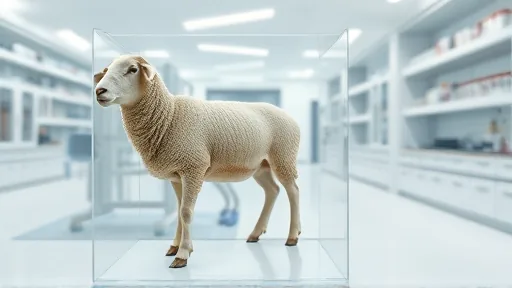
The Roslin Institute remains at the forefront of this work, collaborating with hospitals and pharmaceutical companies. Researchers there have moved from cloning sheep to developing gene-editing technologies that could correct inherited diseases. The institute’s scientists have also studied how cloned animals age, providing insights into cellular health. Their findings have shaped how other laboratories approach the field.
The parallels between Dolly the sheep and Dolly Parton extend beyond a name. Both defied expectations and opened doors that seemed firmly closed. The singer’s cultural footprint gave the scientific breakthrough a memorable identity that persists in public consciousness. The sheep’s birth, meanwhile, gave the world a symbol of what biological science can achieve.