
The One-Size-Fits-All Sleep Rule Is Falling Apart
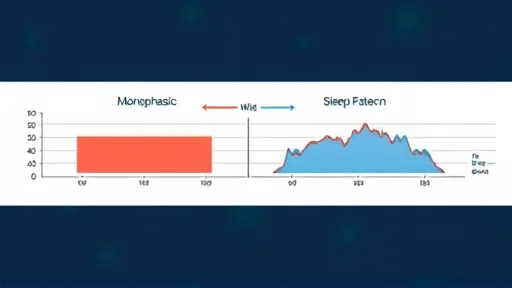
For decades, the message has been simple: sleep seven to nine hours in one uninterrupted block, every night. That single parameter — the continuous nighttime stretch — has dominated how scientists measure sleep, how doctors advise patients, and how researchers design studies. Yet millions of people cannot follow that rule. Shift workers, new parents, teenagers with early school bells, and elderly individuals with fragmented rest all fall outside the model. In Muslim-majority Oman, most people wake before dawn for morning prayers, often returning to sleep afterward or taking afternoon naps, says sleep medicine researcher Mohammed Al-Abri of Sultan Qaboos University in Muscat, Oman In some of the world’s hottest regions, people avoid midday heat with siestas. The gap between how people actually sleep and how science studies sleep has grown into a chasm. Researchers have largely focused on monophasic sleep — single blocks of shut-eye — despite how commonplace various kinds of naps are, according to an Aug. 25 review in Brain Medicine. That narrow focus has left the fatigued masses without meaningful guidance.
The problem is not just that people sleep differently than the idealized model. The problem is that scientists have treated all naps as the same thing, which has produced wildly divergent findings. Some researchers conclude that naps harm health. Others find the opposite. The confusion stems from a binary approach: either a person naps or they do not. That approach ignores that naps vary in duration, timing, frequency, and societal significance, another team notes in August in Sleep Health. A 20-minute power nap is not the same as a two-hour afternoon siesta, yet studies have often lumped them together. Lost in the noise is how to advise the fatigued masses. In theory, splitting up sleep could help people clock in enough snooze-time hours, says occupational health worker Line Victoria Moen, who was not involved with either study. But how that sort of strategic, broken sleep impacts long-term health and well-being remains an open question. “The evidence is too fragmented,” says Moen, of the National Institute of Occupational Health in Oslo, Norway. The field needs to move beyond the binary and toward a more nuanced understanding of what sleep patterns actually serve human health.
The Forgotten History of Two-Sleep Nights
The idea that humans naturally sleep in one continuous block is historically recent. Across the ages, records show surprising variability in sleep patterns. One striking example is medieval Europeans’ two-sleep pattern, described in historian A. Roger Ekirch’s 2006 book “At Day’s Close: Night in Times Past.” People typically went to bed when the sun went down and then woke in the middle of the night to meditate, complete light chores, or have sex, suggests Ekirch, of Virginia Tech in Blacksburg. [2] Then they would fall asleep again until sunrise. This biphasic pattern was not considered disordered or unusual. It was simply how people slept. The sleep intermission served as a natural pause in the night, a time for quiet reflection or intimate connection before resuming rest. The pattern persisted for centuries across European societies, documented in diaries, letters, and court records. .
A sleep intermission no longer jibes with a modern world bathed in electric lights and screens that keep people awake until well past sundown. The advent of artificial lighting fundamentally altered human sleep architecture. But could such a biphasic sleep pattern be rejiggered to serve modern populations? As it stands, people across the industrialized world are chronically sleep-deprived. Not sleeping enough has been linked with numerous mental and physical health woes, including struggles with memory and alertness, weakened performance, heart problems, and obesity. Experts generally advise people to practice better sleep hygiene, such as dimming lights and getting off screens several hours before bedtime. Yet such one-size-fits-all advice overlooks modern realities. The historical record suggests that segmented sleep was the norm for much of human history, not the exception. The question is whether modern humans can adapt that ancient pattern to contemporary demands.
When the Body Demands a Midday Reset
Human biology lends some support for a daytime nap. Two processes govern when and how we sleep. Sleep pressure builds up the longer we stay awake. And circadian rhythms, governed by natural and artificial light, cue the body to release hormones — melatonin in dim light and cortisol upon waking. Roughly after lunch, shorter “ultradian” rhythms, triggered by sleep pressure buildup and changes to body temperature and blood sugar levels, can trigger a crash. This post-lunch dip is a biological reality, not a matter of willpower. The body’s internal clock naturally creates a period of reduced alertness in the early afternoon. Honoring that malaise with a power nap of less than half an hour has been linked with increased alertness and cognitive performance. A short nap can restore focus and improve reaction times without leaving the sleeper groggy. But beware. Shorter naps scattered throughout the day seem to harm mental and physical health, researchers reported in June 2021 in Sleep Health. The timing and consistency of naps matter as much as their duration.
Consider those who work outside a 9 a.m. to 5 p.m. day. Shift workers, who comprise roughly a fifth of industrialized countries’ populations, could try to meet their sleep needs with a single daytime block. But being out of sync with the sun means their sleep will probably be lighter, more fragmented, and less restorative than had they slept through the night, sleep researchers João Sena Ribeiros, of the Autonomous University of Barcelona in Spain, and Càtia Reis of the University of Lisbon in Portugal, wrote in October 2025 in Sleep Medicine The body’s circadian rhythms are deeply tied to light exposure, and daytime sleep after a night shift fights against millions of years of evolutionary programming. Might such individuals be better off sleeping in blocks before and after their shifts? Science provides no clear answers. The research gap is striking given how many people work nonstandard hours. The lack of definitive guidance leaves shift workers to experiment on themselves, often with poor results.
The Athlete Clue That Changes the Nap Debate
Research on an altogether different population — elite soccer players in Australia — suggests that a long afternoon slumber could help counteract sleep deprivation from early morning practices and late evening games. Researchers brought 12 male soccer players into the lab and connected them to electrodes to measure how long it took them to fall asleep and to monitor sleep stages and sleep quality during either one- or two-hour midafternoon naps. Though well-rested, the athletes conked out in less than 10 minutes, the team reported in September in Clocks & Sleep. The rapid sleep onset suggests a high sleep pressure even in well-rested individuals, or perhaps a trained ability to fall asleep quickly. Strategically varying nap length could help with different aspects of performance, the team suspects. That is because nap length altered the athletes’ sleep patterns. Sleep cycles are roughly 90 minutes long and involve two stages: light REM sleep, often marked by dreaming, and non-REM sleep, which includes deep sleep. Research suggests REM sleep is linked with improved learning and memory, and deep sleep is linked with recovery from exercise. Athletes who napped for one hour spent a larger fraction of time in deep sleep compared with athletes who slept two hours, who had longer REM sleep. That hints at the possibility that shorter naps could facilitate recovery, while longer naps facilitate new skills, the team notes. The finding suggests that nap length is not just about total sleep time but about which type of sleep dominates.
That and other research is starting to show that under the right conditions, long naps may be beneficial, says Anastasi Kosmadopoulos, a sleep researcher at CQUniversity Australia in Adelaide. “Sleeping in two blocks versus one is not detrimental to overall daily alertness or waking performance.” This statement challenges the assumption that fragmented sleep is inherently inferior. The athlete study provides a concrete example of how biphasic sleep can work under demanding conditions. It also raises questions about whether the benefits seen in elite athletes could translate to ordinary people with less extreme schedules. The answer is not yet clear, but the direction of research is shifting. Afternoon naps longer than an hour are linked to a higher likelihood of obesity and elevated blood sugar levels, a risk factor for developing type 2 diabetes, Al-Abri and colleagues reported in October 2022 in Frontiers in Psychology “I usually urge people, if they have a nap, to have it less than half an hour,” Al-Abri says. The conflict between the athlete findings and the metabolic risk findings highlights the complexity of nap research. Context matters: an elite athlete’s two-hour nap may serve a different purpose than a sedentary person’s two-hour nap.
The Genetic Code Behind the Nap Urge
Another question is whether findings in elite athletes apply to the rest of us. Moving forward, sleep advice needs to be personalized to the individual, Sena Ribeiros and Reis say. Such personalization should include a genetic analysis, researchers reported in January 2025 in Obesity. Propensity for napping is highly heritable, the team reported in earlier work. In this study of more than 1,200 Spanish participants, the team quantified a person’s genetic predisposition for napping using more than a million genetic variants. Individuals who went against their genetic predisposition, by napping when they ought not to or vice versa, showed increased risk of obesity, while those who followed their genetic predisposition did not. The finding suggests that some people are biologically programmed to benefit from naps, while others are programmed to function better without them. Fighting that programming may carry metabolic costs. The study represents a major step toward personalized sleep medicine, moving beyond generic advice to recommendations tailored to individual biology.

In their August review in Sleep Health, members of that same team outlined eight core features of naps that researchers ought to measure. Besides genetic predisposition and nap frequency, duration, and timing, researchers should also consider other factors that influence how naps affect health. The eight-feature framework aims to standardize nap research so that studies can be compared meaningfully. Until now, the field has lacked common measurement standards, which explains why findings have been so contradictory. The framework includes genetic predisposition, nap frequency, duration, timing, and other dimensions that shape nap effects. By measuring all eight features consistently, researchers could finally produce comparable data across studies. This standardization could resolve the long-standing debate about whether naps help or harm. The answer, it turns out, may depend on who is napping, when they nap, how long they nap, and their genetic makeup.