The Gap in the Fortress Wall
Aviv Regev, a biologist whose work carries weight across the field, told a conference audience in August, “Of course… we now know that Alzheimer’s starts in the nose.” [2] That single sentence reframed a disease most people picture as a slow fog rolling through the memory centers of the brain. The nose, of all places, as the front door.
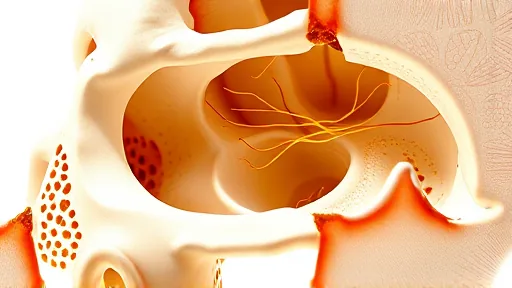
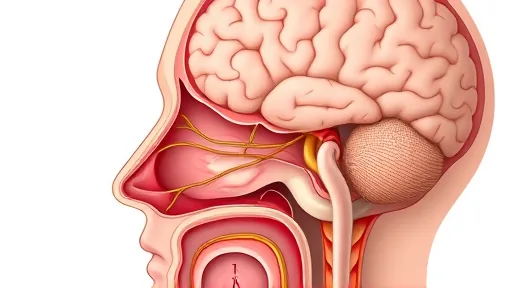
The biology behind the claim is almost absurdly simple once you see it. The skull is a fortress. Blood itself must pass a strict gatekeeper — the blood-brain barrier — before it is admitted. Yet at the very top of the nasal cavity sits a small plate of bone perforated with holes, called the cribriform. Olfactory fibers thread down through those holes into the nose, the way dough pushes through a sieve. That perforated plate is a gap in the wall. A potential entry point, sitting in the middle of the face.
The test came in 2022, when researchers delivered Chlamydia pneumoniae — a bacterial cousin of the organism behind a common sexually transmitted infection — into the noses of mice. Within 72 hours the bacteria had climbed the nerves of the nasal cavity and reached the brain. The infection also triggered a buildup of beta-amyloid, the sticky protein fragment long treated as a central villain in Alzheimer’s. That is not definitive proof of how Alzheimer’s begins in humans, but it is the kind of result that makes a researcher put down the coffee and stare.
A Roadside Dog and a Child’s Brain
The infection route is only half the story, and the other half is harder to look at. A research group in Mexico examined stray dogs that spent their lives breathing heavily polluted air. Inside those animals’ brains they found microscopic metal particles that appeared to have entered through the nose, each one wrapped in a pocket of inflammation and the same beta-amyloid protein. Dogs living in cleaner, rural settings did not show the same pattern. The nose, in other words, may admit more than microbes. It may admit the dust of the world itself.
That finding was then extended to human tissue — the brains of very small children and young adults who died in shootings or car accidents. Tiny metal-rich particles, thought to come from exhaust fumes and brake dust, turned up in that brain tissue alongside inflammation and accumulations of beta-amyloid. These are the very changes associated with Alzheimer’s, appearing in brains sometimes only a few years old. The implication is uncomfortable: the disease may have an environmental cause, and it may begin far earlier than anyone assumed. If the air a child breathes can seed a process that surfaces decades later, then clean air stops being a lifestyle preference and becomes a question of who gets to grow old with their memory intact.
There is a parallel line of evidence pointing the same direction, and it concerns smell itself. People with Alzheimer’s tend to lose their sense of smell, sometimes years before memory symptoms appear. A 2014 study found that smell loss in older adults was a better predictor of whether they would be dead within five years than a cancer diagnosis was. [1] The olfactory nerves are deeply intertwined with the brain’s key memory structures, so their deterioration can serve as an early warning that something far more serious is underway. The connection runs in both directions, too. One small study placed diffusers of essential oils beside older people’s beds, exposing them to a range of scents through the night. After six months, those who received the olfactory enrichment scored better on memory tests than a control group. The sample was small, and the finding is intriguing rather than conclusive.