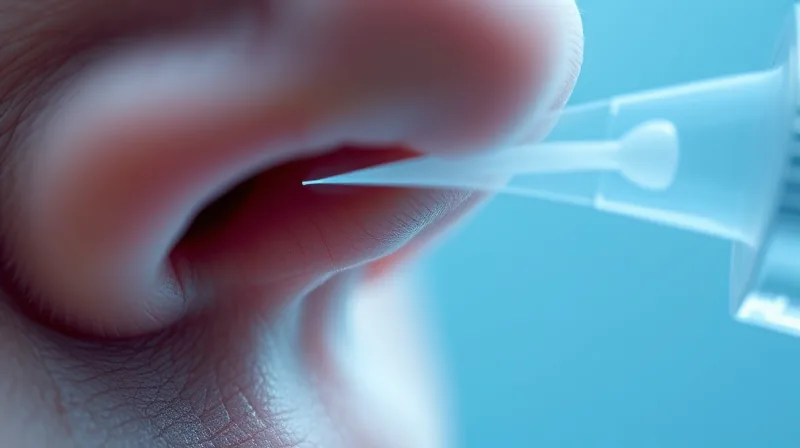
Nasal vaccines aim to block COVID transmission at the source
A Spray Born From an Unlikely Blueprint
The technology did not start out as a pandemic tool. It began as a way to protect children from a seasonal illness that has circulated for decades. FluMist, a nasal spray influenza vaccine, was designed for exactly that purpose — to be squirted into the nose instead of injected into the arm. [1] For years it was given to children and adults as a needle-free alternative to the standard flu shot. Its original job was narrow: train the immune system against influenza strains. Nobody designed it to stop a novel coronavirus. The same delivery route is now being tested against SARS-CoV-2.
That is what makes the current moment so striking. Researchers are now asking whether the same delivery route — a spray into the nose — could do something the first generation of COVID-19 vaccines could not. The COVID-19 vaccines created at the height of the pandemic prevented millions of deaths, especially among older people. [1]. But they fell short in stopping the spread of the virus. A vaccinated person could still carry the virus, still exhale it, still pass it on. The shots protected the person who received them far better than they protected the people around that person. [1]. This is the gap that nasal vaccines are being developed to close.
The logic is anatomical. Microbes that cause respiratory infections enter the body through the nose and throat. An immune response sparked at that exact entry point — right where the virus first lands — should do two things at once. It should stop a person from getting sick, and it should prevent that person from spreading the infection to others. A vaccine that works in the bloodstream may stop severe disease deep in the lungs, but it may not build the local barrier at the mucosal surface where transmission actually begins. [1]. The spray aims to build that barrier where it matters.

When the Shot Protects the Person but Not the Neighbor
The contradiction with established assumptions is sharp. [1]. For decades, the field measured vaccine success primarily by asking whether the vaccinated person stayed out of the hospital. That is a reasonable standard. It is also an incomplete one. A vaccine that keeps a person alive but leaves that person contagious is a personal shield, not a public one. The COVID-19 experience exposed this distinction at global scale. The shots did their most important job — they saved lives. They did not do the second job that pandemic control requires: they did not break the chain of transmission. [1].
This is where the nasal route changes the question. If the immune response is built at the mucosal surface — the wet lining inside the nose — then the virus meets resistance at the door. It cannot replicate freely in the upper airway. It cannot build up the viral load that makes a person exhale infectious particles. The vaccinated person becomes a dead end for the pathogen rather than a silent carrier. [1]. That is the theory. It is also the reason nasal vaccines are being described as a way to stop pandemics before they begin, not merely to blunt their severity. [1].
The stakes are not abstract. A vaccine that prevents severe disease but allows transmission can still overwhelm hospitals if enough people catch the virus at once. It can still force school closures, still disrupt workplaces, still push health systems to the brink. A vaccine that also blocks transmission changes the math entirely. It reduces the number of people who get infected in the first place. It protects those who cannot be vaccinated — infants, the immunocompromised, people whose bodies do not mount a strong response to any shot. The spray does not just protect the person who receives it. It protects the person standing next to them. [1].
The Question That Remains Open
A vaccine that works brilliantly in the bloodstream may not work at all in the nose, and a vaccine that works in the nose may not work in the bloodstream. The two arms of the immune system are not interchangeable. Building one does not automatically build the other. A nasal spray that generates a powerful mucosal response might still leave the deep lungs vulnerable. A spray that generates a powerful systemic response might not build the mucosal barrier at all. Getting both at once — durable protection against severe disease and a reliable block on transmission — is the unsolved problem. [1].
The research is active. Studies are testing whether nasal delivery can produce the kind of immunity that stops a virus at the point of entry. The published work points toward the possibility. It does not yet close the gap. [1]. The first generation of COVID-19 vaccines did something extraordinary: they prevented millions of deaths. [1] They did not stop the spread. The next generation is being asked to do both — and the answer is not yet in.