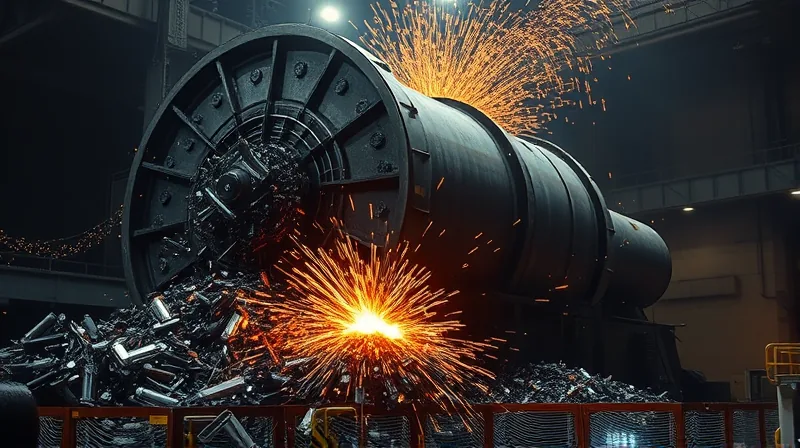
The Mine Is Already on the Road
When One Number Reshapes an Industry
One number sits at the heart of China’s recycling ambitions: 40 percent. That is the share of certain battery elements that recyclers in China recover today. The country’s new policy standard demands far more. It requires at least 98 percent. Between these two figures lies a quiet industrial transformation.
The mathematical case for recycling has always been obvious. Many resources are finite and non-renewable. Reusing them should be a natural response to that limit. The economic math, however, is often brutal. For many materials, recycled goods can find it hard to compete with virgin materials on a cost basis.
That is why a single policy target can change everything. Xin Xiong, who led the study at Nanjing University, and colleagues built a model that measures how recycling supply compares to manufacturing demand in China between 2010 and 2050; separately, researchers at the ReCell Center at Argonne National Laboratory are investigating recycling of electric-vehicle battery materials. [1] The model tracks the materials that matter for electric vehicle batteries. That list includes lithium, cobalt, nickel, manganese, phosphorus, sodium, sulfur, and graphite — raw materials used in battery chemistry; graphite is a form of carbon used in anodes. It also covers the critical materials used in electric motors. Those are copper, neodymium, dysprosium, samarium, and cerium; the last four are rare-earth and related metals used in electric motors.
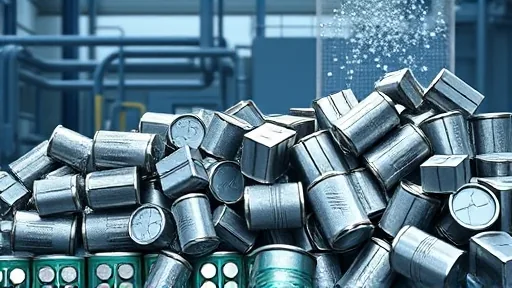
Where the Laboratory Meets the Policy Target
The model runs through four scenarios of technological change. In some, battery and motor chemistry shifts slowly toward newer designs such as lithium solid-state batteries, which use a solid electrolyte, sodium-ion batteries, which use sodium ions to carry charge, and electric motors that use fewer rare-earth elements such as neodymium and dysprosium. In others, the transition happens quickly. Each scenario produces a different answer to one question. How much of that year’s manufacturing demand can recycled material supply? The researchers call this the “circularity potential” of each element — the share of the material’s yearly manufacturing demand that can be supplied by recycled material in the same year. [1]
The calculation folds in China’s recent policy direction. Beyond the 98 percent recycling target, Beijing also wants the share of electric vehicles in new sales to climb from 45 percent to 60 percent by 2030.
Real-world driving habits complicate the model’s clean curves. Batteries can lose capacity long before a vehicle reaches the end of its life. This happens primarily in commercial settings with heavy use. That makes battery replacement common. Between replacement and China’s battery-swapping stations, where drivers exchange a depleted battery for a charged one, extra batteries are manufactured. Those batteries, too, eventually enter the recycling stream.
The Broad View of a Circular Supply (a supply chain that repeatedly returns used materials into production)
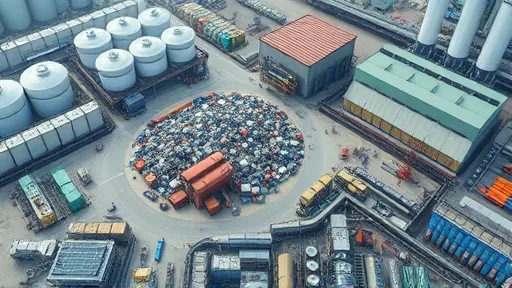
Over the modeled decades, the shape of China’s vehicle fleet shifts decisively. Hybrids and plug-in hybrids, cars with both a combustion engine and a rechargeable battery, eventually vanish from the projection. Battery-electric vehicles, by contrast, keep growing in sales all the way to 2050. Vehicles reaching recyclers lag behind that growth. The stream still rises steadily. Each scrapped car becomes tomorrow’s raw material.
Fast-moving technology adds a twist. When a vehicle is eventually scrapped, the industry may have switched to a different battery chemistry. That shift reduces the value of feeding the car’s battery back into the production chain. The speed of technological change, in other words, can quietly undermine the economics of recycling.
SENTENCE: For a field long obsessed with finding the next mine, this study points elsewhere.
CORRECTION: Recycling could become the dominant source of many key materials for electric-vehicle (EV) components in the coming decades. The circularity potential of individual elements grows over time. Policy, chemistry, and the expanding scrap flow gradually align. For a field long obsessed with finding the next mine, this study points elsewhere. The mine is already on the road.