Moon Recycling Prize Won by Homogenizing Trash
When engineers first considered the problem of waste on a Moon mission, the obvious solution seemed to be sorting. Separate the plastics from the metals, the foams from the fabrics, and process each stream individually. That approach mirrors how recycling works on Earth, where municipal systems rely on citizens and machines to categorize materials before they can be reused. But in deep space, sorting is a luxury no crew can afford. Every minute an astronaut spends separating trash is a minute not spent on science, maintenance, or survival. And every sorting machine added to a spacecraft consumes mass, volume, and power that could serve other purposes.
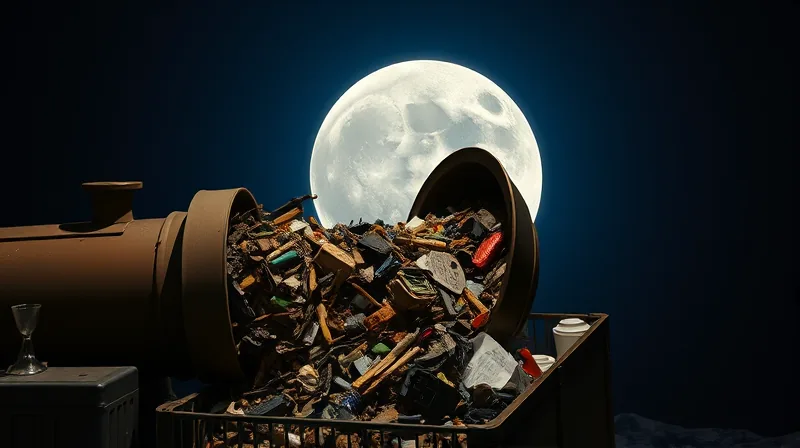
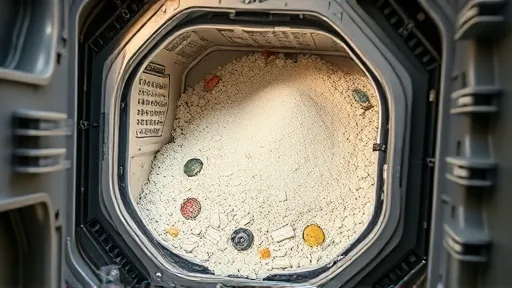
The Massachusetts Institute of Technology team that won the top prize in NASA’s LunaRecycle Challenge took a fundamentally different path. Instead of treating mixed trash as a problem of separation, they treated it as a problem of homogenization. Their system, called CERBERUZ, grinds everything together into a fine powder. Fabrics, plastics, foam, and metals all become a single feedstock. The key insight is that Zotek foam, which most recyclers would consider contamination, actually strengthens the final product when ground fine enough and used as reinforcement. The powder then feeds into either injection molding machines or 3D printers, producing finished parts on demand.
This approach inverts decades of recycling logic. On Earth, the value of recycled material depends heavily on its purity. A bale of mixed plastics sells for far less than a bale of sorted PET bottles, and contamination can render an entire batch useless. The MIT team’s insight is that in space, the goal is not to recover high-purity materials for sale but to create usable structural components from whatever is available. The powder does not need to be pure. It needs to be consistent. Once the grinding process produces a uniform feed, the material can be shaped into almost anything the crew needs.
The competition structure itself reflected this shift in thinking. NASA organized the LunaRecycle Challenge into two parallel tracks. The first track asked teams to build and demonstrate physical prototypes. The second track asked teams to create digital twins, which are virtual models that simulate how a recycling system would behave over time and under different conditions. The MIT team won both tracks, taking home a total of $775,000 in prize money. [1] Their victory in both categories suggests that the conceptual design and the physical implementation were equally strong.
The broader context makes the achievement more significant. The LunaRecycle Challenge is a $3 million, two-phase competition run in partnership with The University of Alabama’s Lee J. Styslinger Jr. College of Engineering. [3] Phase 1 of the competition drew more than 1,200 registrations, making it the most popular challenge in the 20-year history of NASA’s Centennial Challenges program. [2] A panel of 50 judges evaluated nearly 200 Phase 1 submissions and selected 17 winning teams from five countries and nine U.S. states. Phase 2 required new entries, with 14 finalist teams gathering in Tuscaloosa, Alabama, from August 24 to August 28 to demonstrate their prototypes in person.
Limits of the Winning Design
The CERBERUZ system solves one problem but leaves others open. The grinding and powderization approach works well for the materials NASA listed in the challenge: fabrics, plastics, foam, and metals. But the system does not address every category of waste a crew might generate. Food scraps, biological waste, and certain composite materials with embedded electronics would still require separate handling. The challenge’s scope was deliberately limited to common packaging and structural materials, and the winning solution stays within that boundary.
Digital twins carry their own limitations. These virtual models simulate how a recycling system would behave over time, but for a system that has never operated on the Moon, the input data must come from Earth-based tests. Teams like Moon Made from Boulder, Colorado, and RECLAIM from Penn State University built simulations of lunar conditions, yet those models cannot fully capture reduced gravity, vacuum exposure, or temperature swings from hundreds of degrees below freezing to hundreds above. The simulations remain educated predictions rather than verified performance data.
The distinction between prototype and production is also important. The MIT team demonstrated their system at a competition venue in Alabama, not in a vacuum chamber or on a lunar analog test site. The prototype works under normal Earth conditions, with gravity, atmosphere, and ambient temperature all within familiar ranges. Scaling the system to handle the waste output of a full lunar base would require significant engineering work beyond the current demonstration. The prize money supports further development, but the gap between a working prototype and a flight-ready system remains substantial.
Other teams in the competition explored different technical approaches, and their results highlight the range of possible solutions. Terasynth from Orlando, Florida, took second place overall with their Lunar Re-Forge System, which uses a different processing method. RECLAIM from Penn State University uses microwaves to extract and convert materials from waste streams, winning the Most Innovative award in both the prototype and digital twin tracks. [4] Cislune from Rosemead, California, developed a system for carbon recovery and feedstock transformation. Team Lovegrove from Bob Jones University in South Carolina won the award for recycling the most trash types with their LunaBrix system. Waste Parrot Technologies from New York won the Best Visualization award for their digital twin model.
Where the Competition Points Next
Jennifer Edmunson, program manager for Centennial Challenges at NASA’s Marshall Space Flight Center in Huntsville, Alabama, called the finale the culmination of two years of innovation. [5] She said the technologies moved from concept to prototype and digital twin demonstrations within that period, framing the rapid pace as the core purpose of NASA challenges. The structure was built to compress timelines and push creative solutions that traditional procurement rarely produces.
Chris Frangione, who manages the LunaRecycle Challenge in support of NASA Centennial Challenges through Amentum Space Exploration Division, stressed the collaborative nature of the effort. He credited the combination of solver teams, The University of Alabama, and NASA for the finale’s success, noting how resources and ideas converged on a shared goal. The competition drew university students, faculty, entrepreneurs, and space technology enthusiasts into a single pool of problem solvers.
The next verifiable step, as named by the source, is the application of these technologies beyond deep space. The competition encouraged teams to envision solutions that could also work on Earth, and the winning approach has clear terrestrial applications. The grinding and powderization method could be adapted for use in remote locations, disaster zones, or developing regions where waste sorting infrastructure does not exist. The digital twin models could help municipalities simulate recycling systems before building them, reducing the cost of trial and error.
The LunaRecycle Challenge is managed by NASA’s Centennial Challenges program, which has a legacy of more than 20 years of engaging the public to solve complex problems. Past challenges have spurred advances in robotics, additive manufacturing, power and energy, textiles, chemistry, and biology. The program operates under NASA’s Prizes, Challenges, and Crowdsourcing program within the Research and Technology Mission Directorate. Subject matter experts from NASA’s Kennedy Space Center in Florida, Ames Research Center in California, and Langley Research Center in Virginia supported the LunaRecycle Challenge. [6]
The record-breaking Phase 1 registration numbers indicate that the innovator community sees real value in space recycling challenges. The 14 finalist teams in Tuscaloosa spanned established research universities, small companies, and individual enthusiasts. Their prototypes and digital twins now form the foundation for the next phase of development. The technology has been demonstrated, the models have been built, and the prize money has been awarded. The remaining work is to move these concepts from the competition floor to the lunar surface.
Sources
1. Massachusetts Institute of Technology
2. NASA
5. NASA’s Marshall Space Flight Center