
Two Lenses on the Same Street Corner
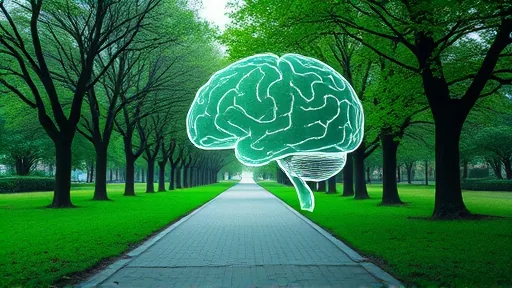
A park bench and a brain scan describe the same event from opposite ends. One records what a person does in a place; the other records what happens inside the skull afterward. A 2022 study by Sudimac, Sale and Kühn, published in Molecular Psychiatry, walked people through green space for one hour and measured amygdala activity — a deep-brain region tied to threat response — and found it decreased. [2] The two approaches — one behavioral, one neural — converge on a single object of study, the built environment, and neither can fully explain the other’s results.
The scale of who is affected is the reason this convergence matters now. The World Bank counts approximately 56 % of the world’s population — 4.4 billion individuals — living in cities. That figure turns urban design from an aesthetic question into a public health lever with a planetary reach.
What the brain does with a green space is not a metaphor. The enriched-environment hypothesis holds that settings offering physical, sensory, cognitive and social stimulation can aid neurogenesis — the development of new synapses in the brain — and counter neurodegeneration with age.
A Vocabulary That Reads the City
To test a claim about place, you need an instrument that reads place. A 2024 study led by Linus W. Dietz, revised in 2025, built one: a lexicon linking six activity types — physical, mindfulness, nature appreciation, environmental, social and cultural — to specific park elements and spaces recorded in OpenStreetMap, a free, crowd-sourced map of the world. [3] The team scored 23,477 parks across 35 cities worldwide. [3] The results split along geography. Parks in North America tilt toward physical activity; parks in Europe offer more chances to enjoy nature. Proximity matters as much as content: parks near city centers support health-promoting activities better than those farther out, while suburban parks in many cities lack the spaces and equipment for nature-based, social and cultural activity. The gaps between cities are large. Tokyo and Paris distribute park quality more evenly across their territory; Copenhagen and Rio de Janeiro show sharp contrasts between one neighborhood and the next.
Here is the tension the data leaves standing. The same park can be a triumph on a map and a disappointment on the ground — the lexicon records that a bench exists, not whether anyone sits on it, or whether the neighborhood around it feels safe enough to reach. A tool that measures supply cannot yet measure uptake.
The Contradiction Between Coverage and Care
The clinical side of city-level brain policy runs into a harder wall than park design does. Nearly 1 billion people worldwide have a mental disorder. Access to affordable, quality care is poor even in high-income settings and nearly nonexistent in many low- and middle-income countries. Preventive strategies remain in their infancy, stigma stays high in many regions, and health insurance systems have for decades offered minimal coverage for these conditions.
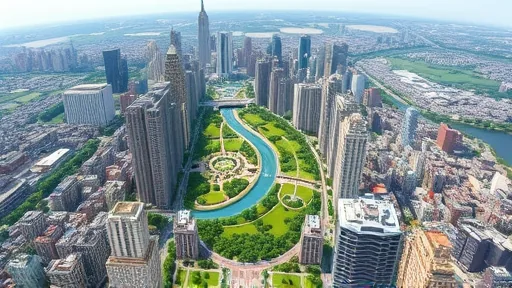
The World Health Organization’s Comprehensive Mental Health Action Plan 2013-2030 lays out approaches toward mental health equity, and one of them is deliberately low-tech: lay counseling, psychosocial support delivered by staff or volunteers without a formal mental health degree. The design of shared space can carry that support into daily life if planners fold mental health facilities and resources into city plans and create inclusive spaces where stigma loses its footing. The contradiction is structural: environmental interventions are cheap to scale, while the interventions that treat illness are clinical, expensive and scarce.
Sources
- Psychiatrictimes — Quote source (original article)
- arXiv - Health-promoting Potential of Parks in 35 Cities Worldwide (2024)