The Brittle Metal That Learned to Bend
For decades, materials scientists have accepted a frustrating trade-off. The strongest metals tend to be the most brittle. The most flexible ones tend to be weak. This has been a foundational assumption in metallurgy, shaping everything from how we build jet engines to how we design gas turbines.
Cobalt-aluminum intermetallics have embodied this problem perfectly. These compounds are extraordinarily strong. They can withstand extreme heat without deforming. But at room temperature, they shatter like glass. Engineers have wanted to use them in turbine blades for years, but their brittleness has made that nearly impossible.
Now researchers at Purdue University have broken this assumption. They have taken cobalt-aluminum, a notoriously brittle material, and made it both extremely strong and capable of bending without breaking. The key was not changing what the material is made of, but reshaping its internal structure at the nanoscale. The work was led by Xinghang Zhang, a professor in Purdue’s School of Materials Engineering, with contributions from Haiyan Wang, the Basil S. Turner Professor of Engineering, and Ke Xu, a postdoctoral researcher and first author of the paper.
The results are striking. The modified material reached a yield strength of 6 gigapascals. [1] That is roughly six to ten times greater than high-strength structural steel. Yet despite this extreme strength, it sustained 15 percent plastic strain under compression at room temperature. In plain terms, it bent significantly before it broke.
This combination has never been achieved before in this class of materials. The Purdue team published their findings in Science Advances, a peer-reviewed journal. [1].
Atomic Defects Turned Into a Hidden Advantage
The problem with cobalt-aluminum intermetallics has always been their internal structure. Unlike ordinary metals, where atoms are arranged in a somewhat flexible pattern, intermetallics have a highly ordered crystal structure. Every atom sits in a precise position. This order gives them strength, but it also leaves no room for movement.
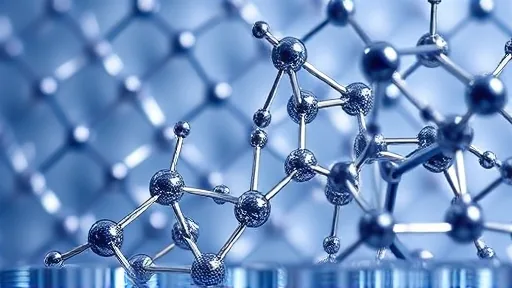
When stress is applied to such a material, the atoms cannot slide past each other. Instead, the material simply cracks. This is why intermetallics have been so difficult to use in practical applications. They are strong, but they are also rigid to the point of failure.
Earlier attempts to fix this problem focused on changing the material’s composition. Researchers tried adding other elements or adjusting the microstructure. These approaches produced limited results because they failed to create enough dislocations inside the material.
Dislocations are microscopic irregularities in a crystal where atoms are no longer perfectly aligned. The word sounds negative, but dislocations are actually what allow metals to deform under extreme force. They act as tiny safety valves, letting the material shift and bend instead of snapping.
The Purdue team took a different approach. They introduced dislocations directly into the cobalt-aluminum during the manufacturing process, using a method called magnetron sputtering deposition. This process builds the material from alloy vapor, layer by layer, rather than casting it from a molten liquid.
They also designed something they call a framework of amorphous interfaces. These are flexible internal boundaries that do not have the same orderly crystal structure as the surrounding material. When the cobalt-aluminum deforms, parts of these interfaces crystallize and help generate new dislocations. The defects that once made the material weak became the source of its newfound flexibility.
A New Manufacturing Path for Tougher Engines
Traditional metal casting begins with molten material. The liquid is poured into a mold and allowed to cool into a solid form. This process has been used for thousands of years, and it works well for many applications. But it has limits when it comes to intermetallics.
Magnetron sputtering deposition is fundamentally different. Instead of starting with liquid metal, it starts with alloy vapor. The vapor condenses onto a surface, building up a thin film atom by atom. This nonequilibrium fabrication method allowed the researchers to introduce far more dislocations into the cobalt-aluminum than conventional casting would ever permit.
“We were able to achieve significant strength and plasticity in CoAl, which can’t be realized via traditional casting,” Zhang said. [1] The process is slower than casting, but it opens up possibilities that casting simply cannot offer.
To verify their results, the team conducted in situ mechanical testing inside a scanning electron microscope. This allowed them to watch the material deform in real time and track its behavior with micrometer precision. They could see exactly how the material responded to stress as it was being applied.
The in situ mechanical testing showed that the frameworks of amorphous interfaces crystallized during deformation. They also revealed dislocations moving from the layer interfaces into the surrounding cobalt-aluminum layers. This helped explain how the material could deform without quickly fracturing.
The potential applications are significant. Bulk cobalt-aluminum intermetallics could be used in next-generation turbine blades for aeroengines. A material that is both strong and plastically deformable could allow an engine to spin faster while sustaining higher centrifugal force. That means better performance and greater efficiency.
The researchers are now planning to apply the same concept to bulk cobalt-aluminum nanocomposites for industrial-scale applications. They will also test the concept using other intermetallics, aiming to establish whether this approach works across the entire metal class.