The Accidental Discovery That Redefined Brain Implants
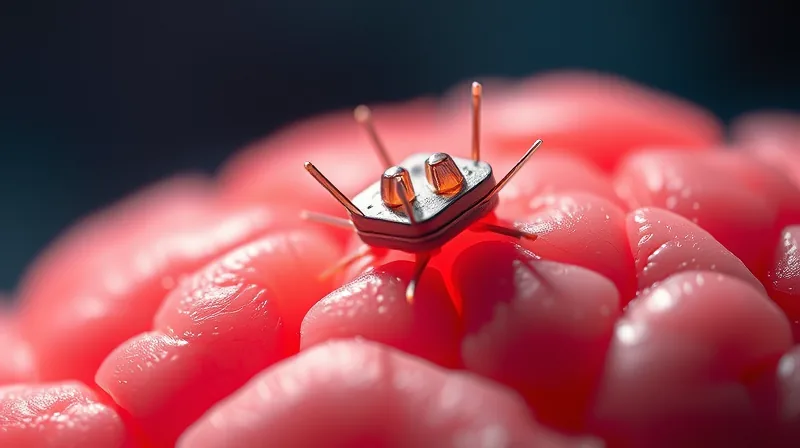
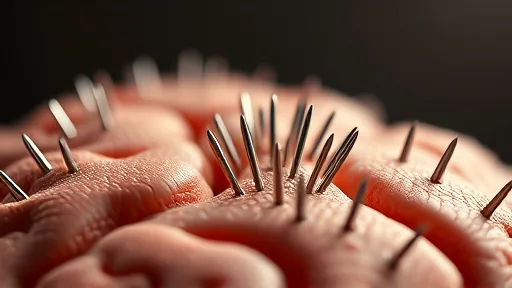
The Utah array looks like a tiny bed of nails. Up to a hundred metal spikes jut from a square surface about half the size of a fingernail. It was designed to sit on the brain’s outer edge while its spikes penetrate the tissue beneath. The device was never meant to go deep. It was a surface solution, a compromise between access and safety.
That compromise turned out to be the breakthrough. Researchers at the University of California, Davis, working with the BrainGate collective, fitted a man with ALS with this array. [1] The man could not move his arms or legs. His speech was unintelligible. Yet with the device, he communicated independently for almost two years. The results appeared in Nature Medicine in June of this year. [1]
David Brandman, the principal investigator on the study, described what changed. [1] “You have a man who’s paralyzed. He can’t move his arms and his legs. He can’t be understood when he speaks. And using this technology, he’s gone back to work full-time,” he said. The man can now hold a conversation with his six-year-old daughter. The surface-level spikes were enough. The shallower approach worked.
This challenges a long-held assumption in brain-computer interface research. The field assumed that deeper electrodes meant better signals. The Utah array suggests otherwise. It collects information from the brain’s surface layers and still decodes complex intentions. The discovery did not come from a grand theory. It came from a device that was already built and already approved, tested in a real patient with real needs.
The implications reach far beyond one man in California. Brain-computer interfaces, or BCIs, connect the human brain directly to machinery. They allow users to send brain signals to a computer, moving a cursor, typing text, or generating speech. For people with severe paralysis from injury or conditions like ALS, these devices are not conveniences. They are lifelines. The Utah array’s success suggests that the path to widespread use may be simpler than anyone thought. The study’s authors note that the device’s existing approval and established safety record were key factors in moving quickly to human trials.
What Surface Signals Mean for Privacy and Access
The shallow approach raises a practical question about how brain signals are handled. A device that sits on the brain’s surface is less risky to implant. That lower risk makes it more likely to be used widely. Wider use means more people generating neural data that could be recorded, stored, and analyzed. Researchers and regulators are still defining how such data should be protected.
The question of control is central. An electrode on the scalp, called an electroencephalogram or EEG, can already detect differences in electrical charge. But EEG signals are weak and blurred by the skull. The Utah array and similar devices sit directly on the brain, picking up far clearer signals. The clarity comes with responsibility. Researchers and clinicians must define who decides what those signals mean and who has the right to interpret them
Cindy Chestek, a BCI researcher at the University of Michigan, studies where electrodes should go. She notes that electrodes do not need to touch exact neurons. The closer they are, the stronger the signal. But the surface approach opens a middle ground. It offers signal quality without deep invasion. That middle ground is where questions about access become urgent. A device that is easy to implant is a device that is easy to justify. And a device that is easy to justify will be implanted in more people.
The societal dimension extends to who gets access. Brain-computer interfaces are expensive to develop and implant. The man in the UC Davis study was part of a research collective. His success does not mean the technology is available to everyone with ALS. The gap between what is possible and what is accessible is enormous. Surface electrodes may narrow that gap, but they will not close it. The challenge is not just about privacy. It is about equity.
There is also the question of what the brain signals are used for. The UC Davis study focused on communication. The man typed messages and spoke through the device. But the same technology could be used for other purposes. The surface approach makes such monitoring less invasive, which makes it more acceptable. The line between medical treatment and neural surveillance is already blurring. It will blur further as the electrodes improve.
The Material Race That Determines Who Wins
The choice of material is not a technical detail. It is a strategic decision that shapes the entire future of brain-computer interfaces. Silicon is a common electrical engineering material, but the brain treats it as a foreign invader. The immune response creates scar tissue that blocks neuronal signals. The scar tissue is the body’s defense mechanism. It is also the technology’s greatest obstacle.
Chestek is developing carbon-fiber electrodes tipped with platinum. She says carbon fiber is likely as close as we can get to true biocompatibility. It does not fracture like silicon or glass. It does not deform like metal. The carbon fiber flexes with the brain’s natural movement. This flexibility reduces scarring and preserves signal quality over time. The material is not just about performance. It is about longevity. A device that works for two years is good. A device that works for twenty years is transformative.
Inbrain Neuroelectronics, a start-up based in Barcelona, takes a different approach. The company uses graphene for its electrodes. Carolina Aguilar, Inbrain’s CEO and cofounder, describes graphene’s advantage. “Graphene has a superpower, which is the charge injection limit, so the capacity to stimulate without degrading the material, without creating redox reactions,” she says. Graphene does not degrade in the brain the way platinum does. It can both record signals and stimulate brain activity. That dual function could make it useful for treating Parkinson’s disease.
The material race is not just about which substance works best. It is about which company gets regulatory approval first. Neuralink, founded by Elon Musk, is the most famous player. But it is only one of several. Ben Rapoport, a Neuralink founder, left to create Precision Neuroscience. [5] His company focuses on surface electrodes that do not damage the brain. [3] Synchron is adapting stent technology to make insertion easier. [4] Each company bets on a different material and a different strategy. These parallel efforts show that the field is moving toward less invasive approaches from multiple directions.
Kenneth Shepard leads Kampto Neurotech, a company developing flexible electrodes that sit on top of the brain. [6] His device, called the Biological Interface System to Cortex or BISC, is made of silicon thinned so dramatically that it conforms to the brain’s shape. “We thinned the chip down so much it basically sticks to the brain surface, and it’s like a piece of wet tissue paper on a bowl of Jell-O,” Shepard says. [6] He believes there is enough information in local field potentials at the brain’s surface. His group at Columbia University published a paper in Nature Electronics in 2025 supporting this view. [6]

The competition is not just commercial. It is scientific. Each approach reveals something about how the brain works. The surface electrodes show that meaningful signals exist at the outer layers. The penetrating electrodes show that deeper signals are stronger but riskier. The flexible materials show that the brain can tolerate foreign objects if they move with it. The rigid materials show that stability has its own value. The race is not about finding the single best answer. It is about finding the best answer for each patient.
The Utah array remains the benchmark. It has been used in human trials for decades. It is approved and tested. The newer materials promise better long-term outcomes, but they lack the track record. The man with ALS who returned to work used the old technology. The new technologies are still proving themselves. The comparison is not between good and bad. It is between proven and promising. The proven device works today. The promising devices may work better tomorrow. For the people who need them, both matter.
Sources
1. University of California, Davis
2. BrainGate
4. Synchron
5. Neuralink