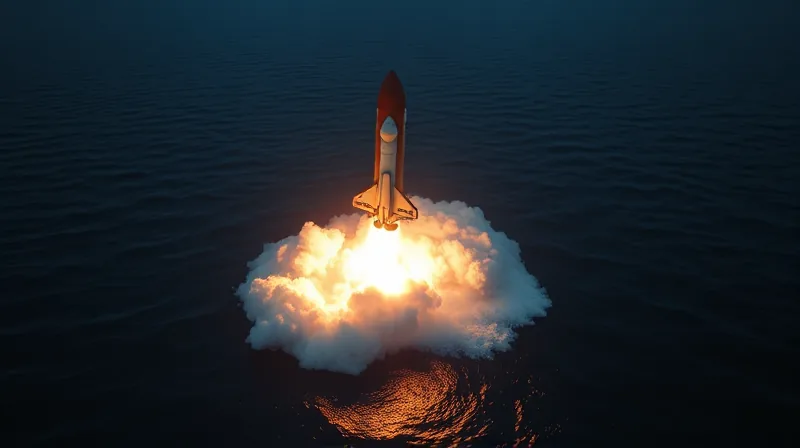
Starship Tests Satellite Deployment After Engine Fixes
A Last-Minute
Fix for a Ninety-Degree Flip
The previous Starship flight in May 2026, Flight 12, ended with a failure that engineers traced to a single moment of misdirection. At stage separation, the Super Heavy booster was supposed to flip its orientation to prepare for a controlled descent. Instead, the booster rotated approximately 90 degrees off its intended axis. SpaceX stated in its preview of Flight 13 that ‘slight differences in engine startup on the ship caused the directional flip of the booster to be off by approximately 90 degrees.’ Five Raptor engines on the booster then failed to ignite for the boostback burn, and the entire burn shut down early. The booster did not perform its planned ‘soft’ splashdown in the Gulf of Mexico. The Federal Aviation Administration (FAA) closed its mishap investigation on July 13, 2026, and accepted SpaceX’s findings. The agency said the investigation determined that ‘heat effects on propulsion system components during the ascent and erroneous engine alarm system settings’ caused the loss of the Super Heavy booster. SpaceX responded by modifying the startup sequence for the ship’s engines. The company stated that the new sequence ‘has been modified to be more robust to timing variability and more reliably flip in the desired direction.’ The Super Heavy booster on Flight 13 includes ‘hardware modifications to improve relight reliability’ along with updates to engine alarms and aborts. The booster also experienced a Raptor engine failure during its ascent on Flight 12, and the ship suffered a separate Raptor failure. SpaceX said that ‘several hardware and operational modifications have been made to address the interconnected causes’ of those engine failures. The company also noted that ‘additional reliability improvements’ are planned for future versions of the Raptor engine. The FAA’s closure of the mishap investigation allowed launch preparations to proceed for Flight 13. SpaceX had completed a static fire of the Super Heavy booster on July 10, 2026, one day before announcing the launch target. The launch window opens at 6:45 p.m. Eastern on July 16, 2026, and lasts 90 minutes. The rocket will fly from Starbase, Texas, on a suborbital trajectory that arcs halfway around the world. The entire mission is expected to last approximately 65 minutes. The ship will target a controlled splashdown in the Indian Ocean northwest of Australia. The 20 Starlink satellites on board will not survive reentry; they will burn up in the atmosphere. The flight plan allows just enough time in space for the satellites to extend their solar arrays and antennas. The satellites will attempt to connect with ground stations in South Africa as they pass overhead at an altitude of more than 100 miles. They will also attempt to establish laser communication links with other spacecraft in low-Earth orbit. If successful, these links will validate that the new Starlink V3 satellites can interoperate with the previous generation of Starlink satellites.
Starship’s Orbital Capability Remains Unproven
.
.
Sources
1. SpaceX
2. Federal Aviation Administration
3. NASA