
The Probe That Came Back From the Brink
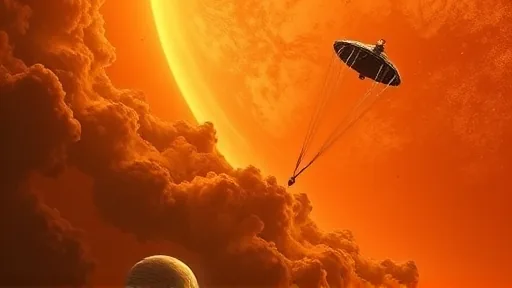
NASA’s DAVINCI mission is now targeting a December 2030 launch, a full 54 weeks earlier than the previous plan. [1] The Deep Atmosphere Venus Investigation of Noble gases, Chemistry, and Imaging will send a parachute-assisted descent probe through Venus’ atmosphere and return the first direct images of the planet’s surface since 1982. A mission that was once on the chopping block is now moving faster than its original timeline allowed.
Jim Garvin, a planetary scientist at NASA’s Goddard Space Flight Center and principal investigator for DAVINCI, described the shift as the most cost-effective and science-effective launch scenario for the mission. \"Thanks to encouragement in early ’26 from our leaders at NASA Headquarters and the Planetary Science Division,\” Garvin said, \"this is our new scenario.\.
Engineers working on DAVINCI have completed experiments showing how the probe’s cameras and instruments should capture data during its one-shot descent. It will take about an hour for DAVINCI’s battery-powered titanium descent craft to travel from space to the surface of Venus, and all of its imagery and data must be relayed to Earth through a radio link with DAVINCI’s carrier spacecraft before it goes over the horizon. Garvin framed the challenge plainly: everything in the final eight to ten minutes of descent, as the probe enters the supercritical atmosphere, should be optimized to get the data back.
A prototype of the entry probe was also subjected to the extreme temperatures it will face at Venus. The insulated sphere kept its internal components below 86° Fahrenheit (30° Celsius), meeting requirements.
The Radar That Survived the Axe
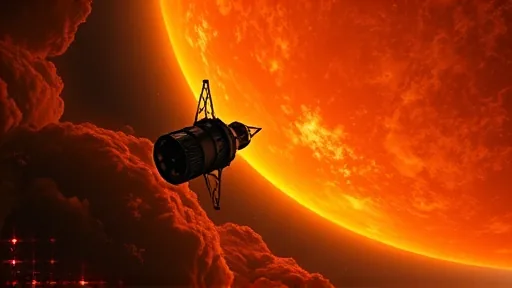
VERITAS is now funded with a launch date of November 2032, one month after DAVINCI arrives at Venus. The Venus Emissivity, Radio science, InSAR, Topography, And Spectroscopy mission will map the Venusian surface by radar from orbit, building on the legacy of Magellan. That left a lot to be desired.
Dan Nunes, the mission’s deputy project scientist at JPL, credited scientific advocacy groups for keeping VERITAS alive. [1] “VERITAS is going,” he said. [1] “We would like to thank all the support from the community, from VEXAG, the Planetary Society, all those people that went out there and made the case for Venus exploration for keeping VERITAS alive and getting us a launch date.” The mission is staffing up and accelerating, though not to the degree of DAVINCI’s 54-week pull-in. Nunes said the shift keeps building momentum for Venus science.
VERITAS will arrive at Venus close to the middle of 2033, then go through a phase of aerobraking before beginning routine science observations. Its radar is far better than Magellan’s, with a particular focus on regions with active volcanoes.
The mission’s survival was not guaranteed. Less than two years after NASA and ESA selected three Venus missions for development in June 2021, NASA officials considered canceling VERITAS amid budget pressures in the agency’s planetary science division. The money problems largely stemmed from delays and cost overruns with the Psyche mission, NASA’s first spacecraft to explore the metal asteroid.
The Armada Takes Shape
The European Space
Agency is building another orbiter, Envision, for launch to Venus in 2032. NASA was committed to providing a radar instrument for Envision, but that contribution was put in question by the Trump administration last year. Nick Lang, a program scientist in NASA’s planetary science division, confirmed the decision at the VEXAG meeting, citing limitations in NASA’s budget. “That decision was not an easy one,” Lang said.
The Venus armada might get started as soon as late 2027, when Rocket Lab aims to launch a privately funded probe to search for signs of organic material in the planet’s high-altitude clouds. That would be a private mission preceding both NASA orbiters and the European orbiter. The update came last week at a meeting of the Venus Exploration Analysis Group (VEXAG), a gathering of scientists whose research focuses on the scorching world just sunward from Earth.
NASA’s planetary science budget remains under pressure. The Trump administration has twice proposed deep cuts in planetary science. Congress restored most of the funding for fiscal year 2026 and is expected to do the same in the 2027 budget.
Venus ventures closer to Earth than any other planet, making it the easiest world for a spacecraft to reach, if not land on. Venus is roughly the same size as Earth and may have once shared a similar climate, but something turned it into an inhospitable world with an atmosphere of nearly pure carbon dioxide, clouds of toxic sulfuric acid, and temperatures hot enough to melt lead — about 872 degrees Fahrenheit (467 degrees Celsius). The planet is less well mapped than Mars, and scientists are not exactly sure what triggered Venus’ runaway greenhouse effect. NASA’s last mission to Venus was Magellan, which launched in 1989 and ended in 1994, revealing the broad strokes of Venus’ landscape for the first time, but with only enough resolution to resolve features the size of a football field or larger. Landing is notoriously difficult: air pressure at the surface is 93 times that of sea level on Earth, equivalent to about 3,000 feet beneath the ocean’s surface. Japan and Europe launched orbiters to Venus in 2005 and 2010 with instruments tuned to study the atmosphere, but it took 30 years for missions to improve on Magellan’s map to win support from decision-makers. The fortunes of Venus scientists changed in a big way in June 2021, when NASA and ESA selected three Venus missions for development in a span of just eight days. Ellen Stofan, a Venus scientist and under secretary for Science and Research at the Smithsonian Institution, said at the time that the Venus community was absolutely elated and excited and wanted to just get to work and see this happen. Ending support for Europe’s Envision mission and canceling Mars Sample Return freed up enough funding for NASA to move forward with DAVINCI and VERITAS, and in some cases, buy back some of their past delays.
Sources
Mentioned organisations (context, not sources)
The European Space Agency — Organisation (homepage)