Space Mirrors Get Green Light for First Flight
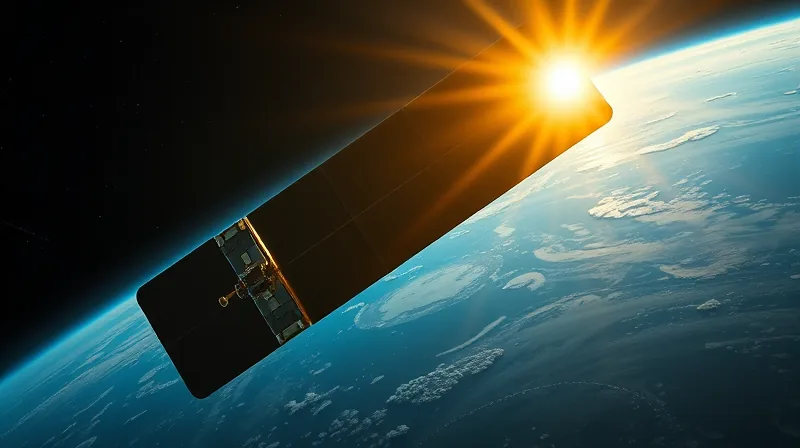
The first of what could become tens of thousands of sunlight-directing space mirrors just received approval to fly. A California-based startup named Reflect Orbital has secured a license from the U.S. Federal Communications Commission to launch its first demonstration satellite. That spacecraft will unfurl a reflective surface measuring roughly 60 feet, or 18 meters, on each side. The satellite, called Eärendil-1, is targeted to launch later this year. [1] This marks the first regulatory clearance for a technology that aims to beam reflected sunlight down to paying customers on Earth’s surface.
The concept represents a fundamental shift in how humanity thinks about light. Until now, sunlight has been a natural resource dictated by geography, weather, and the planet’s rotation. Nightfall has always meant darkness, and darkness has always meant limits on human activity. Reflect Orbital’s approach treats sunlight as something that can be redirected, scheduled, and sold. Instead of waiting for the sun to rise, customers could essentially order a beam of light delivered from orbit. The company’s vision is ambitious: operate 50,000 or more mirror-craft in low Earth orbit by 2035.
From One Mirror to Fifty Thousand
The journey from a single demonstration satellite to a fleet of 50,000 represents an enormous scaling challenge. Eärendil-1 will be the testbed, the proof that a foldable mirror can survive launch, deploy correctly, and reflect sunlight with precision. Ben Nowack, Reflect Orbital’s co-founder and CEO, said in a statement that the license is the first step toward rigorously testing the technology’s efficacy and the safeguards the company has developed. Nowack said the FCC approval validates the importance of testing novel technologies in space This single satellite will determine whether the entire constellation concept is viable.
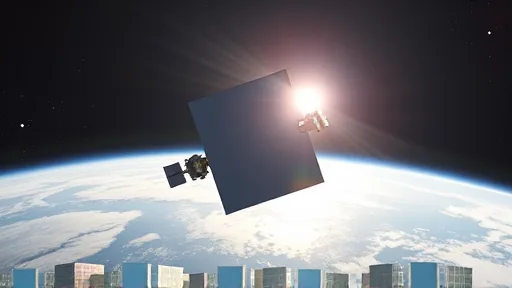
The scaling logic follows a clear progression from small to large. A single mirror can illuminate a specific spot on the ground for a short period. A formation of mirrors could extend that coverage over time and area. A constellation of 50,000 mirrors could provide sunlight on demand across vast regions of the planet. The company’s website describes the potential: a search-and-rescue team locates a missing person in minutes, a city has safer, evenly lit streets without carbon emissions, and construction projects complete in half the time with teams working through the night safely. Each application builds on the same principle, just applied at a larger scale.
The commercial logic also scales with the technology. Solar arrays on Earth currently produce electricity only during daylight hours. With orbiting mirrors beaming additional sunlight, those arrays could generate more power, reducing reliance on fossil fuels. The company frames this as a clean technology that could help meet the world’s urgent energy needs. If the demonstration succeeds, the path to 50,000 mirrors becomes a question of manufacturing capacity, launch availability, and regulatory approval rather than fundamental physics.
A Glare in the Night Sky
Not everyone welcomes the idea of artificial sunlight from orbit. John Barentine, an astronomer at the Silverado Hills Observatory in Tucson, Arizona, and a consultant at Dark Sky Consulting, has raised specific concerns about the technology. Barentine said the beam reflected by these satellites would be very intense, four times brighter than the full moon [2] Multiple satellites flying in formation would compound the effect, he added [2] Wildlife in directly illuminated areas would be affected, and atmospheric scattering would extend the impact to surrounding regions as well.
The concerns fit into a broader pattern of objections to satellite megaconstellations. Some people object to how these satellites are changing the night sky. Others worry that deorbiting huge numbers of satellites will pollute Earth’s atmosphere with heavy metals. Reflect Orbital’s mirrors add a new dimension to these debates by introducing a deliberate form of light pollution. Unlike the unintended brightness of communication satellites, these mirrors would intentionally direct light at specific targets on the ground.

Reflect Orbital says it has designed safeguards to address these concerns. The company’s website states the light is contained within the spot. The light can be turned off quickly and at any time so that none of it reaches Earth. The company says it can intentionally avoid sensitive areas such as research observatories and protected habitats. The light is not bright enough to start fires or harm eyes, even when viewed through a telescope, and cannot be concentrated past maximum natural sunlight irradiance. These assurances will be put to the test once Eärendil-1 begins its demonstration mission, and the results will determine whether the mirrors’ reach extends beyond the drawing board.