
Solar storm saturation was a mirage
For decades, space physicists thought they understood the upper limit of geomagnetic storms. When the solar wind — a constant stream of charged particles from the Sun — hits Earth’s magnetic field with extreme force, the planet’s magnetic activity appeared to hit a ceiling. This saturation limit was a cornerstone of space weather theory. Researchers built entire models around it. They proposed explanations ranging from plasma physics constraints to magnetic field line stretching. None of these theories ever achieved consensus. A new study published in Nature on 15 July 2026 now shows that this saturation was never real. [2] It was a statistical mirage. The true impact of extreme geomagnetic storms can be twice as large as previously thought.
The study, led by Nithin Sivadas of the University of Texas at Arlington and colleagues, re-examined decades of solar wind measurements and ground-based magnetometer data [1] They found that the apparent saturation effect arises from a well-known statistical phenomenon: regression to the mean. This effect occurs when measurements contain random uncertainty. When a measurement captures an extreme value, the true value is likely closer to the average than the measurement suggests In the context of solar wind driving, the uncertainty in timing and magnitude of measurements creates a nonlinear bias. The data analysis that underpinned all the saturation theories was fundamentally flawed.
Consider how the measurements work. Satellites positioned between Earth and the Sun measure the solar wind’s speed, density, and magnetic field. These measurements have inherent uncertainties. When the solar wind is extremely strong, the measured value is often an overestimate. The Earth’s response — measured by indices like the polar cap index from ground magnetometers — appears to saturate because the driver is overestimated, not because the response actually plateaus. Correcting for this regression to the mean effect reveals that Earth’s response to solar wind driving is linear throughout. No saturation exists.
The implications extend far beyond space physics. Regression to the mean is a fundamental property of the relationship between measurement and truth. The truth corresponding to any measurement is always closer to the mean. This effect is especially pronounced for uncertain measurements of extreme values. The authors explicitly state that this phenomenon is likely to manifest across various fields, from extreme climate studies to chronic medical pain. Any field that relies on measuring extreme events with uncertain instruments could be affected.
The Comforting Ceiling That Never Existed
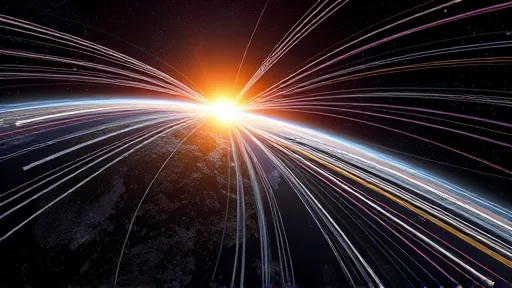
The societal stakes are enormous. Space weather affects modern technology in profound ways. Geomagnetic storms can disrupt satellite communications, damage power grids, and endanger astronauts. The Carrington Event of 1859, the most powerful geomagnetic storm on record, caused telegraph systems to catch fire. A storm of that magnitude today could cause trillions of dollars in damage. If the saturation limit was real, it provided a comforting upper bound on worst-case scenarios. Power grid operators, satellite engineers, and emergency planners used this limit to design their systems.
The new finding destroys that comfort. If the impact of extreme geomagnetic storms can be twice as large as previously thought, then infrastructure designed to withstand a “worst-case” storm is actually under-protected. The Carrington Event itself might have been significantly more powerful than current models suggest. Historical records of that storm are based on limited data. The regression to the mean effect applies to those measurements as well. The true intensity of historical storms may be systematically underestimated.
This creates a fundamental challenge for risk assessment. Preparing for an event whose magnitude has been systematically misjudged presents a fundamental challenge for risk assessment. The linear response means that as solar wind driving increases, Earth’s response increases proportionally. There is no built-in safety valve. The most extreme solar wind events, which occur perhaps once per century, could produce geomagnetic storms twice as powerful as the Carrington Event. The infrastructure that protects modern civilization was not designed for that level of stress.
They do not propose new engineering standards. Their contribution is diagnostic: they identify the statistical error and correct it. The next step — translating this corrected understanding into practical protection measures — remains unaddressed by this study. The paper states that the saturation theories are challenged, but offers no replacement models for predicting storm impacts.
How Regression to the Mean Fooled Researchers
Regression to the mean was first described by Sir Francis Galton in the 19th century. He noticed that extremely tall parents tend to have children who are shorter than them. The extreme trait regresses toward the population average. This same principle applies whenever you select measurements based on their extremity. The most extreme solar wind measurements are likely to be overestimates. The corresponding Earth response measurements are likely to be underestimates. Together, they create the illusion of saturation.

The researchers demonstrate this using a simple statistical argument. They show that the nonlinear bias in the data analysis is a direct consequence of measurement uncertainty. No new physics is required. The saturation that theorists spent decades explaining with complex plasma physics models is nothing more than a statistical artifact. This is a rare instance where a simpler explanation overturns a more complex one. The paper does not name the specific theorists whose models are challenged, but it states that there is no consensus among them, and that the data analysis underpinning their theories is nonlinearly biased.
The study was published in Nature on 15 July 2026 and has already garnered 63,000 accesses and 321 Altmetric mentions. The paper is also available on arXiv, where it was first submitted on 5 January 2022. The final version, submitted on 16 July 2026, includes the updated analysis. The lead author, Nithin Sivadas, is associated with the submission history on arXiv. The institutional affiliation is not specified in the source, but the name is provided exactly as stated.
The application of this finding to other fields remains speculative. The authors state that regression to the mean “is likely to manifest across various fields, from extreme climate studies to chronic medical pain.” They do not provide specific examples from those fields. They do not name researchers working on similar statistical corrections in climate science or pain research. The bridge to those fields is implied but not built. A researcher in chronic pain studies would need to independently verify whether their measurements suffer from the same nonlinear bias. A climate scientist would need to check whether extreme temperature or precipitation measurements exhibit regression to the mean effects.
Sources
1. DOI: 10.1038/s41586-026-10757-4
2. Nature