Siberian Permafrost Methane Could Undermine Global Emission Targets
For years, the global climate community operated on a quiet assumption: that cutting human-made methane emissions by 2050 would be enough to stabilize the Arctic’s contribution to warming. That assumption now looks dangerously incomplete. A new wave of research coming out of Siberia shows that the ground itself is becoming an emissions source that no policy agreement can simply switch off.
The numbers are stark. A 2024 analysis published in Nature Geoscience estimates that methane escaping from thawing Siberian permafrost and intensifying wildfires could erase one-fifth of the world’s agreed methane reduction targets by mid-century That is not a distant hypothetical. That is 20 percent of the progress that nations have formally committed to, silently cancelled by a feedback loop that starts in the soil.
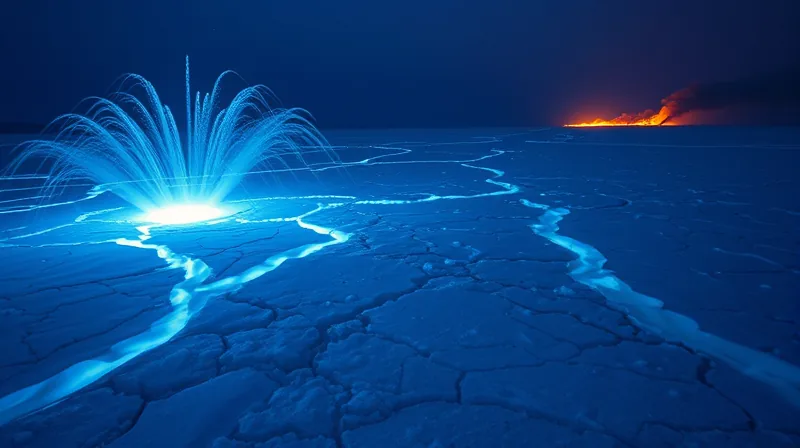
The mechanism is straightforward, though its consequences are anything but simple. As permafrost thaws, organic material that has been frozen for millennia begins to decompose. That decomposition releases methane, a greenhouse gas roughly 80 times more potent than carbon dioxide over a 20-year period. Wildfires accelerate the process by burning off the protective vegetation layer and exposing deeper layers of frozen ground to warmer air.
What makes this different from previous assessments is the scale of the connection being drawn. Earlier studies treated permafrost thaw and wildfire as separate Arctic problems. The 2024 analysis links them into a single, compounding system where each one amplifies the other, producing an emissions trajectory that existing climate models had not fully accounted for
The immediate implication is that methane reduction strategies need to be rethought at their foundation. If natural Arctic sources are going to contribute a growing share of global methane emissions regardless of what humans do, then the remaining budget for human-made emissions becomes tighter. Every ton of methane that industry and agriculture continue to emit must be weighed against a baseline that is no longer stable.
This is not a reason for despair, but it is a reason for recalibration. The global community has spent the past decade building methane reduction frameworks, most notably the Global Methane Pledge, under which over a hundred countries committed to cutting their methane emissions by 30 percent from 2020 levels by 2030. The new findings suggest that even if those pledges are fully honored, the Arctic’s own emissions could offset a significant portion of the gains. [1]
The research also sharpens the urgency around wildfire management in the Arctic. Because fires do not just release carbon directly into the atmosphere when they burn; they also prepare the ground for future methane release by thawing the permafrost beneath them. A single fire season can leave a scar that continues to emit for years after the flames have gone out.
The analysis stops short of claiming that Arctic methane emissions will doom global climate efforts or that the situation is beyond intervention. Instead, it forces a more honest accounting of the scale of the challenge, one that includes natural systems as active players rather than passive victims.
The broader meaning for climate science is a shift in how the Arctic is understood. The region has long been described as a canary in the coal mine, a sensitive indicator of changes that will eventually reach lower latitudes. The new research suggests the Arctic is not just an indicator. It is an amplifier, a region that can take a global problem and make it worse through mechanisms that are difficult to predict and harder to control.
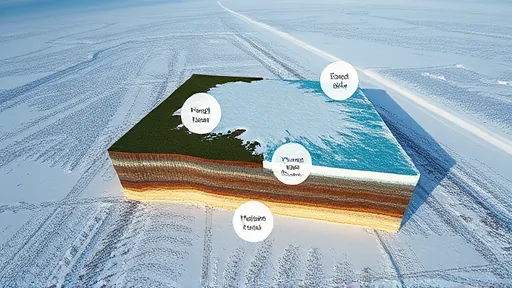
That has practical consequences for how emission reduction targets are set and evaluated. If the baseline itself is shifting, then progress must be measured against a moving target. A country that meets its methane reduction goals may still see global methane levels rise, not because of its own failures, but because the ground in Siberia is releasing what it has stored for tens of thousands of years.
For researchers, the path forward is clear. The analysis points to the need for continuous monitoring of Arctic methane emissions, particularly in Siberia, where the largest and most vulnerable permafrost deposits are found It also underscores the value of integrating wildfire data into permafrost models, treating the two as parts of a single system rather than separate fields of inquiry.
The scientific community has already begun to respond. Researchers at the University of Alaska Fairbanks and the Alfred Wegener Institute are now working to refine the estimates, using satellite measurements and ground-based sensors to track methane plumes in real time. The goal is to narrow the uncertainty range, to know with greater precision how much methane is actually being released and how fast the process is accelerating.
What emerges from this body of work is a clearer picture of the stakes. The Arctic is not a distant problem with distant consequences. It is a present and active force in the global carbon cycle, one that can undermine the very agreements designed to protect the climate. The question is no longer whether the Arctic will contribute to warming, but whether the rest of the world can adapt its plans to account for a source of emissions that refuses to follow human timelines.