Siberian Plague Lab Researcher Dies Raising Questions
The Claim That Breaks The Assumption
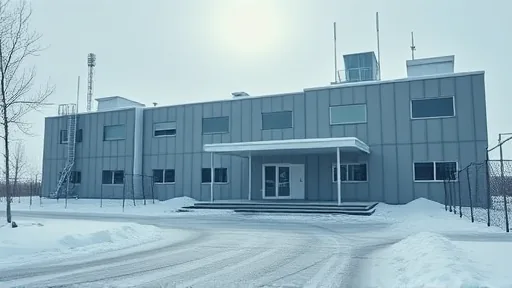
A 28-year-old researcher at a Siberian laboratory is dead, and the official explanation — pneumonia of “unknown” origin — cannot be squared with the fact that she worked with the bacterium that causes plague. [1] Daria Shipilova had been working at the Irkutsk Anti-Plague Research Institute of Siberia and the Far East when she fell ill and died in a hospital on October 2, 2026. [1] Russia’s public-health regulator insisted there was “no emergency” at the institute. Only on October 7 — five days after her death — did Russian officials reveal that the researcher had been vaccinated against plague, and that “thousands of tests” showed neither she nor others who might have been exposed had tested positive for dangerous pathogens. [1] A death from an unknown pneumonia at a facility whose stated purpose is research on Yersinia pestis, the bacterium behind the Black Death, is not a neutral fact. It is a fact that demands a chain of evidence. The World Health Organization and the United States government both pressed Moscow for epidemiological data.
Gregory Koblentz, a biosecurity-policy specialist at George Mason University near Washington DC who studies laboratory safety, offered the comparison that makes the scale of the panic legible. [2] There is a reason the Black Death happened 600 years ago, when the world lacked sanitation, hygiene and modern medicine. Today the tools are different. Y. pestis is a well-studied, well-characterized bacterium. Antibiotics exist. Vaccines exist.
What The Laboratory Was Actually For
The Irkutsk institute is a public-health laboratory, and plague is endemic in that part of the world. That combination gives a legitimate reason to research Y. pestis there: to develop diagnostic and detection methods. This is the mundane infrastructure of disease surveillance, the kind of work that rarely makes headlines because it usually succeeds at not making headlines. Koblentz stated he is not aware of any historical evidence linking this institute to the Russian bioweapons programme. [2] Russia has at least three known military facilities that do research on biological weapons, and those would be where such a programme is mostly located. Conflating a public-health accident with bioweapons research, he argued, is not helpful. The idea that all public-health labs are secretly working on bioweapons is, in his word, nonsense.
This is a boundary between two different questions. The first question — was this an accident at a civilian diagnostic laboratory? — is the one the evidence addresses. The second — does Russia run an offensive biological weapons programme? — is real, separate, and documented elsewhere. Russia inherited the world’s largest bioweapons programme when the Soviet Union fell apart, and for roughly the last decade it has been modernizing that programme. That modernization is a major concern because it violates the 1972 Biological Weapons Convention, which internationally banned the development, production and stockpiling of biological weapons. A civilian lab accident is not evidence of a weapons programme, and a weapons programme is not evidence that this particular death was one of its products.
The mother of the dead researcher pushed back against the accident narrative from a different direction. [2]. Svetlana Shipilova, a medical professional, told the Russian outlet Glubina that she did not believe her daughter was infected after breaking a test tube. [2] Her reasoning was technical: it is impossible to break a test tube like that, even if you fling it at a wall. Only an amateur would say such a thing. Even hypothetically, she insisted, you cannot spill what is inside or break the tube, because the tubes are that well protected. Her conclusion was blunt and accusatory: “They simply let my daughter die.” That is one family’s account, not a verified finding, and it points in the opposite direction from a laboratory accident — toward a failure of medical response rather than a failure of containment.
The Question Left Standing
The reassurance from the WHO was specific and layered: low risk for people who live in Irkutsk, even lower risk across Russia, and extremely low risk for Europe and the world. That is the epidemiology of a treatable bacterium with known countermeasures. It is also, notably, not the epidemiology of a novel virus. Post-COVID-19, there is a reflex: “Is this going to be COVID-26?” The comparison collapses under inspection. SARS-CoV-2 was a novel virus for which the immunology was not understood, and there were no antivirals and no vaccines. Y. pestis is the opposite case in every dimension that matters for outbreak control.
Robert Redfield, a former director of the US Centers for Disease Control and Prevention, told NewsNation that if the researcher was working in a plague lab and had an accident, there would have been a protocol for her to go on antibiotics. If the plague she was working with had been manipulated to be insensitive to antibiotics, that would explain why they might not have worked. That is a hypothesis, not a finding, and it is the kind of hypothesis that only transparency can kill. President Trump downplayed the possibility that the scientist died from a biological weapon, saying “we don’t think so” but that “we’re going to find out soon enough.” Kremlin spokesman Dmitry Peskov said Russia reported the incident to the WHO and followed international protocol, and accused the media of pushing false information.
Strip away the speculation and what remains is a structural vulnerability, not a biological one. The bacterium is treatable. The diagnostics exist. The vaccines exist. The thing that failed here was the flow of information — five days between a death and the disclosure of basic facts, a public-health regulator using the phrase “no emergency” while roughly 200 contacts sat in quarantine, and a mother publicly rejecting the official account of how her daughter died. Koblentz’s concern about the incident was never the pathogen. It was the lack of transparency around it. The open question is the one no laboratory, no vaccine and no antibiotic can answer: whether the next such death will be disclosed in hours or in days, and whether the world will have to guess in the interval. [1].