
Scientists count heat deaths using excess mortality models
For decades, public health officials faced a troubling puzzle. Heatwaves were clearly killing people, yet death certificates rarely recorded heat as the cause. A heart attack during a hot spell might be listed as cardiac arrest, not heat-related mortality. The true toll remained hidden, making prevention nearly impossible. Scientists needed a way to see what official records obscured.
Counting Deaths That Never Appear on Certificates
The challenge begins with how death is documented. When extreme heat strikes, it does not act like a virus or a wound. It aggravates existing conditions — heart disease, respiratory illness, kidney failure — and pushes vulnerable bodies past their limits. Doctors completing death certificates typically list the immediate medical cause, not the environmental trigger. Heat becomes an invisible accomplice in thousands of fatalities each year.
Researchers developed a workaround called the “excess deaths” method. This approach compares total deaths during a heatwave against a baseline period without extreme heat. The difference between these numbers represents the presumed heat-related deaths. Public health agencies across the globe rely on this technique because it is straightforward and fast, says Antonio Gasparrini, a biostatistician and epidemiologist at the London School of Hygiene and Tropical Medicine. [1]
The method has clear limitations. It cannot distinguish between deaths caused by heat and those caused by other factors that happen to coincide with the heatwave. It also only works after the event has passed, offering no predictive power for an approaching heatwave. Officials must wait until the damage is done before they can measure it.
Recent events in England demonstrate the method in action. The UK Health Security Agency announced that an estimated 2,877 people died of heat-related causes during heatwaves in May and June. [2] The agency compared average daily deaths during heatwave periods against days without extreme heat. This estimate emerged only after the heatwaves had already claimed their victims.
Building Models That Predict Before the Heat Arrives
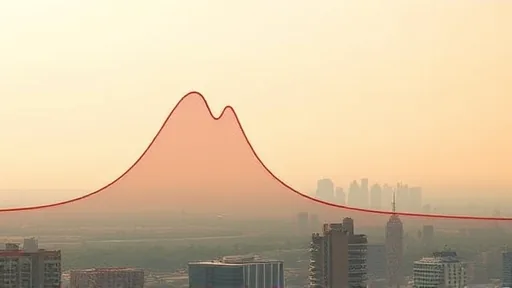
A more sophisticated tool offers a path forward. Researchers developed something called an exposure-response function, which describes the mathematical relationship between temperature and mortality. These functions allow scientists to build models that estimate deaths for any given temperature rise. A model might predict, for instance, that a 5 degree Celsius increase in temperature could result in a 3 percent increase in a city’s weekly mortality rate.
These models operate in real time, unlike the excess-deaths method. They can run during an ongoing heatwave or project forward into future climate scenarios. This predictive capacity matters because prevention requires foresight. “Nobody needs to die in a heatwave,” says Kristie Ebi, a climate epidemiologist at the University of Washington in Seattle. [3] “If you don’t know how many people died in a heatwave, you’re not going to take appropriate preventive action.”
The accuracy of these models depends on reliable temperature forecasts. A model is only as good as the weather prediction feeding into it. Non-heat-related changes in mortality can also distort the results, adding uncertainty to the estimates. These technical limits determine what cannot yet be known about heat deaths.
The scale of the problem demands better tools. An estimated 210,000 more people died of heat-related causes each year from 2012 to 2021 than from 1990 to 1999, on average. Some 75,000 deaths per hot season have been linked to heatwaves in Asia from 1990 to 2019. Nearly 14,000 people are estimated to have died in June this year in Europe during a record-breaking heatwave. The annual toll is growing, and the methods to track it must keep pace.
When Two Methods Agree, Confidence Grows
Gasparrini and his colleagues put the exposure-response method to a direct test. They analyzed the same May and June heatwaves that the UK Health Security Agency examined using the excess-deaths approach. Their estimate of 2,736 deaths in England and Wales closely matched the agency’s figure of 2,877. The alignment between two fundamentally different methods inspires confidence in the exposure-response approach, Gasparrini says.

The comparison revealed an additional finding. Almost half of the deaths from these heatwaves can be attributed to human-induced climate change. This attribution represents a significant step forward in understanding how rising global temperatures translate into human mortality. It connects the abstract concept of climate change to a concrete number of lives lost.
The agreement between methods raises an open question that researchers now face. If both approaches can produce similar estimates, which one should public health agencies adopt for routine monitoring? The excess-deaths method is simpler but reactive. The exposure-response method is more complex but can operate in real time and under future scenarios. The choice carries practical consequences for how quickly warnings reach vulnerable populations.
The stakes are measured in lives. Extreme heat is killing hundreds of thousands of people every year, and the annual toll is growing. This week, extreme heat has once again blistered parts of Europe and East Asia. Each heatwave presents an opportunity to test and refine these methods, to sharpen the tools that tell us who is dying and why. The question is not whether the methods work — both have now proven themselves. The question is which one will save more lives when it matters most.