CRISPR delivery advances gene editing precision
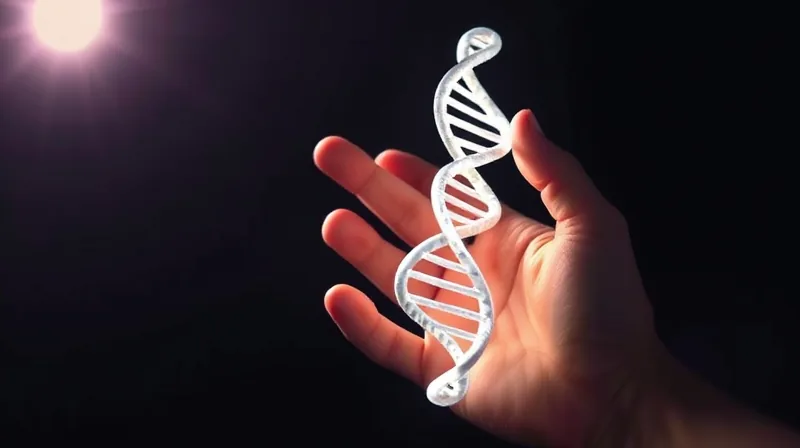
A hand once held a stone knife to cut a wound, then a scalpel to heal it. Now that same hand holds something smaller than a virus, yet capable of rewriting the very code of life. That tool is CRISPR-Cas9, a molecular scissors that has moved from the petri dish to the clinic, and from the clinic to the fields where our food grows.
The Old Way: Blunt Instruments
For decades, gene editing was like trying to fix a watch with a sledgehammer. Scientists could insert new DNA, but it landed randomly, often breaking other genes. The first successful gene therapy in 1990 treated a girl with severe combined immunodeficiency, but later trials using a different viral vector caused leukemia in other patients. The precision was poor. The risks were high.
CRISPR-Cas9 changed that. Discovered in bacteria as an immune system against viruses, it uses two parts: the Cas9 protein that cuts DNA, and a guide RNA that tells it exactly where to cut. Think of it as a GPS-guided scalpel. In 2012, researchers at the University of California, Berkeley, and Umeå University in Sweden showed this system could be programmed to cut any DNA sequence [1]. The world of genetics split into before and after.
The New Challenge: Getting the Scissors Inside
But here is the problem. Even the best scissors are useless if you cannot hand them to the tailor. The CRISPR system is a large protein and a piece of RNA. They cannot simply swim through cell membranes. They need a delivery vehicle.
The old vehicles were viral vectors — modified viruses like adeno-associated virus (AAV) or lentivirus. These are efficient. They have evolved over millions of years to get inside cells. But they have limits. They can only carry small payloads. They can trigger immune reactions. And once inside, they sometimes integrate into the genome in unpredictable ways.
This is where nanomaterials enter the story. Scientists at the Massachusetts Institute of Technology and the University of Texas at Austin have been working on lipid-based nanoparticles — tiny fat bubbles — and polymeric nanoparticles, which are like microscopic plastic capsules [2][3]. These can carry larger payloads, are less likely to cause immune responses, and can be engineered to release their cargo at the right moment.
The Synthesis: What the New Tools Unlock
Combine CRISPR-Cas9 with these smart delivery systems, and the possibilities multiply.
In personalized medicine, doctors can now edit a patient’s own immune cells to attack cancer. In 2017, the U.S. Food and Drug Administration approved the first CAR-T cell therapy, which uses edited T-cells [4]. But those cells were edited outside the body. The next step is to edit them inside the body. That requires the precise delivery that nanomaterials provide.
In agriculture, CRISPR-edited crops are already in the market. The Calyxt company created a soybean oil with no trans fats by editing a single gene. But delivery remains the bottleneck for more complex edits in plants. Nanoparticles can cross the tough cell walls of plant cells, opening the door to drought-resistant wheat or vitamin-enriched rice.
In gene therapy, the holy grail is fixing diseases like sickle cell anemia or cystic fibrosis at the source. Vertex Pharmaceuticals and CRISPR Therapeutics have already treated patients with sickle cell disease using CRISPR-edited stem cells [5]. But again, those cells were edited in a lab. The next frontier is editing them inside the patient’s body, without ever removing them. That requires a delivery system that can find the right cells, enter them, and release the CRISPR machinery without causing collateral damage.
The Ethical Hand
Every hand that holds the scissors must also hold the responsibility. The World Health Organization announced a committee in 2018 to guide human genome editing, with its first meeting held in 2019 [6]. The National Academies of Sciences, Engineering, and Medicine have published frameworks for what is permissible [7]. The line between therapy and enhancement is thin. Editing a gene to prevent a fatal disease is one thing. Editing a gene to make a child taller or smarter is another.
Nanomaterials add another layer. They can be designed to target specific tissues, but they can also accumulate in organs like the liver or spleen. Their long-term effects are not fully understood. The European Medicines Agency and the U.S. Food and Drug Administration are developing guidelines for nanoparticle-based gene therapies, but the science is moving faster than the regulation [8][4].
The Bridge Forward
The parallel work happening at Stanford University, the Broad Institute of MIT and Harvard, and the Karolinska Institute in Sweden shows a clear direction [9][2]. The goal is not just to cut DNA, but to do so safely, precisely, and ethically. The tools are converging: better guide RNAs, more efficient Cas9 variants, and smarter nanoparticles that can be triggered by light, heat, or pH changes.
The bridge between the lab and the patient is being built with these three components. The CRISPR system is the engine. The nanoparticle is the vehicle. And the ethical framework is the road map.
What the Hand Will Hold Next
By 2030, the first in-body CRISPR therapy using nanoparticle delivery is expected to receive regulatory approval. The target will likely be a liver disease like transthyretin amyloidosis, where the editing can be done in a single organ. The number that matters is 1 — one injection, one edit, one cure.
The hand that once held a stone knife now holds the code of life itself. The question is not whether we can edit the genome. We can. The question is whether we can deliver that edit with the precision and care that life demands. The answer is being written now, in labs from Cambridge to Kyoto, one nanoparticle at a time.
Sources
2. Massachusetts Institute of Technology
3. University of Texas at Austin
4. U.S. Food and Drug Administration
7. National Academies of Sciences, Engineering, and Medicine