Scientific breakthroughs driven by tools not lone genius
The established story of scientific discovery has long followed a familiar arc: a lone genius, a sudden flash of insight, a eureka moment that rewrites the textbooks. Albert Einstein stands as the archetype - a patent clerk in Bern who, in 1905 alone, transformed our understanding of light, matter, and time. His work emerged not from a laboratory brimming with instruments, but from thought experiments conducted at a desk. This narrative of solitary brilliance has proven remarkably durable, shaping how we teach science, fund research, and celebrate achievement.
Yet the data increasingly fail to fit this model. When historians and computational scientists examine the actual record of major breakthroughs, a different pattern emerges. The tools themselves - not the flashes of insight - often deserve the credit. Pulsar stars, for instance, were discovered not because astronomers Jocelyn Bell Burnell and Antony Hewish had a revolutionary idea, but because a radio telescope constructed near Cambridge, UK, opened a window that had never existed before. The instrument came first; the discovery followed as a consequence of new capability.
This is the moment the established model breaks against its own evidence. The romantic image of the solitary genius cannot explain why so many breakthroughs cluster around the introduction of new instruments. The data point elsewhere: innovation in science is frequently a story of infrastructure, not inspiration.
Tools Enable Questions No One Could Ask
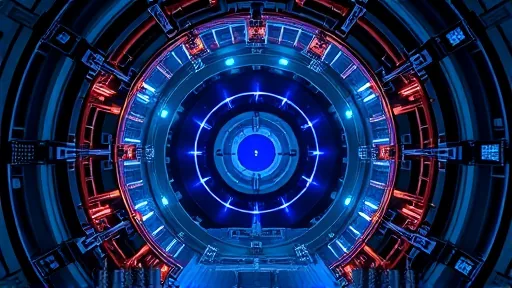
Consider what the historical record actually shows. Across fields, the pattern repeats with striking consistency. New methods and tools do not merely accelerate existing research - they enable questions that researchers previously could not even formulate. The telescope did not make astronomy faster; it made astronomy possible in ways that the naked eye could never achieve. The same logic applies to the microscope, the particle accelerator, and the sequencing machine.
This pattern demands a fundamental rethinking of how we understand scientific progress. If instruments are the true engines of discovery, then the current emphasis on individual genius - in hiring, in funding, in prizes - may be misdirected. The implications extend into the present day, where artificial intelligence systems are increasingly being deployed across scientific research. The question is no longer whether AI can assist scientists, but where its assistance matters most.
The evidence suggests an answer that may surprise: AI’s most valuable contribution to science may not be in generating hypotheses or analyzing data, but in designing the next generation of scientific tools. Just as the radio telescope opened the door to pulsar discovery, AI-designed instruments could open doors we cannot yet see. The historical pattern is clear - breakthroughs follow tools - and AI’s ability to accelerate tool design places it at the very heart of future discovery. Researchers such as James Evans, a computational social scientist at the University of Chicago, have examined how the structure of scientific innovation can be studied and understood. [2]
The Parallel That Confirms the Pattern
The confirmation comes from an unexpected direction: artificial intelligence research itself. The most celebrated AI breakthroughs of recent years did not emerge from a single flash of insight in isolation. They emerged from massive computational infrastructure, vast datasets, and new hardware architectures - tools built specifically to enable new forms of learning and pattern recognition. The parallel with Bell Burnell and Hewish is direct: capability preceded discovery.
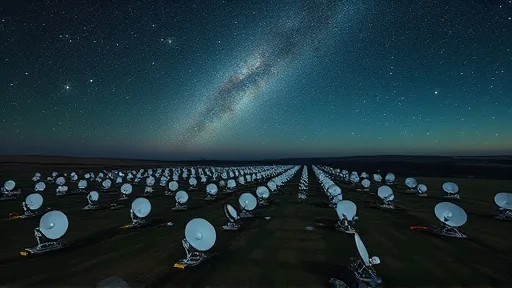
This parallel reinforces the central claim. Across centuries and disciplines, from radio astronomy to machine learning, the pattern holds. Scientific revolutions are powered by instruments that expand what we can observe, measure, and compute. The genius narrative persists because it is compelling - but the evidence points elsewhere. The next great breakthrough will likely come not from a solitary thinker in a quiet office, but from a new tool that lets us see what we have never seen before. And if AI can design those tools faster than humans ever could, then its most profound scientific contribution may be yet to come.