
A Hand That Once Held a Key
Peptides are short chains of amino acids that act as signaling molecules in the body. Unlike proteins, which are long chains, peptides are typically less than 50 amino acids long. They occur naturally and can also be synthesized in labs. Some peptides, like insulin and GLP-1 drugs, are approved as medicines. But a growing number of unregulated peptides are being sold online and in clinics, labeled ‘for research use only.
These unregulated peptides include compounds like BPC-157, MOTS-c, and TB-500. They are promoted for weight loss, muscle building, anti-aging, and injury recovery. But they have not been approved by regulators for human use. The U.S. Food and Drug Administration has issued warnings about the risks of unapproved peptides, including contamination, incorrect dosing, and unknown side effects.
**The Proven Path: Diet, Exercise, and Time It was also hard. You ate less. You moved more. You slept seven to nine hours. You did this for months, then years. The results came slowly. The results stayed. This was the deal. You traded time for change. You traded effort for results.
The Nature article by Cassandra Willyard explains that peptides are made of the same building blocks as proteins but are shorter — typically less than 50 amino acids long. [1] They can be powerful medicines. The GLP-1 drugs for diabetes and weight loss are peptides. Insulin is a peptide. But the unregulated peptides sold for wellness purposes are not the same as these approved drugs.
Vikas Patel, an emergency-medicine physician at Elmhurst Hospital in Illinois, calls the peptide market a ‘completely unregulated industry,’ as reported in the Nature article. [1] These compounds are not approved for use in humans. They come in vials labeled ‘for research use only.’ The promise of fast results has replaced the slow, proven path.
**The Unregulated Market: What Is Being Sold It says you can eliminate wrinkles. You can build lean muscle. You can boost your metabolism. You can clear brain fog. You can heal torn ligaments. All with a small injection. Influencers on TikTok rave about their peptide glow-ups. Bodybuilders exchange information about their favorite combinations at the gym. US Health Secretary Robert F. Kennedy Jr. is a proponent. “I’m a big fan of peptides,” he told podcaster Joe Rogan in February 2026, according to the Nature article. [2] “I’ve used them myself, and used them with really good effect on a couple of injuries.”
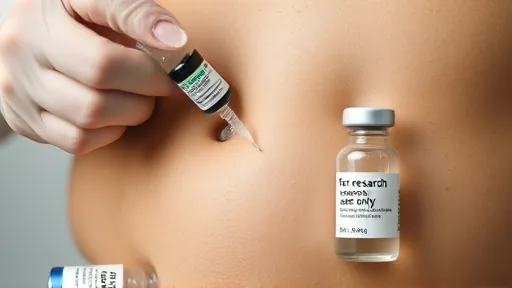
Researchers say enthusiasm for these unregulated drugs has got ahead of the science, as the Nature article states. [2] The risks include unknown long-term effects, contamination, and incorrect dosing. Users are betting that the chemicals will work without causing harm.
But there is another trade-off. What is gained is a feeling of control. What is lost is the understanding of complexity. The body is a system. It does not respond well to simple chemical fixes. The peptide craze ignores the system. It focuses on the signal. It ignores the noise. The hand that holds the vial believes it has found a lever. It may have found a trap.
Historical Lessons: Shortcuts That Failed
History shows that medical shortcuts can have devastating consequences. Thalidomide, prescribed for morning sickness in the 1950s, caused severe birth defects. Fen-phen, a diet drug in the 1990s, led to heart valve damage. Opioid painkillers, overprescribed in the 2010s, triggered an addiction crisis. In each case, the promise of fast relief was followed by slow disaster.
The peptide craze follows a similar pattern. The promise is fast results. The cost is unknown. The science has not caught up. Researchers quoted in the Nature article say enthusiasm has got ahead of the science.
But the body is not a computer. It is a garden. It needs water, sunlight, and time. The peptide craze offers a chemical fertilizer. It may work for a season. It may poison the soil. The hand that holds the vial does not know. The hand that holds the vial is taking a risk.
**What Experts Recommend Instead. The real decision is about trust. Do you trust the influencer on TikTok? Do you trust the emergency-medicine physician who says the industry is unregulated? Do you trust the science journalist who spent months researching the topic? The Nature article was published on June 10, 2026. It is a careful, evidence-based look at the peptide craze. It is not a hype piece. It is a warning.
The decision is also about time. Do you have time to wait for the science? Do you have time to do the slow, boring work of diet and exercise? Do you have time to let your body heal naturally? The peptide craze says no. It says you do not have time. It says you need the shortcut. It says you deserve the shortcut.

Experts recommend six lifestyle habits that are more effective than unregulated peptides: sleep, nutrition, exercise, stress management, social connection, and avoiding harmful substances. [3] These methods are not fast, but they are proven.
**Conclusion You knew that the promise of a quick fix is usually too good to be true. You knew that the body is complex and does not respond well to simple chemical interventions. You knew that the influencer on TikTok is not a doctor. You knew that the hand that holds the vial is taking a risk.
Now you know why. The science is not there. The regulation is not there. The safety is not proven. The hand that holds the vial is a hand that wants to believe. But belief is not evidence. And the body does not care about belief. It cares about biology. The peptide craze is a trade-off. What is gained is speed. What is lost is safety. What is gained is excitement. What is lost is wisdom. The balance is not in your favor. The hand that holds the vial should let it go.
Sources
2. Nature
3. MSN