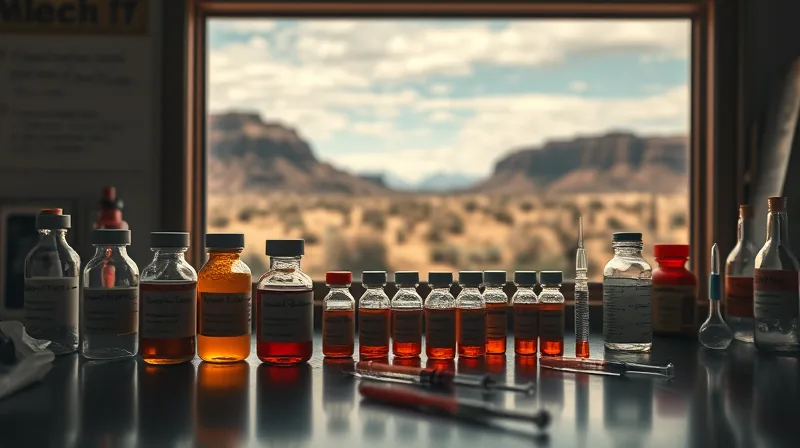
Booming Peptide Wellness Market Lacks Scientific Evidence
A Booming Market from a Bird’s-Eye View
From a satellite perspective, the wellness landscape in the United States and parts of Europe glows with clinics, spas, chiropractor offices, and rehabilitation centers offering peptide injections. Proponents claim these tiny protein fragments — defined by most researchers as chains of fewer than 100 amino acids, and by the FDA as no more than 40 — can combat aging, heal injuries, dampen inflammation, accelerate weight loss, and treat conditions from osteoporosis to opioid withdrawal. Yet robust evidence to support these claims is scarce. The unregulated market for peptides is now estimated to be worth between $100 million and $3 billion.
The lack of regulation creates a “Wild West” environment, says Alexander Weber at the University of Southern California. [1] Because peptides are not FDA-approved drugs for most of these uses, they occupy a legal grey zone. Online retailers ship them directly to customers in the US, UK, Canada, and the European Union, so long as no health claims are made. This setup invites contamination.
The scale of the problem is visible from orbit: an industry that has exploded since 2000, with nearly 2.3 million research papers mentioning peptides published since then — double the number from the entire 20th century. In the past decade alone, the FDA has approved more than 40 peptide drugs for therapeutic use. One of them, semaglutide, the main ingredient in Ozempic and Wegovy, has transformed the treatment of obesity and type 2 diabetes. Weber says these drugs were a big step in the peptide space, propelling peptides into the mainstream. Yet the majority of peptides sold directly to consumers are not approved drugs — they are experimental compounds meant only for research purposes, Weber adds.
A Timeline from the Lab to the Clinic
The trajectory from scientific discovery to widespread availability has been rapid but uneven. Technological advances such as improved genetic sequencing, about 25 years ago, made detecting and analyzing peptides much easier. This opened a new biological frontier, says Changhan David Lee at the University of Southern California. The pace of research accelerated, but clinical evaluation did not keep up. In 2024, an advisory committee to the FDA made a controversial decision.

The week before the meeting, the US Department of Health and Human Services, which oversees the FDA, nominated eight new committee members.
A Gap in Knowledge That Raises More Questions Than Answers

Questions multiply: What about side effects? TB-500 appears to accelerate tissue regeneration and healing in animals.
Sources
1. University of Southern California