Paint-on ink creates wearable health sensors
From Face Paint to a Second Skin for Signals
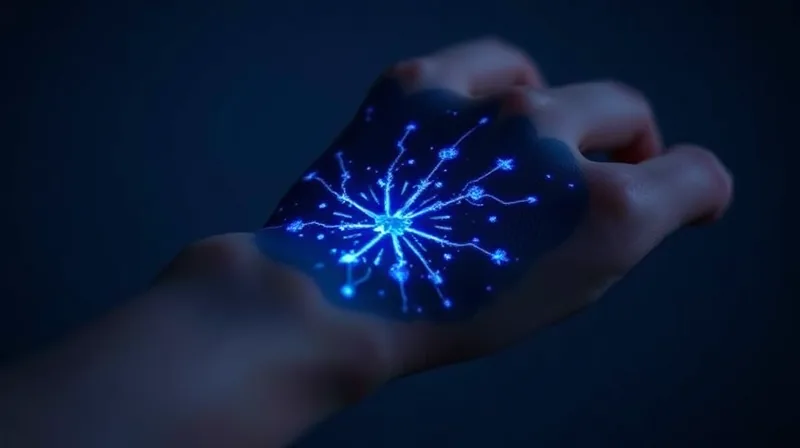
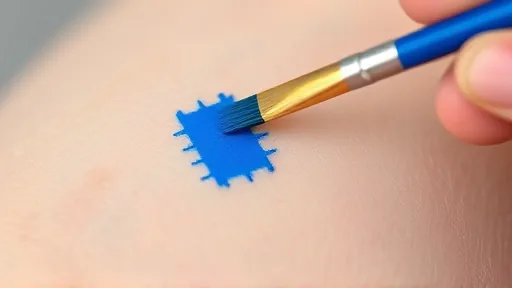
Painting a star on a child’s cheek and painting a working electrode on a forearm seem like two completely different acts. One is decoration. The other is medicine. At Pennsylvania State University, engineers have merged them. [1] They created a water-based conductive ink that can be painted directly onto the skin in colorful, custom designs. Once it dries — in less than 10 minutes — that painted design becomes a functional electrode. It can monitor the body’s electrical signals: the heart’s rhythm, the brain’s waves, and the muscles’ commands. “The big idea behind this is that in the future, you could potentially have a more expensive sensing module that remains separate from the system, but the electrodes themselves can be disposable,” said Larry Cheng, the paper’s corresponding author and a James L. Henderson Jr. memorial professor of engineering science and mechanics at Penn State, in a press release. [1] “A single bottle of ink could provide enough material to paint multiple electrodes over the course of several days or a week.” This is not a temporary tattoo that merely looks like a circuit. This is a circuit that looks like a tattoo.
Traditional electrodes have a fundamental problem. They are prefabricated. A manufacturer stamps them out in a fixed shape. A doctor or patient then applies that rigid shape to the skin. But skin is not flat. Skin curves. Skin has hair. Skin sweats. An air gap forms between the prefabricated electrode and the skin’s uneven surface. That gap weakens the sensor’s reading. The new ink solves this by becoming the electrode only after it touches the skin. The liquid flows into every microscopic crevice. It molds itself to the skin’s natural texture. No air gap remains. The signal quality improves because the connection is direct. Sweat and body hair, which often disrupt commercial electrodes, no longer cause the same problems. The ink is applied to a porous silver fabric, which connects the painted design to the monitoring module and allows sweat and hair to pass through. The system maintains reliable electrical contact even during movement.
The ink itself is a carefully engineered mixture. It starts as a transparent, glue-like liquid. The base is a water-based ethanol/polyvinyl alcohol solution. Into this, the researchers mixed several different kinds of polymers and acidic additives. PEDOT:PSS — poly (3,4-ethylenedioxythiophene): poly (styrene sulfonate) — provides the electrical conductivity. DBSA — 4-dodecylbenzenesulfonic acid — serves a dual role. It adds conductivity and acts as a plasticizer, giving the dried ink flexibility. The ink can also be mixed with food coloring. This allows users to create almost any color or design. Instead of wearing plain medical patches, people could paint cartoon characters, animals, or logos. The design quietly monitors their health while looking like art. This customization could be especially beneficial for children, who may be more willing to wear a medical device if it is powered by a temporary tattoo of their favorite character.
Why This Measurement Works Where Others Fail
Larry
Cheng has spent more than 10 years working on electrode designs for biomonitoring applications. He has worked on EEGs for brain activity, ECGs for heart activity, and EMGs for muscle contractions. Each of these measurements detects tiny electrical signals generated by the body. The problem has always been the interface between the electrode and the skin. Rigid materials, like metals, make for a stable biomonitor. But they are easily dislodged when the wearer moves too much, such as during exercise. Hydrogels emerged in recent years as an alternative. They can absorb water, swell, and stretch with the skin during movement. But hydrogels degrade rather quickly. They dry out. They lose their benefits with prolonged use. The Penn State team took a different approach. They did not try to make a better rigid electrode or a longer-lasting hydrogel. They changed the fundamental method of attachment. Instead of applying a prefabricated electrode to the skin, they painted the electrode onto the skin. The ink becomes part of the skin’s surface.
The connection method is the key to the measurement’s reliability. The wet ink flows into a lightweight silver fabric with a porous structure before drying. This creates a strong bond. The fabric can stretch to more than one and a half times its original length without breaking. The painted electrodes connect to a small reusable electronic module worn under clothing. This module collects the electrical signals and wirelessly sends them to a computer or other device using Bluetooth. The electronic module is designed for repeated use. The painted electrodes themselves can simply be washed off and reapplied whenever needed. A single bottle of conductive ink could produce many wearable sensors over several days or even a week. This disposability of the electrode combined with the reusability of the module addresses a practical barrier to long-term monitoring.
The researchers tested the technology in several real-world situations. In one experiment, volunteers wore the painted electrodes for 12 hours during normal daily activities. The system continuously recorded high-quality ECG readings throughout that period. In another test, the electrodes maintained their accuracy even during exercise. Movement and sweating did not degrade the signal. The team also demonstrated that muscle signals detected by the painted electrodes could control a robotic prosthetic hand. This was done without requiring any physical contact between the user and the hand. This demonstration highlights the technology’s potential for advanced rehabilitation and assistive devices. The system works because the painted electrode conforms to the skin so perfectly that even the small electrical signals from muscle contractions can be captured and transmitted accurately to an external device.
The Next Measurement Needed to Be Certain
The current ink detects electrical signals. It measures the heart’s rhythm, the brain’s waves, and the muscles’ commands. These are all bioelectrical signals. The researchers are now looking beyond electricity. They hope to expand the technology to detect important biological chemicals. The next measurement needed is chemical. Future versions of the ink may detect cortisol, a stress hormone. They may detect glucose for diabetes management. This would transform the paint-on tattoo from a simple electrical sensor into a full biochemical monitor. The ability to measure chemicals in sweat or interstitial fluid would open up entirely new categories of health monitoring. A patient with diabetes could paint a small design on their arm each morning. That design would continuously track their glucose levels. A person under chronic stress could monitor their cortisol levels throughout the day.
The researchers are also exploring unusual applications beyond human health. They are investigating painting sensors onto plants. This would allow them to monitor environmental conditions. They could study how pollution or chemicals affect plant health. A painted sensor on a leaf could detect changes in the plant’s electrical activity in response to environmental stressors. This application extends the core technology — a conductive ink that forms a functional sensor on a surface — to an entirely new domain. The same principles of conformal contact and direct measurement apply whether the surface is human skin or a plant’s leaf.
The researchers have filed a provisional patent for the ink, signaling a move toward commercialization. Future versions may detect cortisol or glucose, transforming the paint-on tattoo from a simple electrical sensor into a full biochemical monitor.