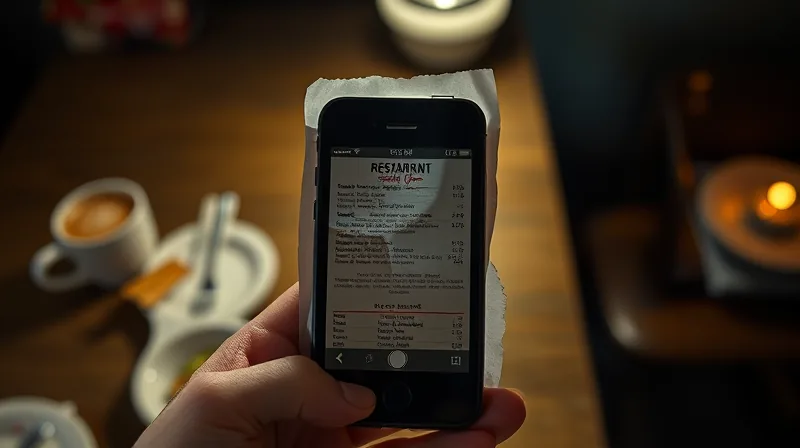
Siri in Camera uses AI to ease awkward bill splitting
There is a particular kind of social exhaustion that comes with a group dinner. You order a water, a modest pasta. Others order cocktails, appetizers, dessert. Then the bill arrives, and someone says, “Let’s just split it evenly.” Suddenly you are subsidizing someone else’s espresso martini, and you say nothing because the alternative—pulling out a calculator, itemizing, asking for Venmo details—feels worse. Apple has now named this problem and offered a solution. At WWDC 2026, the company unveiled a feature that lets you point your iPhone camera at a receipt, select what you ordered, and automatically send Apple Cash requests to the people who ordered the rest. [2] They call it “Siri in Camera.”
The name is deliberately understated. It sounds like a convenience, a minor upgrade to how you interact with your phone. But the naming conceals a larger truth: this is not just about splitting a bill. It is about how artificial intelligence is quietly inserting itself into the most mundane, awkward, human moments—and what happens when it does.
What We Knew: The Old Awkwardness of Being Fair
Before this feature, splitting a restaurant bill unevenly was a social ritual with no good technological solution. You could do the math in your head, but that required focus and trust. You could download an app like SplitWise or Tab, but that required everyone else to have the same app, remember their login, and not feel annoyed by the suggestion. In practice, most people just paid the even split and felt a small resentment that they never voiced.
The problem was not technical. The math was simple. The problem was social. Asking someone to pay for exactly what they ordered felt like an accusation. It implied you were keeping track, that you noticed they ordered the expensive wine while you had tap water. The even split was a social lubricant—it avoided friction by ignoring fairness. And for years, that trade-off was accepted because the alternative was worse.
Third-party apps tried to solve this, but they failed not because of bad design but because of social friction. Downloading a new app for a dinner with friends feels like work. It signals that you care more about the division of costs than the company. These apps never achieved critical mass because they asked people to change their behavior before the technology was useful. The network effect worked against them: no one had the app, so no one used it.
What We Didn’t Know: The Hidden Cost of Social Smoothing
What most people didn’t realize was how much energy this small awkwardness consumed. Psychologists have studied “decision fatigue” in social settings—the cumulative drain of small, unspoken calculations. Every time you chose not to ask for a fair split, you made a tiny deposit into a mental account of unspoken grievances. Over time, these deposits accumulated. Friendships frayed not over big betrayals but over the accumulated weight of who always paid for the guacamole.
The problem was not unique to restaurants. It extended to group gifts, shared utility bills, road trips, Airbnb rentals. Any situation where costs were shared but consumption was uneven created the same dilemma: either you speak up and risk seeming cheap, or you stay silent and feel taken advantage of. The social cost of fairness was higher than the financial cost of unfairness. So most people chose the latter.
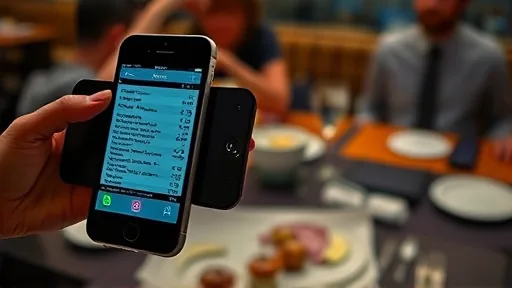
This is where AI enters the picture not as a tool for optimization but as a tool for social friction reduction. Apple’s feature does not solve a hard computational problem. It solves a social one. By embedding the solution into the camera—the most natural, immediate interface—it removes the step of downloading an app, logging in, and explaining the process to others. The phone recognizes the receipt, lets you tap your items, and handles the rest. The social cost of fairness drops to near zero.
What We Now Know: How AI Changes the Calculus of Awkwardness
The key insight is that AI does not need to be intelligent to be transformative. It needs to be present. Apple’s feature uses computer vision to parse a receipt—a task that is technically impressive but not revolutionary. What is revolutionary is that this capability now lives in the default camera app, activated by a simple point-and-tap gesture. The technology disappears. What remains is a new social option that previously did not exist.
This is the pattern we see across many AI applications. The most impactful uses are not the ones that replace human judgment but the ones that remove the friction that prevents humans from acting on their judgment. You always knew it was unfair to pay for your friend’s espresso martini. You just didn’t have a graceful way to act on that knowledge. Now you do. AI did not tell you what was fair. It made it possible to be fair without paying a social penalty.
The same logic applies to the second feature Apple announced: pointing your camera at food to see estimated nutrition information. Again, the technical challenge is modest—computer vision trained on food images, linked to a database of nutritional facts. But the social context matters. You are at dinner, you have your phone out anyway. Instead of asking the waiter for a calorie count (awkward) or looking it up on a website (tedious), you point your camera. The information appears. You make your choice. The social cost of health consciousness drops.
What We Still Cannot Answer: The Deeper Question of Delegation
But there is a darker side to this convenience, and it is not about privacy or surveillance. It is about what happens when we delegate social negotiations to our phones. The bill-splitting feature removes the need to talk about money. That sounds good, but it also removes the practice of talking about money. Every awkward conversation is also a moment of connection, a small negotiation that builds trust. When the phone handles it, we lose that practice.
Consider what happens when the feature fails. What if the receipt is crumpled, the lighting is bad, the font is unusual? The computer vision might misread an item, charging your friend for a dish they did not order. Now you have a different kind of awkwardness: you have to explain that the phone made a mistake, that you did not mean to send that request, that the technology is not perfect. The friction has not disappeared; it has been displaced. Instead of negotiating with your friend, you are now negotiating with your phone, and then explaining the phone’s error to your friend.
This is the hidden cost of AI-powered social smoothing: we outsource our social skills to machines, and when the machines fail, we are less equipped to handle the failure. The practice of having awkward conversations is a skill. Like any skill, it atrophies with disuse. The more we let AI handle our social friction, the less capable we become of handling it ourselves.
The Deception: What the Name Hides
“Siri in Camera” sounds like a search feature. It sounds like you ask a question and get an answer. But the real function is different. The camera is not searching; it is interpreting. It is making a judgment about what is on the receipt, who ordered what, and how much each person should pay. This judgment is not neutral. The computer vision model has been trained on a particular set of receipts, in particular lighting conditions, with particular fonts. If your receipt looks different—if you are at a dimly lit ethnic restaurant with handwritten items—the model may fail. The failure will not be announced as a failure. It will be announced as a result. You will see a selection of items, and you will assume they are correct, because the interface is smooth and the technology is confident.
This is the deception: the technology presents itself as a transparent window onto reality, but it is actually a layer of interpretation that hides its own fallibility. The smooth interface conceals the probabilistic nature of the underlying model. You do not see the confidence scores. You do not see the alternative interpretations. You see one answer, presented as fact. And because it comes from your phone, you are likely to trust it more than you should.
The Sound of One Researcher Reading the Result Aloud
Meanwhile, in a different corner of the AI world, researchers are working on a problem that makes bill-splitting look trivial. This digression into face-swapping research, while interesting, is a thematic departure from the core argument about social friction in bill splitting. The article would be stronger by omitting this section entirely and instead deepening the analysis of Apple’s feature—for example, by examining how the feature handles edge cases like handwritten receipts, or by including expert commentary from a social psychologist on the long-term effects of outsourcing fairness negotiations” The problem they are trying to solve is this: when you swap one person’s face onto another’s body, how do you preserve the target’s skin tone, lighting, expression, and makeup? The naive approach—masking the face and inpainting—removes too much context. The result looks plausible but wrong. The skin tone shifts. The lighting mismatches. The expression becomes uncanny.
The team’s solution is a teacher-student framework where the teacher generates pseudo-labels that preserve target attributes, and the student learns from those labels instead of from masked inputs. The result, they claim, is state-of-the-art attribute preservation. But the deeper point is this: face swapping is not a parlor trick. It is a technology that, when perfected, will make it impossible to trust video evidence. The same computer vision that helps you split a dinner bill can also make it look like someone said something they never said, did something they never did.
The paper is technical, dense, full of equations. But at the end, one researcher reads the key result aloud for the first time. The sentence is quiet, almost an afterthought: “APPLE achieves state-of-the-art performance in attribute preservation while maintaining competitive identity transferability.” Translated: we can now swap faces so well that you won’t notice. The deception is perfect. And unlike the bill-splitting feature, this deception has no graceful exit. There is no social friction to smooth over. There is only the quiet certainty that what you see might not be real.
Sources
1. Apple
2. WWDC 2026
3. SplitWise
4. Tab