
Norwegian coach uses heat training to boost athlete performance
A Discovery Born from Suffering
The 1968 Olympics in Mexico City caught the world off guard. Sprinters shattered records. Endurance athletes collapsed. Nobody had prepared for altitude. Coach Olav Aleksander Bu, who pioneered the data-intensive Norwegian method of endurance training, saw a parallel. Heat, he realized, acts exactly like altitude. It is an external stressor that causes underperformance. The difference is that heat had been ignored for decades. Bu began searching for ways to protect his athletes from heat before the Tokyo Olympics in 2021.
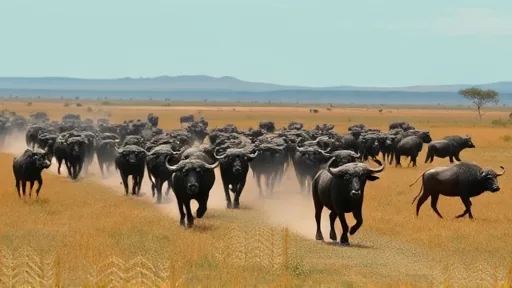
Bu began searching for ways to protect his athletes from heat before the Tokyo Olympics in 2021. Bu studied military research, including what the U.S. Army had learned about soldiers fighting in desert heat. Then he found something unexpected in anthropology. African tribes hunt buffalo in daytime heat. The buffalo outruns humans easily. But because the buffalo overheats faster, it eventually becomes exhausted. The hunters simply walk up and kill it. Humans are built for endurance in heat. We sweat. Most animals cannot.
This became the foundation for Bu’s strategy. He stopped cooling his athletes down. No cold beverages. No air conditioning. No ice vests. He wanted their bodies to learn to tolerate heat, not depend on artificial cooling. The approach seemed counterintuitive. Elite athletes had always used ice and cold drinks to survive hot races. Bu argued that this made them dependent on external cooling, not internally adapted to heat.
The Limits of What the Body Can Reveal
The human body adapts to heat faster than to any other stressor. Bu found that with a proper protocol, most benefits appear within seven to ten days. The key biomarker is blood volume. Plasma acts as a coolant. When body temperature rises, the body redirects blood from muscles to the skin, like a radiator. After one week of heat training, plasma volume increases significantly. The athlete has more coolant available.
But measuring this adaptation is difficult. Bu uses CORE sensors, small devices that attach to the body and monitor core temperature continuously. These sensors show that untrained athletes see their temperature spike quickly in heat. After a week of training in warm conditions, speed increases while temperature stays stable. The body has learned to cool itself more efficiently.
The training itself is gradual. Athletes start with short, low-intensity sessions in heat. They wear painter’s suits in Norway to trap body heat. They train in small rooms heated to 30 degrees Celsius, then 35, then higher. Every calorie burned produces 70 to 80 percent heat. Pedaling at 200 watts generates 800 watts of heat. That is like running a small heater inside the body.
The Norwegian method, famous from Olympic and Ironman champions, uses finger-prick lactate readings. Lactate rises when muscles lack oxygen. Bu added CORE sensors to this approach. He monitors both lactate and core temperature during every session. This gives him precise data on how each athlete responds to heat stress. He can adjust training daily based on real measurements, not guesses.
What This Means for Anyone Who Knows the Field
The Tour de France shortened a stage for the first time in 123 years on July 12, 2023. Temperatures neared 40 degrees Celsius. Riders stuffed ice down their jerseys. Organizers cut 30 kilometers from stage nine between Malemort and Ussel. Yet Uno-X Mobility, a Norwegian-Danish team from cold climates, performed surprisingly well. Tobias Hallend Johannessen finished second in that stage. Torstein Træen wore the leader’s yellow jersey for two stages earlier in the race.
Bu attributes this success directly to heat training. “It is critical,” he said. “If you don’t train for heat, you will underperform.” Without acclimatization, performance can drop by 30 to 40 percent in extreme heat. His athletes can maintain near-normal performance because their bodies have learned to cool themselves efficiently.
The methods remain experimental. Bu acknowledges that much of what he does has not been conclusively examined by peer-reviewed research. But he argues that performance in actual races is the best peer review. With 50 athletes, he can repeat results month after month. He can reproduce the adaptation. That, he says, is what science is really about.
Passive acclimatization, like saunas or hot tubs, can help. But active training in heat is more powerful. Bu suggests that athletes who cannot train in heat every day can use saunas on off days. The key is raising core temperature regularly. The body adapts to whatever stress it faces repeatedly.
Bu predicts that core temperature monitors will become common for ordinary people as global temperatures rise. Most people already feel when their body temperature is high, like during fever. But as heat becomes more critical, technology will integrate into everyday sensors. The same devices that track heart rate and steps will track core temperature.
Greenhouse gas emissions continue rising. Bu expects sport to adopt more drastic measures. Heat will become a broader topic that more people need to understand. The Tour de France and Olympics cannot continue in their current form indefinitely. But Bu’s work shows that humans can adapt to heat far better than we believed. The body’s own cooling system, if trained properly, is remarkably capable. .