
New Cat Species Discovered After 100 Years
The Assumption That Fell Apart in the Cloud Forest
For more than a hundred years, the count of living cat species stood still. That stillness was never a law of nature — it was an assumption dressed up as a fact. The assumption held that the world’s wild felines had been catalogued, that the remaining unknowns were subspecies at best, variations on themes already named. Then a small spotted cat walked out of the Yungas forests of the central Andes Mountains in Bolivia and broke the stillness. Meet Leopardus tilcayo, a pint-size tiger cat whose existence was confirmed not by a chance sighting but by the deliberate reading of its genetic code. The last time scientists described and named a new living cat species was 1923, when the Uruguayan pampas cat, Leopardus fasciatus, entered the record. [1] Between that year and this one, every newly proposed feline was either a subspecies or a fossil. L. tilcayo ends that drought. It is the first new living cat species described in more than 100 years, reported on September 17 in the journal Current Biology. [1]
For a century, the working rule was simple: if a small spotted cat looked like a known tiger cat, it was treated as one. Geography was assumed to explain the rest — a population in a remote valley was read as a local form of something already named. Naming a new species meant a specimen in a museum drawer and a careful description of its skull, its teeth, its fur. L. tilcayo climbed onto a new rung because its DNA told a story its fur could not.
The cat itself is modest in size and dramatic in implication. It has a slender body, spotted fur and a ringed tail. It weighs roughly two kilograms — about as much as a two-month-old domestic kitten. For such a tiny animal, it has made a terrific splash, pouncing into headlines around the world. “I did not at all expect attention at this scale,” says Jonas Lescroart, an evolutionary biologist at the University of Antwerp in Belgium. [1] His surprise is itself a data point: the scientific community did not see this coming, which is precisely why the finding matters.
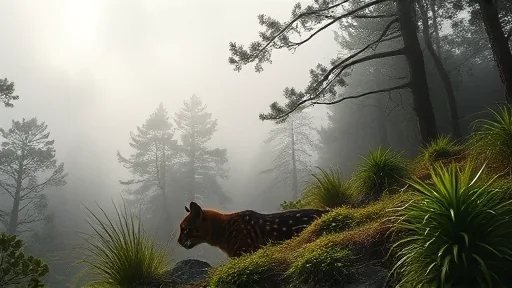
Scientists do not yet know how many of these cats survive in the wild. The discovery is a naming, not a census.
Reading a Species in Its Own Code
The instrument that made this possible was not a trap or a camera. It was genetic testing. The finding rests on the comparison of genetic material, the kind of analysis that can detect reproductive isolation between populations that look alike. That is the logic the description of L. tilcayo rests on, and it is why the discovery could not have been made by field observation alone.
Taxonomy — the discipline of naming and classifying life — has traditionally relied on morphology, the study of physical form. Genetics hands taxonomy a different kind of evidence. When the two agree, confidence rises. Independent teams working on other small Neotropical felids, such as the tigrina and the pampas cat, are applying the same genomic approach to test whether populations long treated as single species are in fact several.
The description rests on genetic evidence rather than on a single specimen, and it places L. tilcayo among the tiger cats of the genus Leopardus, a group whose members are notoriously hard to tell apart by appearance alone.
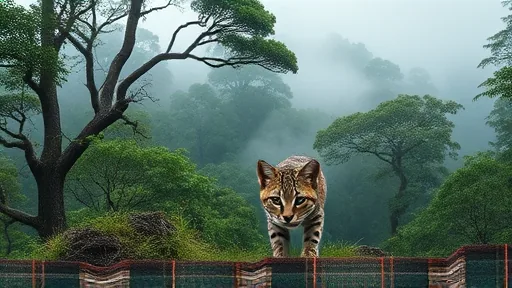
A species can be named and still be vanishing. The next step the researchers point to is a survey of the Yungas forests to establish how many L. tilcayo remain and what pressures their habitat faces.
Sources
1. Sciencenews — Quote source (original article)