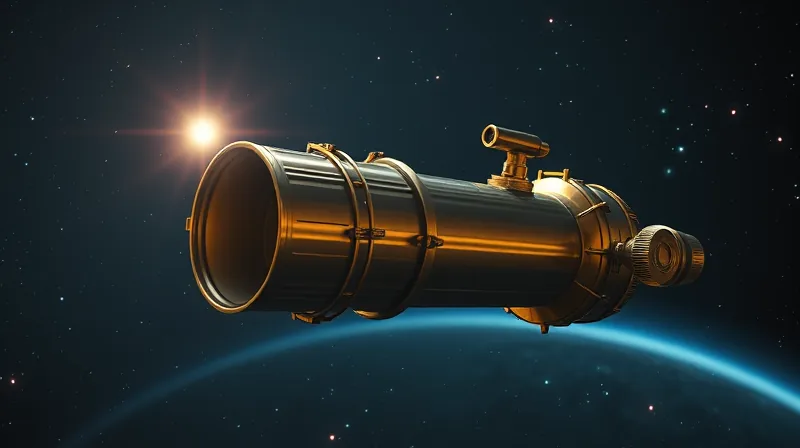
Nancy Grace Roman Space Telescope to Unlock Dark Energy Mysteries
Nancy Grace Roman was NASA’s first chief astronomer and a tireless advocate for space-based observatories. She championed the Hubble Space Telescope from its earliest funding battles to the fine details of its instruments, earning her the nickname “the mother of the Hubble Space Telescope.” The telescope that bears her name continues that legacy of ambitious cosmic exploration
Born May 16, 1925, in Nashville, Tennessee, Roman died Dec. 25, 2018, but her legacy continues to grow. On Aug. 30, 2026, the telescope bearing her name will launch aboard a SpaceX Falcon Heavy rocket from Launch Complex 39A at NASA’s Kennedy Space Center in Florida. The Nancy Grace Roman Space Telescope is NASA’s newest astrophysics observatory, designed to scan vast regions of space to answer questions about dark energy, dark matter, and exoplanets
The Roman telescope will orbit about 930,000 miles (1.5 million kilometers) from Earth at a location called the second Sun-Earth Lagrange point, or L2. At this point, the gravitational forces of the Sun and Earth balance out, creating an “orbital parking spot” where a spacecraft needs minimal fuel to hold its position. This gravitational sweet spot gives Roman unobstructed views of the universe.
Seeing Through Dust With Infrared Eyes
Roman will peer through dust and across vast stretches of space using infrared light, which is completely invisible to the human eye but can be felt as heat. It sits on the electromagnetic spectrum where wavelengths are longer than visible red light but shorter than microwaves. This choice of wavelengths matters because infrared light can pass through cosmic dust clouds that block visible light, allowing astronomers to see what lies behind them.
The telescope’s primary mirror is 7.9 feet (2.4 meters) across, and this large surface gathers lots of light. More light equals finer details, much like how a larger bucket catches more rainwater than a thimble. The mirror will send light to Roman’s two science instruments: the Wide Field Instrument and the Coronagraph Instrument.
The Wide Field Instrument is a 300-megapixel infrared camera that allows scientists to look very far back in time. The light captured by this camera has been traveling for billions of years before reaching the instrument, which means it shows the universe in its early stages. Seeing the universe in its early stages will help unravel how it has expanded throughout its history, giving scientists hints about how the universe may continue to evolve. This is like reading ancient letters that have taken billions of years to arrive at our cosmic mailbox.
The Coronagraph Instrument uses technology that blocks the glare from a star, letting astronomers see planets in orbit around it. This instrument is the most powerful coronagraph ever flown in space, and it will allow astronomers to see planets that are almost a billion times fainter than their host star. Imagine trying to spot a firefly sitting next to a blazing searchlight - that is the challenge this instrument was built to overcome.
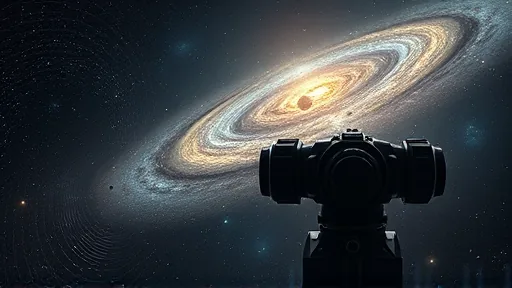
Unlocking the Mysteries of Dark Energy
Dark energy is a mysterious part of the universe that scientists aren’t sure about, but it makes up about 68% of the universe’s total contents. It is believed to be responsible for the accelerating rate at which our universe is expanding. This means the universe is not just growing - it is growing faster and faster over time, like a balloon being inflated with increasing force.
Recent observations seem to show that the pressure from dark energy is shifting over time. This finding has puzzled scientists because it suggests that dark energy may not be a constant force but something that changes. Scientists hope to use the Roman Space Telescope to help solve the mystery of dark energy’s true nature, and the Wide Field Instrument will be key to this effort.
By capturing infrared light that has traveled for billions of years, Roman will help scientists trace how the universe expanded at different points in its history. This cosmic timeline could reveal whether the push from dark energy has always been the same or whether it has varied. Understanding this could change our fundamental models of how the universe works and what its ultimate fate might be.
Tracing the Invisible Glue of the Cosmos
Dark matter is the invisible glue that holds the universe together, and scientists aren’t sure what it is made of. Roman will allow scientists to peer back in time to trace how galaxies and galaxy clusters formed, which could help narrow down what dark matter consists of. The Wide Field Instrument’s ability to see very distant light will be essential for this task.
If dark matter consists of heavy, sluggish particles, it would clump together readily, and Roman should see galaxy formation early in cosmic history. If dark matter is made up of lighter, faster-moving particles, it should take longer to settle into clumps and for large-scale structures to develop. These two scenarios predict different patterns of galaxy formation, and Roman’s observations will help astronomers tell them apart.
If astronomers can narrow down the candidates for dark matter particles, we will be one step closer to finally detecting them directly in experiments on Earth. This would be a monumental achievement because dark matter has never been directly observed - only inferred from its gravitational effects. Roman’s observations of galaxy formation could provide the clues needed to guide these Earth-based detection efforts.
Exoplanets are planets outside of our solar system, and scientists have discovered more than 6,000 of them so far. But they believe that billions could exist. Most of the exoplanets detected so far are wildly different than the planets in our solar system - some are giant gas worlds orbiting extremely close to their stars, while others have bizarre orbital patterns. Scientists expect Roman to find more unusual exoplanets, and the Coronagraph Instrument will be essential for this work.
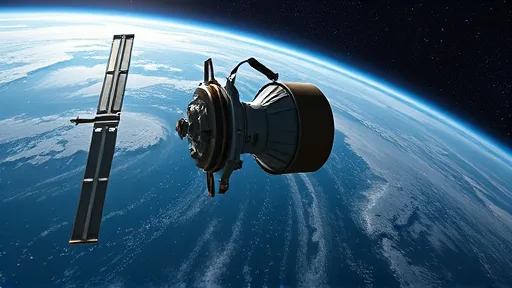
The Coronagraph Instrument will allow astronomers to find planets in the habitable zone of their stars - the region where liquid water could exist on a planet’s surface. This will be key to finding planets similar to Earth. The most powerful coronagraph ever flown in space will block starlight to reveal these faint planetary companions, opening a new window onto worlds that might harbor conditions suitable for life. [3]
The Many Hands That Built Roman
More than a thousand technicians and engineers assembled Roman from millions of individual components. This massive effort required a diverse workforce with specialized skills. Instrument technicians install, calibrate, and maintain sensors and control systems, troubleshooting issues that might come up with delicate systems and equipment. This career path often starts with an apprenticeship or hands-on training alongside experienced technicians, and an associate’s degree is often required.
Mechanical engineers design, build, test, and improve mechanical systems, playing an essential role in making a complex observatory like the Roman Space Telescope a reality. This branch of engineering focuses on complex machines and engines, and a career in engineering demands a strong understanding of math and complex problem-solving, usually requiring an advanced college degree. These engineers had to account for the extreme conditions of space, including temperature swings and the vacuum environment.
Astrophysicists study the physics of the universe, interested in learning how the universe began, how it is evolving, and how it works. Becoming an astrophysicist requires advanced college degrees. But NASA also needs people who work in photography, management, social media, videography, and much more - the mission depends on a wide range of talents beyond the purely scientific and technical.
Sources
1. NASA
2. SpaceX