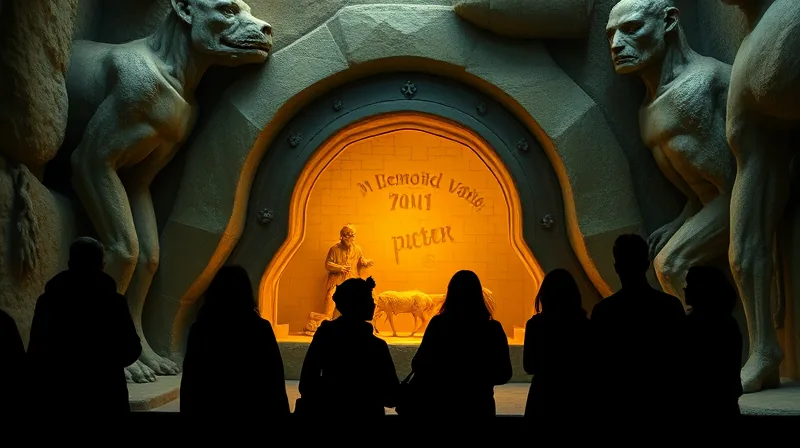
Museum Rebuilds Lost World Through Stimulated Memory
When the Model Breaks Against Its Own Data
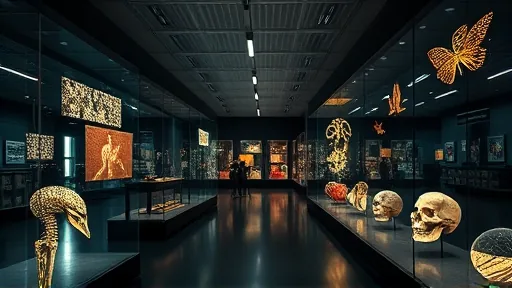
A lost world sits behind glass, and the visitors standing before it are being asked to remember something they never lived through. The exhibition presents a stimulated-memory exhibition — a display built not from surviving artifacts alone but from the deliberate reactivation of recollection in the people who walk through it. The model that guided museums for two centuries — preserve the object, label it, trust the object to speak — fails here against its own data. Objects survived; the world that gave them meaning did not. What the exhibition tests is whether memory itself can serve as an exhibit, and whether a visitor’s own reconstructed past can stand in for a vanished environment.
A stimulated-memory exhibition does not mean a show about memory. It means a show that uses stimulation of memory as its primary medium. This is a shift in kind, not degree. A conventional natural-history hall asks the visitor to look at what remains. This one asks the visitor to look at what the mind still holds, and to treat that holding as evidence. The distinction matters because it relocates authority.
A queue wrapped two blocks around a squat building, its roof stripped of even a basic garden, the concrete itself described as carbon-devastating, is not decoration. It is the argument’s first premise. An exhibition about a lost world is housed in architecture that enacts loss. The building is wasteful, a relic from a world the visitor understands only dimly, and that incomprehension is precisely why the exhibition had to be built at all. No one can mourn what cannot be pictured. The show exists to restore the picture.
Two Institutions and One Question
The exhibition entered the scientific record on 29 July 2026, when Nature published the account under a Digital Object Identifier that makes it citable and permanent. [2] The piece is credited to Priya Chand, an environmental-justice writer based in the American Midwest. [3].
The pairing is the load-bearing element. Reckoning Press supplies the environmental-justice frame; Nature supplies the archival permanence. Together they move a stimulated-memory exhibition — a format that could easily read as an art-world curiosity — out of the gallery and into the scientific literature as a citable claim.
The issue gathers companion works alongside the main piece, among them “Those who forget,” “Sarcophagus,” “Garbage collection,” and “The futile beauty of flightless birds.” The titles alone map the territory: forgetting, grief, vaults, sarcophagi, flightless birds. This is a body of work organized around what is kept, what is lost, and what refuses to stay buried.
The Past as an Open Can of Worms
The exhibition also appears in PubMed under the title “The past is an open can of worms: a stimulated-memory exhibition,” with the summary line “A lost world.” [4] The National Center for Biotechnology Information does not index art criticism for its own sake. [5] Its presence here signals that the exhibition’s central claim — that memory can be stimulated into standing in for a vanished world — has entered the biomedical and life-sciences record as a citable object.
What the two records share is a single assertion: the past can be reopened. The can of worms is not a warning against the attempt. It is a description of what happens when the lid is lifted — the contents move, rearrange, and refuse to lie flat. A stimulated-memory exhibition is that lid being lifted in public, with visitors as participants rather than spectators. The lost world the summary names is not recovered intact. It is reconstructed in the act of remembering, and the reconstruction is the exhibit.
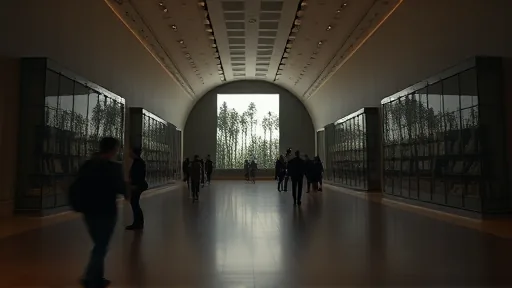
If memory can be stimulated into serving as an exhibit, the exhibition stops being a container for the past and becomes a method for producing it. The two records — the Nature Digital Object Identifier and the PubMed index — now hold that claim in place, so the next step can be taken from a documented position rather than from a gallery floor.
Sources
1. DOI: 10.1038/d41586-026-02254-5
2. Nature
4. PubMed