
The Secret Highway in the Sky
In the spring of 1935, two pilots climbed into a pressurized gondola beneath a helium balloon over the Black Hills of South Dakota. They carried a sterile sampling device. When they reached more than 22 kilometers above the ground, they dropped it. The device fell through the lower stratosphere, closed itself halfway down, and parachuted back to Earth with a sealed sample inside. Scientists later grew 10 types of bacteria and fungi from that sample. [1] They could only describe the shapes of the cells and what temperatures and nutrients those cells needed to grow. They had no way to ask the deeper questions. DNA was still two decades away from being discovered.
That was the first serious attempt to find life in the stratosphere. For nearly a century afterward, the question remained open. Did anything actually live up there, or were those early results just contamination from the ground?
The controversy began almost immediately. In 1974, Soviet scientists launched rockets equipped with sticky microbe collectors into the mesosphere, the layer above the stratosphere, at altitudes between 48 and 77 kilometers. The collectors parachuted back with a few living cells embedded in them. Scientists grew those cells in the lab. But microbiologist Brent Christner of the University of Florida in Gainesville does not believe they found anything alive at that altitude. [1] He says there is no way to know what they sampled or whether it came from contamination at ground level.
The stratosphere is a hostile place. At 30 kilometers above the ground, the air pressure is one percent of what it is at sea level. A person would die quickly. The blood would boil inside the body. The skin would welt like bubble wrap. Temperatures drop as low as minus 60 degrees Celsius. Ultraviolet radiation bombards everything up there, damaging DNA in ways that would kill most life on Earth’s surface.
Yet the stratosphere holds plenty of life. Tiny single-celled microbes somehow navigate extreme dehydration, freezing cold, and intense radiation. Christner says that if someone took a microbe from those altitudes and put it on the surface of Mars, the microbe would not even know the difference.
Christner and his team started looking for life high in the atmosphere over a decade ago. They intended to find the upper limits of Earth’s habitable zone. They hoped this might show whether life could persist on the cold, radiation-pummeled surface of Mars, where the atmosphere is just as thin. Christner’s graduate student Noelle Bryan sent sampling balloons to 38 kilometers above Earth’s surface. [1] She was utterly surprised by what they found. She said they did not hit an altitude where they could not find something alive.
In 2025, Christner’s team revealed something even more surprising. The microbes they found were not the kind of extremophiles one would expect at the edge of space. They looked nothing like the exotic organisms that inhabit boiling hot springs, deep subterranean rocks, or pools of concentrated acid. Instead, they turned out to be some of the same humdrum bugs that grow on crops, in gardens, even on human skin. These well-known critters may live a secret double life that few people imagined. They fly around the world at two to three times the height of a commercial jetliner.
The atmosphere, Christner says, is like a highway system. It allows microbes to move globally in periods of weeks. They cross oceans and settle in new habitats. This realization expands the view of the biosphere and evolution. It could reshape the understanding of how pathogens spread around Earth. It could transform how scientists look for life on other worlds, on Mars, in the clouds of Venus, and even on exoplanets light-years away.
In the early 2000s, NASA flew its ER-2 aircraft, a civilian version of the U-2 spy plane, 20 kilometers up in the stratosphere to collect cosmic dust from space. [4] Microbiologist Dale Griffin, then with the U.S. Geological Survey in St. Petersburg, Florida, arranged to have sticky microbe catchers taken on several of those flights from 2003 to 2008. Griffin grew several kinds of bacteria from those samples. Unlike his predecessors, he subjected them to a simple DNA analysis called genetic barcoding. This used a short sequence from a single gene to get a general idea of which family or genus they belonged to. These bacteria were related to several that were known from remote islands and volcanic soils. Griffin speculated that eruptions might have lofted them into the stratosphere.
Taken together, the U.S. and Soviet observations did not reveal much. They depended on growing microbes in the lab. But scientists cannot grow 99 percent of the microbes that exist in most environments because they cannot re-create the proper growing conditions. The findings did not reveal how many living cells were present in the stratosphere. They often did not identify the species. The scientists did not test whether these microbes could survive the extreme cold, desiccation, or UV radiation found in the stratosphere. They never identified the lifestyles of these microbes on Earth’s surface, whether the creatures lived on plants, slurped raw sewage, or grew in the armpits of NFL linebackers.
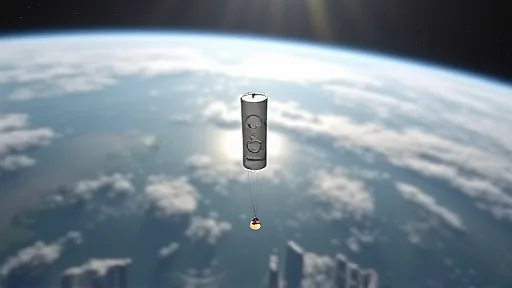
Christner was at Louisiana State University in Baton Rouge when he and Bryan started their search for life in the stratosphere in 2008. They planned to start low and sample progressively higher. They would try to grow the cells they collected, as other people had previously done. But they would also count the total number of living cells, something no one had ever done before at that altitude. They expected that at some altitude, the number of living cells would drop to zero. This would define the outer limits of life on Earth and hint at the possible limits of life on Mars.ars.
Bryan spent three years building a series of microbe collectors. She used Styrofoam and balsa wood purchased at Hobby Lobby and Home Depot. She launched these contraptions into the air dangling from helium balloons. During a dozen launches in Texas and Louisiana, she attempted to sample airborne microbes from as high as 25 kilometers. Each device included a control chamber that did not open during the flight, allowing her to check whether the samples were contaminated with ground-level microbes. She gradually improved her design, bringing the levels of contamination down to almost zero.
By 2013, Bryan was using a more advanced system developed by LSU engineer T. Gregory Guzik. Its rugged circuits allowed it to reach even higher altitudes, where the thin air can cause electricity to arc from one wire to another, damaging a device. She and Guzik used this system in a pivotal series of balloon launches over Fort Sumner, New Mexico. These would be the last samples that she collected for her Ph.D. research, and they would transform the endeavor from a cool science project into a major discovery.
The town of Fort Sumner crouches amid an arid plain of grass and yucca in eastern New Mexico. The launches took place from a scientific balloon facility operated by the Columbia Scientific Balloon Facility, a NASA-affiliated center. [3] The balloons rose slowly, carrying the microbe collectors through the troposphere, the layer of the atmosphere where weather happens, and into the stratosphere. The collectors opened at predetermined altitudes, exposing sterile surfaces to the thin air. After several hours, they closed and parachuted back to Earth.
Bryan and her team recovered the samples and brought them back to the lab. They counted the number of living cells using a technique called flow cytometry, which can detect individual cells and determine whether they are alive or dead. They also tried to grow the cells in culture. They performed DNA sequencing to identify the species. The results were consistent across multiple flights. Living cells were present at every altitude they sampled, up to 38 kilometers. The number of cells decreased with altitude, but they never reached zero.
The identity of the microbes was the biggest surprise. The team expected to find extremophiles, organisms adapted to extreme conditions. Instead, they found common bacteria that live on plants, in soil, and on human skin. One of the most abundant was a bacterium called Bacillus, which is commonly found in soil and on vegetation. Another was Staphylococcus, which lives on human skin and mucous membranes. These are not organisms that one would expect to survive in the stratosphere. But they do.
Christner’s team tested whether these microbes could survive the conditions of the stratosphere. They exposed the bacteria to extreme cold, desiccation, and UV radiation in the lab. The bacteria survived. They formed spores, a dormant state that allows them to withstand harsh conditions. When the spores returned to favorable conditions, they germinated and grew again. This suggests that the microbes are not just passively floating in the stratosphere. They are actively surviving and potentially even reproducing there.
The implications are profound. If common microbes can survive in the stratosphere, then the biosphere extends much higher than previously thought. The atmosphere is not just a passive medium for transport. It is a habitat. Microbes may be living in the stratosphere, using it as a highway to move around the globe, and potentially even evolving there.
This changes the way scientists think about the spread of pathogens. If microbes can travel around the world in weeks, then diseases can spread more quickly than previously assumed. This could explain how some plant pathogens appear in new locations without any obvious means of transport. It could also explain how some human pathogens, like the bacteria that cause tuberculosis, can travel long distances through the air.
The research also has implications for astrobiology. If microbes can survive in the stratosphere, then they could potentially survive on Mars, where the atmosphere is similar in pressure and composition. The clouds of Venus, which are much warmer but contain sulfuric acid, might also harbor life. Christner’s team is already planning to send similar sampling devices to other planets. They want to see if the same kind of microbes exist there.
Living cells are present at altitudes up to 38 kilometers. The open question is whether these microbes are accidental passengers, blown up from the surface by storms and volcanic eruptions, or active inhabitants of the stratosphere that live and reproduce there.
Christner’s team is continuing their research. They are planning more balloon launches to sample higher altitudes. They want to see if there is an upper limit to life in the atmosphere. They also want to study the microbes in more detail, to understand how they survive the extreme conditions. They are collaborating with other researchers who are studying the atmosphere, including atmospheric chemists and climate scientists. They are also working with engineers to develop better sampling devices that can collect more microbes and keep them alive during the flight.
The research is ongoing, and the questions are multiplying. How do these microbes get into the stratosphere? How long do they stay there? Do they reproduce there? Do they interact with each other? Do they affect the chemistry of the atmosphere? Do they affect the climate? These are all open questions.
One thing is clear. The stratosphere is not a dead zone. It is a living highway, teeming with microbes that travel around the world. The discovery challenges the traditional view of the biosphere as a thin layer on the surface of the Earth. It suggests that life is more resilient and more widespread than previously imagined. It also suggests that the search for life on other planets should not be limited to the surface. The atmosphere might be the place to look.
The research is not finished. That is the point. The discoveries of the past decade have opened a new frontier in biology. The stratosphere is a vast, unexplored habitat. It is a place where life exists at the edge of space. It is a place where the boundaries of life are being redefined. The question is not whether life exists there. The question is what that life is doing there, and what it can tell us about the limits of life on Earth and beyond.
The stratosphere is a living highway, teeming with microbes that travel around the world, challenging the traditional view of the biosphere as a thin layer on the surface of the Earth
Sources
3. Columbia Scientific Balloon Facility
4. NASA