Mary Gray Uses Math to Bring Justice After Genocide
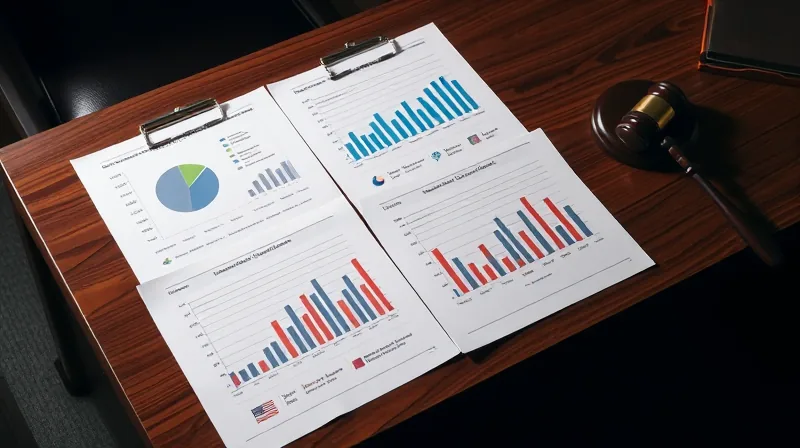
Most researchers build a career inside a single narrow question. Mary Gray built hers across the wreckage of entire societies. Before her statistical methods reached Rwanda, the government faced an impossible puzzle: hundreds of thousands of people detained after the 1994 genocide, each awaiting trial, with no clear path to justice. The courts were overwhelmed. The numbers were staggering. Gray’s contribution was to show that mathematics could do more than describe the scale of the horror - it could help a nation move forward.
Earlier approaches to post-genocide justice relied on legal reasoning alone, case by painful case. Gray introduced something different: statistical arguments that could establish patterns of human-rights violations across entire populations. Her work helped the Rwandan government structure trials and reconciliation efforts for the hundreds of thousands of detainees. The numbers were not cold abstractions. They became the foundation for deciding who faced trial, who faced reconciliation, and how a fractured country could begin to heal.
A Statistical Lens on Power
Gray’s toolkit spans three disciplines - law, statistics, and mathematics - and she has applied it across the globe. At the International Criminal Court in The Hague, she trained investigators to determine the extent of human-rights violations and genocide. [2] The method was the same one she used closer to home: rigorous quantitative analysis applied to questions of justice, whether the victims sat in a refugee camp or a university faculty meeting.
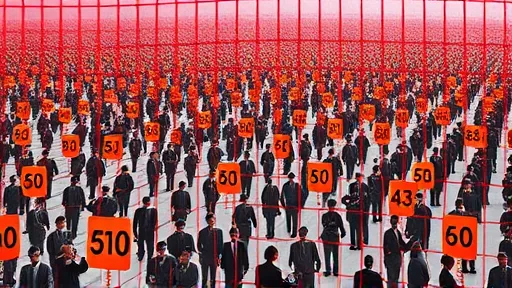
In the United States, she turned the same statistical lens on sex-, race-, and age-based discrimination in academia. The connection is not obvious at first glance. A genocide tribunal and a university hiring committee seem worlds apart. But Gray saw the common thread: both are systems where power hides behind numbers, and both require careful measurement to expose what lies beneath. Her work created opportunities in US academia for people from diverse backgrounds, using data to demonstrate patterns of exclusion that had long been dismissed as anecdotal.
The first institution to put her findings into practice was the Association for Women in Mathematics, which she led as founding president from 1971 to 1974. [1] Under her direction, the association established networks and support systems for female mathematicians and advocated for a more equitable culture across the discipline. What began as a support group became a force for institutional change, and the methods she developed there would later inform her work on a global stage.
Eight Decades of Defiance
Gray’s career has now spanned eight decades, and she shows no signs of stopping. In her 80s, she continues her work at American University in Washington DC, where she holds appointments as lawyer, statistician, and mathematician. Her own words capture the defiance: “In spite of the fact that I have a lot of white hair, I’m not retired yet.”
The recognition has caught up with the work. In 2022, the Association for Women in Mathematics established the Mary and Alfie Gray Award for Social Justice, named after Gray and her mathematician husband, who died in 1998. [1] The organization described her as having “lived her life in the pursuit of mathematics excellence and social justice.” The award bears her name, but the work continues through the institutions she helped build.

Alongside her academic career, Gray has volunteered with Amnesty International and Statistics Without Borders, an organization that provides pro bono statistics and data-science services to improve human welfare worldwide. [3] Her legacy is not a single number but a pattern: one woman, three disciplines, and a career that has stretched from the halls of The Hague to the faculty lounges of American universities, always applying the same principle - that mathematics, properly used, is a tool for justice
Sources
1. Association for Women in Mathematics