
Dust Reveals Freezing Mistake After 150 Years
In a laboratory in Hamburg, Germany, a researcher once made a small error that changed everything. They forgot to clean a sample holder properly. A trace of dust remained on the surface where water was supposed to freeze. The experiment failed. The water did not behave as expected. But that failure revealed something no one had seen before. It showed that freezing is not a simple process. It is a complex dance of molecules that scientists have misunderstood for over a century.
For 150 years, physicists have tried to explain how pure liquids turn into solids. Their models were elegant. They used mathematics that seemed perfect. But when tested against real experiments, those models failed dramatically. The predictions were off by factors of 10,000,000,000,000,000,000,000. That is 20 orders of magnitude. Imagine predicting the height of a child and being wrong by the distance to the nearest star. That was the state of freezing theory.
The problem lies in the very beginning of freezing. Before a liquid becomes a solid, tiny clusters of molecules must form. These clusters are called nuclei. They are the seeds from which crystals grow. But forming a nucleus is incredibly difficult. The molecules must arrange themselves in exactly the right pattern. They must overcome energy barriers. They must do this while surrounded by chaotic liquid motion. Theorists thought they understood this process. They were wrong.
The Threat Hidden in Plain Sight
The failure to understand freezing is not just an academic problem. It has real consequences. Every time water freezes in a cloud, it affects weather patterns. Every time a metal solidifies in a factory, it determines the strength of the final product. Every time a biological sample is frozen for storage, the success of preservation depends on freezing dynamics. We have been flying blind for generations.
Consider the formation of ice in clouds. Water droplets in the atmosphere do not freeze at 0 degrees Celsius as you might expect. They can remain liquid down to minus 40 degrees. This is called supercooling. The droplets need a trigger to freeze. That trigger is often a tiny particle of dust or pollen. These particles act as nuclei. Without them, water stays liquid far below its freezing point. This is why cloud seeding works. Planes spray silver iodide particles into clouds to encourage freezing and produce rain.
But the process is far more complicated than anyone realized. The nuclei that form in pure water are not simple spheres. They are dynamic structures that constantly form and dissolve. They are influenced by vibrations in the water molecules. They are affected by the shape of the container. They are sensitive to impurities at levels so low that standard instruments cannot detect them. This complexity explains why theoretical models have been so inaccurate.
The European X-ray Free Electron Laser (XFEL) facility in Hamburg, Germany, is a 3.4-kilometer-long particle accelerator that generates X-ray pulses a billion times brighter than conventional sources. It propels electrons to near light speed. These electrons produce X-ray pulses that are a billion times brighter than conventional X-ray sources. The pulses last for only a few femtoseconds. That is a millionth of a billionth of a second. This speed allows researchers to capture the fleeting moments when nuclei first form.
In 2023, researchers at the European XFEL used ultrafast X-ray pulses to observe ice nucleation in supercooled water droplets. Their observations revealed that ice crystals form through disordered clusters, not the simple hexagonal structures predicted by classical nucleation theory. The nuclei did not form as simple hexagonal structures. They formed as complex, disordered clusters. These clusters then rearranged themselves into crystalline forms. The process was messy and chaotic.
The Mechanism Revealed by Light
The experiments at the XFEL revealed a new understanding of freezing. The key insight is that water molecules do not arrange themselves all at once. They first form a disordered network. This network is called a transient structure. It exists for only a few picoseconds. Then it collapses or transforms. If it transforms correctly, a crystal nucleus emerges. If it collapses, the process must start again.
This discovery explains why theoretical models failed. They assumed that nuclei form through a simple, step-by-step process. They assumed that each molecule finds its correct position immediately. In reality, molecules explore many configurations before settling into the right pattern. This exploration takes time. It requires energy. It is influenced by the random motions of neighboring molecules. The theoretical models missed this entirely.
The implications are profound. If scientists can understand this process in detail, they can control it. They can design materials that freeze at specific temperatures. They can create better ice cream with smaller ice crystals. They can improve the freezing of organs for transplantation. They can develop more efficient methods for making metals and ceramics. The potential applications are vast.
But Water, despite being a simple molecule with only three atoms, exhibits remarkably complex behavior due to its hydrogen-bonding network, which underlies its many anomalous properties. This complexity arises from the way water molecules interact. They form hydrogen bonds. These bonds are weak individually. But collectively, they create a network that is incredibly flexible and responsive. This network is the source of water’s many anomalies.
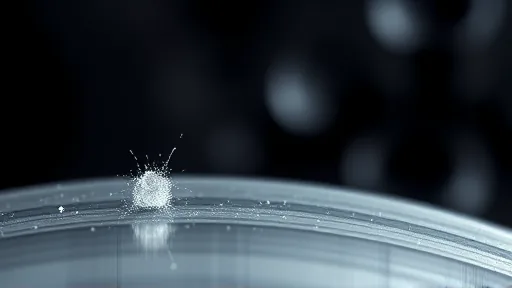
Water has over 20 known phases of ice. Most people know only one: the hexagonal ice that forms in freezers and glaciers. But under high pressure, water can form ice that is denser than liquid water. It can form ice that conducts electricity. It can form ice that exists at temperatures hot enough to melt lead. Computer simulations predict tens of thousands of possible ice phases. Many of these may exist on other planets.
The Adaptation of Scientific Understanding
The failure of old theories forced scientists to adapt. They had to abandon assumptions that seemed obvious. They had to develop new experimental techniques. They had to embrace the complexity of real systems rather than simplifying them away. This adaptation is ongoing. It requires patience and humility.
One of the most important adaptations is the use of computer simulations. Modern simulations can track the motion of millions of water molecules. They can model the formation of nuclei over timescales of nanoseconds. These simulations have revealed structures that no one predicted. They have shown that water can form clathrate-like cages around impurities. They have demonstrated that freezing can be triggered by vibrations at specific frequencies.
The simulations also reveal the role of entropy. Entropy is a measure of disorder. It usually opposes the formation of ordered crystals. But in some cases, entropy can actually help. The disordered transient structures that form before freezing have high entropy. This entropy stabilizes them temporarily. It gives them time to find the right configuration. The balance between entropy and energy determines whether freezing occurs.
This understanding has practical applications. Engineers can now design surfaces that promote or inhibit freezing. They can create coatings that prevent ice formation on airplane wings. They can develop additives that control crystal size in frozen foods. They can optimize processes for freezing biological samples without damaging cells. Each application requires a deep understanding of the underlying physics.
The research also connects to other fields. The formation of nuclei is similar to the formation of droplets in a cloud. It is similar to the formation of bubbles in a boiling liquid. It is similar to the formation of defects in a crystal. All these processes involve the same fundamental physics. Understanding one helps understand the others.
The Hope for Future Discoveries
The new understanding of freezing offers hope for solving long-standing problems. One of the most important is the mystery of how life survives in extreme environments. Some organisms can survive freezing. They produce proteins that control ice formation. These proteins are called antifreeze proteins. They bind to ice crystals and prevent them from growing. Understanding how they work could lead to better methods for preserving cells and tissues.
Another hope is for climate science. Clouds play a crucial role in Earth’s energy balance. The formation of ice in clouds affects their reflectivity and lifetime. Current climate models struggle to predict cloud behavior accurately. Improving our understanding of freezing could lead to better models. This could improve predictions of global warming and weather patterns.
The research also has implications for space exploration. Icy moons like Europa and Enceladus may harbor life. The ice on these moons is not like Earth ice. It is exposed to high pressures and radiation. It may contain exotic phases of ice. Understanding these phases could help us design instruments to detect life. It could also help us understand the geology of these distant worlds.
Perhaps the most exciting possibility is the discovery of new forms of ice. The computer simulations predict thousands of phases. Only a handful have been confirmed experimentally. Each new phase has unique properties. Some may be useful for technology. Some may reveal new physics. The search for these phases is ongoing.
The European XFEL is not alone in this quest. Other facilities around the world are also studying freezing. The Advanced Photon Source in the United States uses X-rays to study materials. The Swiss Light Source uses synchrotron radiation. [2] The Japanese SPring-8 facility is one of the most powerful in the world. [3] Together, these facilities are building a complete picture of how liquids freeze.
The Bridge Between Theory and Reality
The gap between theory and experiment has been a source of frustration for decades. But it has also been a source of discovery. Every time a theory fails, it forces scientists to think more deeply. It reveals assumptions that were hidden. It opens new avenues for research. The failure of freezing theories is no exception.
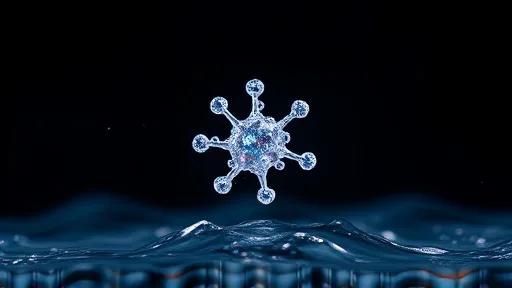
One of the key insights from the new research is that the classical theory of nucleation is fundamentally incomplete. This theory was developed in the 1920s. It assumes that nuclei form as spherical droplets of the solid phase. It assumes that the surface tension of these droplets is the same as that of a flat surface. Both assumptions are wrong. Real nuclei are not spherical. They are irregular and dynamic. Their surface properties are different from bulk material.
The new research shows that nuclei form through a process called two-step nucleation. First, a disordered cluster forms. Then, within this cluster, a crystalline nucleus emerges. This process is more efficient than direct nucleation. It reduces the energy barrier. It explains why some liquids freeze more easily than others.
This understanding has practical implications. For example, it explains why adding certain impurities can promote freezing. The impurities create surfaces where disordered clusters can form more easily. They act as catalysts. This is why silver iodide is effective for cloud seeding. It provides a surface that mimics the structure of ice.
The research also explains why some liquids resist freezing. Glycerol is a common example. It is used as an antifreeze. It works by disrupting the formation of ordered clusters. It makes the two-step process more difficult. Understanding this mechanism could lead to better antifreeze compounds.
The Unintended Consequence
The research at the XFEL has produced an unexpected result. It has shown that the process of freezing is intimately connected to the process of melting. The two are not opposites. They are different manifestations of the same physics. The same transient structures that form before freezing also form before melting. This symmetry was not predicted.
This discovery has profound implications. It suggests that the boundary between solid and liquid is not sharp. It is a region of constant fluctuation. Molecules are constantly moving between ordered and disordered states. The distinction between solid and liquid is a matter of timescale. On short timescales, everything is fluid. On long timescales, everything is solid.
This insight challenges our basic understanding of matter. It shows that categories like solid and liquid are human constructs. Nature does not respect these categories. It operates on a continuum. This is humbling. It reminds us that our models are always approximations. They are tools for understanding, not descriptions of reality.
The research underscores that scientific understanding evolves through confronting complexity. The initial question—how water freezes—led to discoveries that challenge long-held assumptions about phase transitions. They had to abandon their most cherished assumptions. They had to develop new tools and techniques. They had to accept that nature is more subtle than our theories.
This lesson applies beyond physics. It applies to all human knowledge. We are always learning that our understanding is incomplete. We are always discovering new layers of complexity. This is not a failure. It is the nature of discovery. It is what drives science forward.
The researchers at the XFEL did not set out to teach a lesson in humility. They set out to understand freezing. But their work has revealed something deeper. It has shown that the universe is more intricate than we can imagine. It has shown that every simple question leads to a maze of complexity. And it has shown that the most productive attitude is one of open-minded curiosity.
The next time you see ice forming on a window, remember the journey that led to understanding it. Remember the mistakes that turned out to be right. Remember the assumptions that had to be abandoned. And remember that every frozen droplet is a testament to the beautiful complexity of nature.
Sources
1. European X-ray Free Electron Laser Facility
3. SPring-8