
Gifted children grow into successful adults
The Myth of the Troubled Prodigy Falls Apart
For decades, a persistent cultural narrative held that gifted children were destined for unhappy, unbalanced adult lives. The pressure of early exceptionalism, many worried, would leave them socially isolated and emotionally fragile. But long-term studies now paint a radically different picture. In a landmark investigation at Vanderbilt University in Tennessee, led by psychologist David Lubinski, scientists tracked more than 1,600 adolescents aged 13 and under who scored within the top 1 percent for mathematical reasoning on college admission exams More than 40 years later, these individuals had not merely survived their childhood gifts — they had flourished. Depending on the year they entered the study, between 25 and 40 percent of them had earned doctorates. That figure stands in stark contrast to just 2 percent of the general population. The same group was also more likely to have earned tenure at a university, published a book, or risen to the top of a Fortune 500 company. These findings directly challenge the stereotype that gifted children burn out or become maladjusted adults. The data is clear: the troubled prodigy is largely a myth, and the reality is one of professional success and social engagement
The idea that labeling a child as gifted might cause harm has deep roots in popular psychology. Parents and teachers have long argued about whether the designation places undue pressure on young minds, potentially setting them up for unbalanced and unhappy lives. Yet the Vanderbilt research, led by David Lubinski, reveals a different outcome. A further study, not yet published, has found that these same individuals are more likely to engage in altruistic acts, such as pro-bono legal work. As they approach retirement, Lubinski notes, they are planning to increase the amount of time they devote to volunteering. This suggests that giftedness, far from being a burden, may foster a lifelong orientation toward contribution and service.
What Makes the Gifted Brain Different
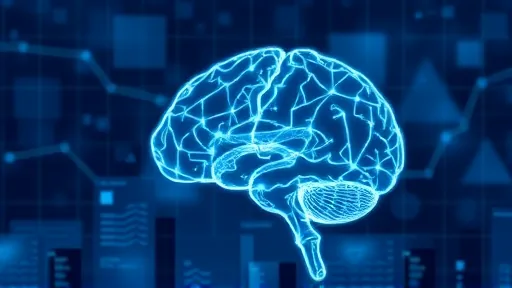
The question of what sets the gifted brain apart has puzzled researchers for nearly a century. Now, neuroimaging studies are beginning to provide concrete answers. In a paper published in 2025, neuropsychologist Karin Reuwsaat at the Federal University of Rio de Janeiro in Brazil analyzed dozens of brain-imaging studies involving gifted individuals She found that giftedness was associated with more grey matter in the dorsolateral prefrontal cortex, the superior temporal gyrus, and the inferior parietal lobes. These areas play a crucial role in abstract reasoning and problem solving. This structural advantage may make it easier for gifted children to excel at school and beyond, Reuwsaat explains. The gifted brain is not simply a faster version of a typical brain — it is built differently from the ground up.
Beyond structural differences, gifted brains exhibit enhanced connectivity. A 2021 study of 30 children found that white matter — the tissue that transmits signals across brain regions — was more highly connected in gifted individuals, particularly between the hippocampus, putamen, and prefrontal cortex. These areas are all crucial for thinking and memory. Other studies have shown that in gifted individuals, there is greater interaction between the default mode network, which is associated with imagination and creativity, and frontoparietal networks, which are involved in reasoning and attention. This enhanced connectivity may help gifted individuals find “unusual associations between ideas,” Reuwsaat says, and provide greater “cognitive flexibility.” The gifted brain also appears to use energy more efficiently. Reuwsaat points to studies showing that such brains tend to have lower activity than average when completing easier problem-solving tasks. But activity then ramps up as the difficulty increases. This suggests “an enhanced capacity to recruit additional neural resources when needed,” she says. This pattern differs from people with lower cognitive capacity, who are more likely to disengage from challenging problems. Yet scientists remain humble about what they know. Enrico Toffalini at the University of Padua in Italy, who has studied differences in intelligence across the lifespan, estimates that current research can explain perhaps 20 percent of the variance in IQ. The other 80 percent, he says, remains a mystery. .
The Next Stage: Rethinking Giftedness as Neurodiversity
Given these brain differences, some research groups and organizations have suggested that giftedness should be classified as a form of neurodivergence, similar to conditions like ADHD and autism. “If neurodivergence is understood broadly as naturally occurring variations in brain functioning and cognition, then there is a reasonable argument that giftedness could fit within that framework,” Reuwsaat says. After all, increased brain connectivity appears to underlie all three conditions. This perspective could fundamentally change how society views and supports gifted children. Instead of being seen as lucky or privileged, they might be recognized as having a distinct neurological profile that requires specific accommodations and understanding. The framework of neurodiversity has already transformed how clinicians approach autism and ADHD, moving away from a deficit model toward one that acknowledges both challenges and strengths
However, the comparison is not straightforward. Neurodivergence typically describes neurodevelopmental conditions that create functional problems in everyday life, such as inattention, emotional dysregulation, or hyperactivity. That does not seem to be the case for gifted children. “It is simply on the higher end in a spectrum of human intelligence,” says Mimi Wellisch, a psychologist based in Australia who has published extensively on gifted children. If gifted children have social and behavioral issues, Wellisch suggests their parents get them assessed for neurodevelopmental conditions such as autism and ADHD or for mental health conditions like obsessive-compulsive disorder. Problems with behavior “are unlikely to be a byproduct of giftedness,” she says. The debate remains open, but the scientific community is actively working on the next stage of this question. Researchers at Vanderbilt University are already planning follow-up studies to examine how gifted individuals navigate the transition into retirement and how their unique cognitive profiles shape their later years. Lubinski and his team are particularly interested in whether the altruistic tendencies they have observed continue to grow as these individuals age. This ongoing work will help determine whether giftedness should be viewed as a form of neurodiversity or as something entirely its own.