
Finland tops happiness rankings for ninth year
A Nine-Year Streak Defies Gloomy Weather and High Taxes
For nine consecutive years, Finland has claimed the top spot in the World Happiness Report. [2] This is not a fluke. The country has now held the number one position longer than any other nation since the rankings began. This persistence is striking because Finland possesses several characteristics that, on the surface, should make its citizens unhappy. The country has some of the shortest winter days in Europe, with limited sunlight for months. Its tax rates are among the highest in the world. Yet these factors do not seem to dampen the reported well-being of its people.
The contradiction with established assumptions is sharp. Economists have long assumed that high taxes reduce happiness because they lower disposable income. The Nordic countries, which occupy five of the top six spots in the 2025 report Jan-Emmanuel De Neve, an economist and behavioural scientist at the University of Oxford and the editor of the World Happiness Report, explains that taxes in these countries ‘really go somewhere Residents see the rewards in healthcare, education, and transport infrastructure. The high taxes fund a welfare state that minimizes economic anxieties. Being made redundant or losing a job feels very different in Finland compared to the United States, where social safety nets are thinner. The US ranks 23rd in the report. The UK ranks 29th.
De Neve points to income distribution as a key factor. Nordic countries have high levels of economic productivity, but unlike many other high-income nations, wealth is more evenly spread. Income inequality is much lower than in places like the US. Previous research has shown that greater income inequality is associated with worse well-being, all other factors being equal. The money collected through taxes gets redistributed through the welfare state, which reduces the fear of financial collapse. This creates a baseline of security that allows people to focus on other aspects of life.
The next test for this finding comes from researchers at the University of Oxford who work with De Neve. They are analyzing whether the relationship between tax rates and happiness holds across different cultural contexts. The World Happiness Report team plans to examine data from countries that have recently reformed their tax systems to see if changes in income inequality produce corresponding shifts in national happiness scores.
Social Trust and Shared Meals Matter More Than Money

The most underrated factor in national happiness, according to De Neve, is social ties. The research correlates happiness with simple proxies: the number of shared meals a person has per week, and whether they have friends they can rely on in an emergency. People in Nordic countries have more time for family and friends than people in the UK or the US, where work consumes most waking hours. Work-life balance is taken seriously in Denmark and Finland. This allows citizens to build and maintain rich social lives.
Social trust plays a crucial role. The report uses what De Neve calls the ‘lost wallet’ question: ‘If you lost your wallet, what is the likelihood that you think you would get it back?” In Nordic countries, people expect wallets to be returned much more frequently than they do in other places. This expectation feeds positively into well-being. The relationship between trust and happiness is bidirectional. If you live in an environment with high trust, that drives your well-being. And when people are happy, they become more pro-social. Volunteers are happier, and happier people are more likely to volunteer. It is a synergistic, dynamic relationship with arrows pointing in both directions.
De Neve’s team at Oxford reverse-engineers the survey results to identify what explains differences between countries. They use objective measures like GDP per capita, healthy life expectancy, and whether people have friends they can rely on. They also measure generosity and whether people generally feel positive or negative emotions. The healthy life expectancy measure is particularly important: it tracks the years people can expect to spend in good health, not just total lifespan.
The Gallup World Poll provides the raw data. This survey runs annually and covers almost 150 countries. In each country, a sample of at least 1,000 people represents the population in terms of gender, socioeconomic status, and urban versus rural dwelling. The ranking is based on a moving average over the past three years. This smooths out year-to-year fluctuations and gives a more stable picture of national well-being.
Connection to Nature and Down-to-Earth Expectations
Finland has two elements that set it apart from other Nordic countries, according to De Neve. First, Finland has a small population spread across a vast country. Almost everyone seems to own a cabin on a lake somewhere in the woods. This connection to nature is very present in daily life. Spending time outdoors enhances well-being: it improves mood, reduces stress, and lowers blood pressure. The benefits are well-documented.
Second, most Finns appear content with their lives rather than striving for more. They are not wishing for the stars. They are pleased with what they have. This down-to-earth attitude positively influences their subjective well-being. The survey asks people to visualize a ladder with 10 rungs. The top rung represents the best possible life they can imagine. The lowest rung represents the worst possible life. People then place themselves on this ladder. This is not a measure of whether people are dancing in the streets or singing from the rooftops. It is a measure of contentment.
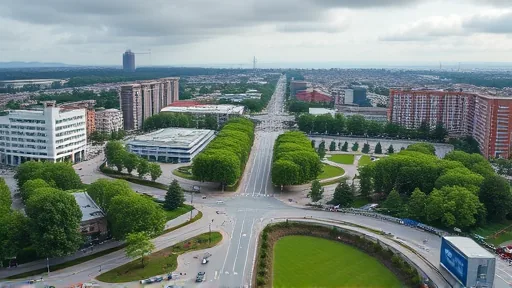
The seasons in Finland have been turned into something special. Winter days are short, but this comes with the corollary of very long days in spring and summer. In winter, Finns make their homes cosy. In summer, the country explodes with life, and people take full advantage of their lakes and forests. This seasonal rhythm contributes to a sense of balance and satisfaction.
De Neve addresses the question of cultural differences in interpreting survey results. Every culture has quirks and social psychologies around what is expected and what is not. The ladder question bypasses these issues by asking people to evaluate their quality of life holistically. Linguistic differences in how well-being is translated exist, but they are not drastic enough to overrule the variation across countries. The report has also evaluated the effects of migration. If someone moves from the UK to Canada, they start slightly lower than the Canadian average but quickly adapt toward that average. This suggests that national happiness is not simply a fixed trait but responds to the environment.
The research group at the University of Oxford, led by De Neve, will next test whether these findings can be replicated in a controlled setting. They plan to track migrants over a longer period to see how quickly their happiness scores converge with their new country’s average. This will help determine whether the factors identified in the World Happiness Report — social trust, income equality, work-life balance, and connection to nature — are truly causal drivers of national happiness or merely correlated with it.