A Flood Plain That Rewrote Prehistory
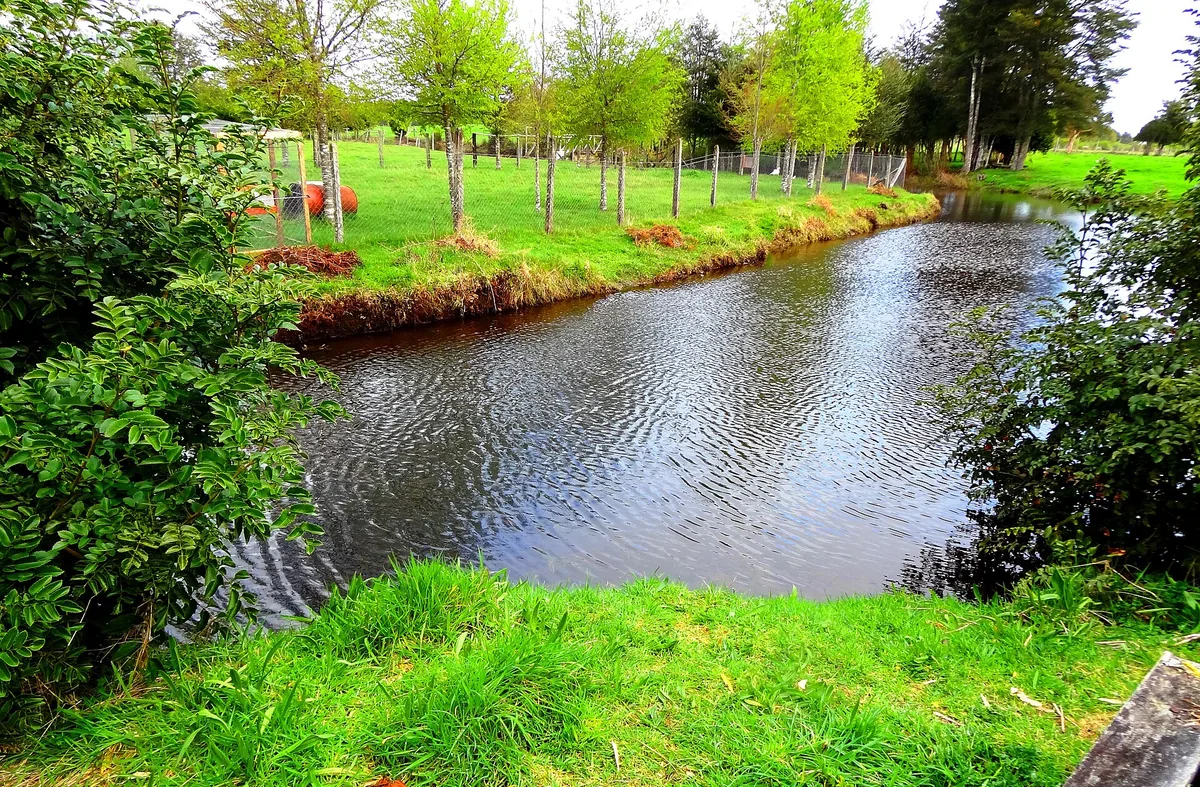
For half a century, a creek bank in southern Chile has anchored one of archaeology’s boldest claims. Monte Verde sits a few tens of kilometres inland from the Pacific Ocean, on the banks of the Chinchihuapi creek, a tributary of the larger Maullín river, with the Andes running north-south to the east. Archaeologists have excavated there on and off since 1977. The site’s most prominent investigator, Tom Dillehay of Vanderbilt University in Nashville, Tennessee, worked two relatively close locations, dubbed Monte Verde I and Monte Verde II. [1] Monte Verde I is trickier: it holds burned areas and numerous putative stone artefacts, though some may simply be natural stones. Early radiocarbon dating of its charcoal placed it at 33,000 years old, a figure never widely accepted; a 2015 study by Dillehay’s team dated it to between 14,500 and 18,500 years ago. Monte Verde II yielded stronger evidence: artefacts of stone, wood and bone, plus what appear to be the foundations of a structure, perhaps a tent. Directly above those layers sat a peat layer dated to 14,500 years ago, implying the site is at least that old. In 1997, a team of archaeologists visited and gave Dillehay’s analyses an official stamp of approval, and in 2008 his team identified marine algae at Monte Verde II, directly dated to 14,220 to 13,980 years ago.
That mountain of evidence once detonated the reigning model of how the Americas were peopled. For much of the 20th century, most archaeologists held that the first Americans were the Clovis, named after a site in New Mexico, makers of distinctive pointed stone tools, with the oldest Clovis sites about 13,000 years old. The consensus was so strong that any pre-Clovis site faced immense scrutiny. Cooper’s Ferry, Buttermilk creek and Paisley caves in North America were endlessly picked over. Monte Verde was the first site to survive that process and become established.
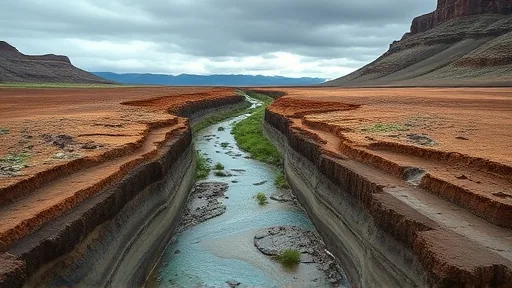
Todd Surovell first learned about Monte Verde in 1994, as an undergraduate at the University of Wisconsin, when Dillehay came as a guest speaker. “I was absolutely blown away,” Surovell says. [2] “It really inspired my career.” He is now an archaeologist at the University of Wyoming — and increasingly sceptical. They did not excavate at Monte Verde I or II. Instead they dug along the banks of the Chinchihuapi creek and reconstructed the landscape’s history from the sediment layers they found.
The Ash Layer That Resets the Clock
The pushback was immediate and fierce, according to Dillehay. At the centre of the dispute sits a simple problem of geography: Surovell’s team excavated near Monte Verde but not at it. “They did not excavate at the site, never saw the stratigraphy and examined only surface landscape from 50 to 4000 meters away in distance,” Dillehay says. [2] Surovell’s team identified a layer of peat they say corresponds to the peat overlaying the Monte Verde II occupational layer; Dillehay’s team says it does not.
The wood tells a similarly contested story. A key plank of evidence for Monte Verde’s age is the large quantity of wood at the site that has been dated. “There’s a lot of wood in there that dates to the ice age, but that wood is derived from… older deposits,” Surovell argues. [2] “It was eroded from these older deposits to wash into the stream onto these younger surfaces.” Dillehay counters that the wood shows no sign of having been redeposited — no telltale damage from being bashed around in flood water. And there is the missing ash: no sign of the crucial Lepué Tephra layer appears at Monte Verde II, either above or below the artefact-bearing layer. Dillehay argues that, therefore, it can tell us nothing about the age of the site. Every detail of both excavations is now being picked over, across thousands of words and many more lines of reasoning.
This is where the machinery of science grinds rather than glides. When a claim becomes disputed, resolving who is correct turns extremely challenging because of what philosophers call the experimenter’s regress. If the true answer to some question is unknown, it is difficult to judge whether an experiment has been performed correctly. A surprising result might mean something new has been found — or that a mistake was made. So if an experiment contradicts a favoured theory, one can argue the experiment was flawed or its authors incompetent. The trouble is that the same can be said about the opposing side’s work. The result is a seemingly endless cycle of claim and counterclaim, each side insisting the other is stuffing up their research in crucial ways. A peat layer becomes not a peat layer but a Rorschach test, and the flood plain that preserved the evidence is also the thing that scrambles it.
Footprints, Genes and the Long Road Ahead
If Monte Verde cannot settle the question alone, can independent lines of evidence? There are now many pre-Clovis sites in the Americas, and more turn up fairly regularly. Among the most dramatic recent discoveries are those at White Sands National Park in New Mexico, where footprints and drag marks seem to be about 22,000 years old. Genetic studies of Indigenous Americans and their Asian relatives point in a similar direction, indicating people were present in the Americas well before the Clovis horizon. The picture emerging is not of a single dramatic arrival but of a long, halting, perhaps coastal procession — small groups feeling their way south along a continent no human had ever walked. Monte Verde, whatever its final date, is one node in that procession. The Clovis-first model is not coming back.
What remains genuinely open is the calendar, and the calendar is everything. The difference between 14,500 and 8,200 years is the difference between a site that anchors the earliest peopling of a hemisphere and a site that merely records people living in a Chilean flood plain long after the hemisphere was already inhabited. Surovell’s team goes further, placing the occupation as late as 4,200 years ago. Dillehay says the evidence consists of more than 1000 radiocarbon and luminescence dates and intact chrono-stratigraphy. Surovell’s team says the stratigraphy it read along the creek places the occupation after an ash fall 11,000 years ago, and dates the site to between 8,200 and 4,200 years ago. Neither side has produced the one thing that would end the argument: an excavation at Monte Verde II itself that both teams accept as competently done and correctly read. Until that happens, the totemic site of American archaeology sits in the same uncomfortable position it occupied for two decades at the end of the last century — claimed, contested, and waiting.