
Giant Trees Defy Drought Vulnerability Assumptions
The Accidental Discovery That Rewrote Tree Physics
For decades, ecologists assumed that the tallest trees on Earth faced a hidden weakness. Gravity, they believed, would eventually win. Water traveling upward through a tree’s vascular system faces increasing resistance with every meter of height. The taller the tree, the harder it must work to keep its crown hydrated. During drought, that strain was expected to become fatal. This logic seemed so self-evident that it entered computer models used to predict which forests would survive climate change. No one had actually tested it on the world’s tallest tropical trees.
A team of researchers led by forest ecologist Paulo Bittencourt from Cardiff University set out to measure exactly how much hydraulic stress giant trees experience. They traveled to the Kabili Sepilok Forest Reserve in Malaysian Borneo, where the dipterocarp family of trees dominates the canopy. These trees can exceed 70 meters in height — taller than a 20-story building. The team expected to find clear evidence that height impaired water transport. What they found instead overturned a core assumption in plant biology.
The study, published in Science on July 2, 2026, showed that tall dipterocarps are not more vulnerable to drought than their shorter neighbors. The researchers measured 25 traits related to water transport across 38 trees from five different species. The trees ranged from 7.7 meters to 71 meters tall. In every measurement that mattered, height did not predict drought vulnerability. The finding was so unexpected that the team had to double-check their data multiple times before submitting the paper.
Plant functional ecologist Arne Scheire, now at the Southeast Asia Rainforest Research Partnership in Kota Kinabalu, Malaysia, explained that no experiments had ever verified whether taller trees actually succumb to hydraulic failure during drought. The theoretical models were built on physical principles that seemed unassailable. Water traveling up longer xylem vessels encounters more resistance. Gravity reduces water potential — the tendency of water to be pulled upward as leaves transpire. But the real trees had evolved solutions that the models had not accounted for.
Why Climbing the World’s Tallest Trees Was the Only Way to Know
The team needed samples from the uppermost branches of trees that tower over the rainforest canopy. No drone or satellite could collect the living tissue required for hydraulic measurements. So Bittencourt and his colleagues recruited professional tree climbers — people who could thread a rope through a tree as tall as a 30-story building and climb it safely. The work had to begin before dawn, when the trees’ water status was most stable. Climbers checked for wasp nests, tested branch strength, and assessed wood integrity before each ascent.
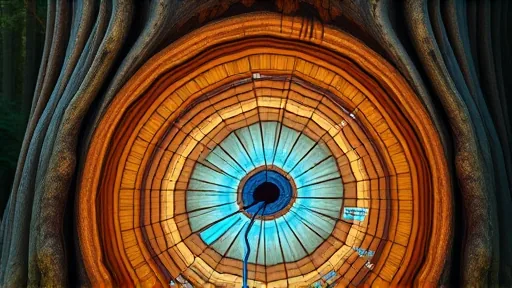
Over three months in 2022, the team collected branch, leaf, and trunk core samples from 38 dipterocarp trees. The samples came from heights ranging from 7.1 meters to 71 meters — over three-fourths as tall as the Statue of Liberty. Back in the laboratory, the researchers analyzed the samples for traits directly related to water transport efficiency. They measured xylem vessel width, leaf dehydration tolerance, and the vulnerability of water-conducting tissues to embolism — the formation of air bubbles that block water flow.
The trunk cores revealed a striking adaptation. Tall dipterocarps had wider xylem vessels at their bases compared to shorter trees. At the base of a 70-meter tree, the vessels were more than twice as wide as those at the base of a 10-meter tree. This structural compensation reduced the resistance to water flow, effectively canceling out the disadvantage of height. The trees had built themselves a wider pipeline where it mattered most.
The leaves at the top of tall trees showed another adaptation. They could tolerate drier conditions without wilting, maintaining their ability to photosynthesize even when water supply was limited. The researchers tested this by inducing embolisms in the leaf tissues — the same type of blockage that occurs during severe drought. They found that the tissues of small and tall trees responded to dehydration in the same way. Height did not predict embolism vulnerability.
The team also measured trunk growth rates before, during, and after an intense El Nino-related drought that lasted from 2023 to 2024. If tall trees were more vulnerable to drought, their growth should have slowed more than that of shorter trees during the dry period. The data showed no such pattern. Growth rates declined similarly across all tree heights, suggesting that drought responses were independent of stature.
Forest ecologist Amy Bennett, who led a 2015 paper showing that larger trees suffer most in droughts worldwide, acknowledged that the new study reveals important exceptions. “I don’t think it overturns the idea that large trees are more vulnerable in many forests,” she told Science, “but perhaps height isn’t the fundamental driver. The finding does not apply to all tree families. But for the dipterocarps that dominate Southeast Asian rainforests, the old rule no longer holds.
What the Discovery Means for Forest Futures
Functional ecologist Julieta Rosell from the National Autonomous University of Mexico, who was not involved in the study, pointed out that a competing theory already predicted these adaptations. That theory proposed that larger trees would evolve compensatory mechanisms like wider vessels and more drought-tolerant leaves. But no one had ever tested the uppermost parts of tall trees to confirm it. “This was never done before,” Rosell said. The study closed a gap that had existed for decades between theory and direct measurement.
The finding has immediate implications for carbon storage. More than half of the aboveground carbon in tropical forests is held in the tallest 1 percent of trees. Dipterocarps are among the most carbon-rich trees on Earth, capable of sequestering massive amounts of carbon for centuries. If these giants were as drought-vulnerable as models predicted, conservation efforts would need to prioritize shorter, more resilient trees. The new data suggests the opposite — that tall dipterocarps may be a safe long-term investment for carbon sequestration in Southeast Asia.
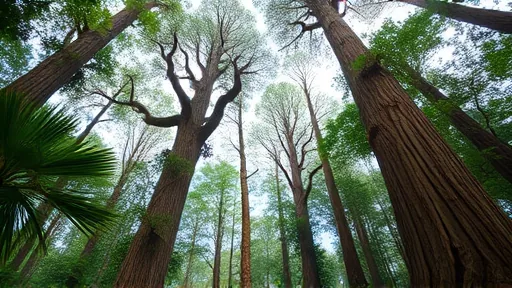
The study also challenges the way ecologists think about tree physiology. Rosell noted that trees are constantly making changes to their anatomy. “They’re doing things all the time, making changes in their anatomy all the time,” she said. “And that gives a different perspective to trees because they seem so quiet.” The quiet giants of the rainforest had been adapting in ways that science had not yet measured.
The precedent for this kind of revision comes from research on tree mortality in the Sierra Nevada mountains. Forest ecologist Adrian Das from the U.S. Geological Survey observed that during droughts in that region, the relationship between tree size and mortality varied by species. Some large trees died, while others survived. The simple assumption that bigger equals more vulnerable did not hold across all species. The Borneo study extends that lesson to the tropics, where the stakes are even higher for global carbon budgets.
Bittencourt said the next step is to investigate the hydraulic systems of other tall tree species. The dipterocarps have their own evolutionary history and unique adaptations. Other giant trees — the redwoods of California, the eucalypts of Australia, the kapoks of the Amazon — may have evolved different solutions or none at all. Each family of tall trees must be tested directly, not assumed to follow the same rules. Climate models that predict forest survival will need to account for this newly measured complexity
Sources
2. Southeast Asia Rainforest Research Partnership
3. Science