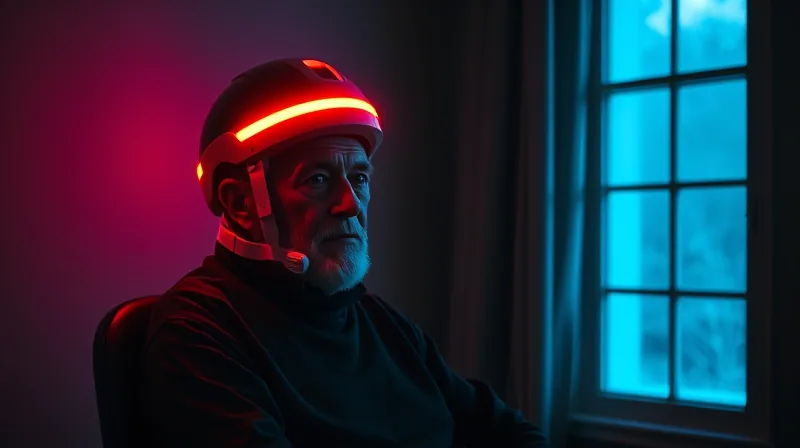
Former Linebacker Finds Hope in Red Light Brain Therapy
A Linebacker’s Collapse and the Diagnosis That Followed
Larry
Carr held a Ph.D. in physiology and exercise physiology. [6] He had been a star middle linebacker for Brigham Young University’s football team in the 1970s, and he still holds the record for tackles per game over a career. [1] By 2010, he was a man who yelled and yelled at his wife, Laurie, during a terrible fight. She left the house to gather her own emotions. Alone with his thoughts, Carr felt he had reached a bottomless abyss. “Broken,” he says. No one understood what was happening to him. Out of nowhere, he would explode in anger. Paranoia and depression hounded him. Laurie tried to tiptoe around his emotions, unsure what might trigger an outburst. He did not resemble the man who had been her high school sweetheart — even-keeled, playful, logical.
That night, alone in his home, Carr took a knife and held it to his chest. “I wanted it to be over,” he remembers. Something stopped him. Laurie came home soon after, finding him with a trail of blood dotting his shirt. She took him into her arms and the two quietly held each other. The next morning, he received a phone call. BYU Athletics wanted to induct him into its Hall of Fame. The dissonance was jarring. He was to be celebrated for part of his past that he would soon learn was potentially debilitating him. At age 60, after several years of progressive emotional and cognitive decline, he was officially diagnosed with significant brain damage. [3] The likely cause was his history of playing football and repeated head impacts. The diagnosis came in 2013. [3] The knife, the call, the diagnosis — these would lead him on a life-changing mission.
That mission eventually drew him into a team of researchers at the University of Utah. [2] One of those researchers, Elisabeth Wilde, Ph.D., co-director of the Traumatic Brain Injury and Concussion Center, calls the resulting findings “striking.” [2] The treatment they are studying is called photobiomodulation therapy, or itPBM — intranasal transcranial PBM. It is also known as red-light therapy. It is different from the kind of superficial red-light usage one can find on social media skincare channels or at a wellness boutique. Its application is broader. The research spans multiple studies and reaches beyond ex-football players to women and men in a wide range of circumstances.
The Assumption That Damage Is Permanent
Elisabeth Wilde, Ph.D., and her group recently published their latest results in the Journal of Neurotrauma. [9] That study followed 26 BYU football players throughout a season and suggested the treatment could “potentially safeguard neurological health without reduced playing time or contact exposure.” [9] Definitive clinical trials have not been run yet, and broader validation is still required. Carr acknowledges some have told him the approach could be “too good to be true,” while outside experts who spoke with The Athletic call the findings promising but caution that this is not a cure-all. The results have nonetheless been compelling enough to justify more research. “It’s a turning point in the field of photobiomodulation,” says Dr. Paolo Cassano, Ph.D., Director of Photobiomodulation, Division of Neuropsychiatry at Massachusetts General and Assistant Professor of Psychiatry at Harvard Medical School, who is not involved in the Utah studies. [4]
Some people who took part in the research believe they are already benefitting, and the BYU football program has continued using the treatment since the 2021 season. [1] Chronic traumatic encephalopathy, or CTE, has been linked with repetitive head impact exposure, and more than five million Americans suffer from disabilities related to traumatic brain injury. The New York Times recently reported on a study finding that one in four NFL players develop brain diseases like CTE. [5] Carr has read many of their stories: former football players, men in their 50s or 60s, dealing with unexplained depression, anger or violence, their families torn apart. Now, Carr says, “there’s hope.”
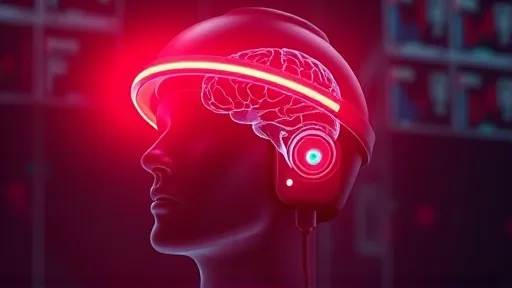
Around for decades, red-light therapy has traditionally been used to treat chronic muscle and joint pain and various injuries. It has shown cosmetic benefits for skin and facial care, purposes for which it’s cleared by the FDA. [10] The technology researchers are using is different from the mainstream popular applications of red-light therapy. For treating brain injuries, itPBM is delivered through a medical-grade, portable headset device with a nose clip, worn at home for about 20 minutes each day. It shines red or near-infrared light onto the head. Compared with commercial devices, this treatment produces a much stronger effect in terms of power, pulse frequency, penetration and wavelength, Utah’s researchers say. Light at this frequency interacts with cells in a way that boosts cellular energy, which potentially reduces inflammation to improve neural network connectivity.
From Boston
Trials to a Utah Research Team
Fourteen peer-reviewed studies have found that the treatment improves mental health and cognitive measures, Carr says. The study that followed the BYU football players was published this year with similar findings. itPBM is how Carr began to heal himself, he says. Larry and Laurie, members of The Church of Jesus Christ of Latter-day Saints, decided to go on a mission to Boston in 2017. [6] Knowing Dr. Ann McKee, a renowned researcher in the field of CTE with ex-NFL and college players, was based in Boston, Carr reached out to her for help. McKee steered him to Dr. Margaret A. Naeser, a research professor at Boston University School of Medicine for nearly 50 years. [7] She allowed him into an itPBM trial she was conducting at the Boston VA Medical Center. [8]
“The red, near infrared light, whether it’s laser or LED, is going to help the cells recover,” Naeser says. [8] “Because with brain damage … the cells are not dead. They are just low on oxygen and working very poorly and interfering with all other kinds of pathways that should be smoothly operating in the brain.” Carr, who played two seasons in the CFL after college, was dubious. His wife quickly noticed changes in his demeanor after using the headset for a six-week period in Boston. His symptoms and overall cognition seemed to improve, which was confirmed with post-testing. The relief continued as he returned home and continued using the headset. He felt calmer and more in control. “The changes I’ve seen in him were so profound,” Laurie says.
Now 74, Carr continues to use the headset, as he has for nearly seven years. He says he probably will for the rest of his life. He wants to give others a chance to experience similar relief. Carr is an adjunct professor at the University of Utah School of Medicine. He is part of a team that stands at 27 researchers. While many studies in collision or contact sports athletes have historically focused on male football players, the Utah researchers have focused on both men and women. Their subjects include intimate partner violence survivors, ex-football players and athletes from other sports, first responders such as firefighters, veterans and the BYU football team. In published studies, including work by the investigators at the University of Utah, individuals treated with itPBM show improvements in cognition, mood, anxiety and motor performance. Changes in the brain itself are also apparent through MRI results and advanced imaging, including less inflammation and improved functional connectivity. When researchers followed 26 BYU football players in 2021, half were treated with itPBM and the other half were not. The untreated group developed significant and widespread inflammation over the season, as measured by DTI imaging. [2] No inflammation was present in the group treated with itPBM.
Sources
3. Massachusetts General Hospital
6. The Church of Jesus Christ of Latter-day Saints
7. Boston University School of Medicine
9. University of Utah School of Medicine
10. FDA