
Ebola outbreak tests global health response
An Epidemic Hidden in Plain Sight
The current Ebola outbreak in the Democratic Republic of Congo and Uganda began with a delay in detection. Health officials now believe the Bundibugyo strain of Ebola virus was probably spreading as early as February 2026, yet the World Health Organization did not declare a public health emergency of international concern until May 17. That is a gap of roughly two and a half months.
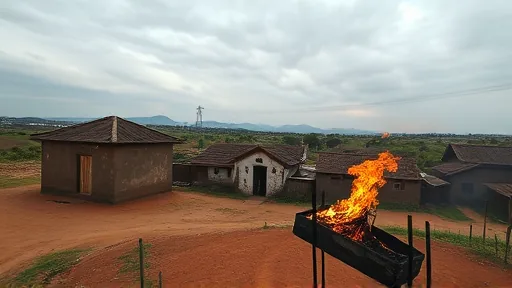
The delay had a specific cause. Early tests in the remote gold mining town of Mongbwalu, Ituri Province, looked for the more common Zaire strain of Ebola. They came back negative. Local leaders initially suspected tuberculosis was driving the deaths. The mayor of Mongbwalu told CNN Chief International Correspondent Clarissa Ward that he thinks the first case occurred on February 22. Around that time, a body was moved out of a local morgue, and a coffin was burned. Within two weeks, dozens of people in the town were dead.
The outbreak has now confirmed more than 1,700 cases since April, making it one of the largest on record. New modeling from the US Centers for Disease Control and Prevention suggests this outbreak could even surpass other historic outbreaks if strong public health interventions are not rapidly implemented. The 2014-16 West Africa outbreak resulted in more than 28,000 cases and more than 11,000 deaths.
Safura Abdool Karim, head of pandemic preparedness and response and senior scientist at the Centre for the AIDS Programme of Research in South Africa, University of KwaZulu-Natal, Durban, has been tracking the response. She notes that the approaches taken by dozens of governments and health organizations reveal how global health is evolving after US cuts to international aid.

The Virus Spreads Through Close Contact
Healthcare providers and family members are the most likely to contract the virus. In the current outbreak, most patients are women between the ages of 20 and 39. Personal protective equipment like masks and gloves can help prevent spread. But the outbreak is happening in a remote place with limited resources. Conditions are improving as international partners surge resources to the area.
Dr. Jay Bhattacharya, director of the US National Institutes of Health and acting director of the CDC, has been directly involved in the US response. At a CNN All Access Subscriber Series event, he described how the US is responding. The CDC modeling poses many scenarios in which the current outbreak could become larger than the 2014-16 West Africa outbreak in a matter of months. If the ongoing investigation shows that there were 100 or even 200 deaths by late May, the modeling predicts a much higher likelihood of this growing into a massive outbreak. The best chance to minimize that risk is to identify and isolate cases as quickly as possible.
The World Health Organization has maintained that the risk to the broader global community is low. For many of the reasons outlined by experts, there is a nearly zero chance this becomes a pandemic. But the regional risk is high. The outbreak has already spread into Uganda.
The Critical Data Point Is the Death Toll in Late May
The key uncertainty is the true start date of the outbreak. WHO officials are investigating to learn more about the timeline of spread, which they also concede probably started earlier than they knew. The mayor of Mongbwalu said the first case was on February 22. If that timeline is confirmed, the outbreak has been spreading for months before detection.
The next measurement needed is a clear accounting of deaths from late May. At least 60 deaths have been confirmed in the current outbreak. But if the ongoing investigation shows that there were more deaths in that period, the CDC modeling predicts a much higher likelihood of this growing into a massive outbreak. The number of deaths in late May is the critical data point that will determine whether the outbreak can be contained or will spiral.
Africa’s response to this outbreak shows how to shape global health, according to a commentary in Nature published July 14, 2026. Countries elsewhere must learn from the continent’s example and combat disease outbreaks by working together, not by closing borders. The question now is whether the international community can apply those lessons quickly enough to stop this outbreak before it grows even larger.
Sources
1. DOI: 10.1038/d41586-026-02148-6
3. Centre for the AIDS Programme of Research in South Africa, University of KwaZulu