Drought may have driven yellow fever into Brazilian cities
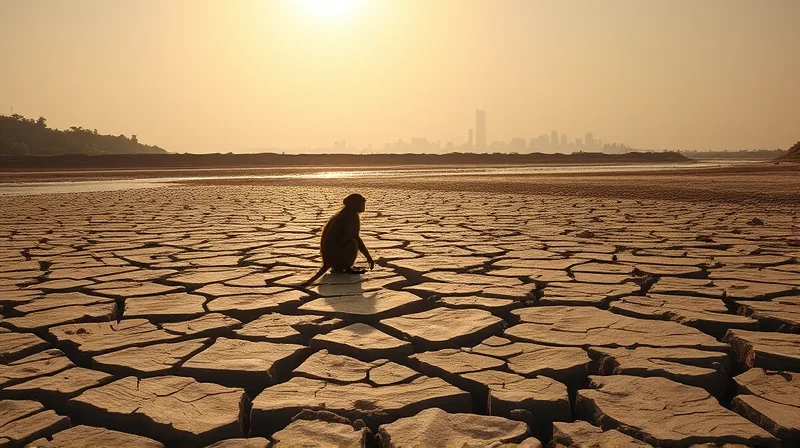
It started with a mistake. In 2015, an El Niño powered an abnormally strong drought across central South America. Researchers initially set out to study how rainfall patterns shaped mosquito populations. What they found instead was something far more unsettling: the drought itself may have driven infected monkeys and thirsty mosquitoes into Brazilian cities, triggering the first urban yellow fever outbreak in decades.
The connection between drought and disease seemed counterintuitive at first. Mosquitoes need water to breed, so common wisdom says rain should increase disease risk. But the team discovered that water scarcity can alter behavior in ways that matter more than simple population counts. When forests dry up, monkeys move toward human settlements searching for water. Mosquitoes, desperate to avoid dehydration, bite more frequently. Both behaviors pulled the virus out of the forest and into the city.
The researchers report their findings in Science Advances, using computer simulations to test how these behavioral shifts might combine. The simulations matched real-world data from the 2016-2019 outbreak with striking accuracy. More than 2,000 people fell ill during that period, and nearly 750 died. The study suggests that dry periods can raise yellow fever risk - something to watch closely as climate change brings more frequent droughts.
When thirst rewrites the rules of transmission
Brazil had not seen an urban yellow fever outbreak since 1942. That long gap was no accident. The Aedes aegypti mosquito, once a major spreader of the virus in the Americas, had been pushed back through aggressive insecticide use and an effective vaccine. Public health officials believed the urban cycle was broken. The 2016 outbreak proved them wrong.
Yellow fever does not only circulate between A. aegypti and humans. It maintains a separate cycle deep in the forest, where Haemagogus mosquitoes spread the virus among howler monkeys, marmosets, and other nonhuman primates. These monkey infections serve as an early warning system. When primates start dying, it signals that yellow fever is actively spreading and could spill into human populations.
During the Brazilian outbreak, something unexpected happened. A. aegypti was not the primary species driving the epidemic. Its populations had been greatly reduced in the wake of the recent Zika outbreak. Instead, Haemagogus mosquitoes from the forest took over the role of urban spreader. The forest cycle and the urban cycle had merged in a way researchers had not anticipated.
Jamie Caldwell, a disease ecologist at the High Meadows Environmental Institute at Princeton University, captured the strangeness of the moment “It was this once-in-a-century drought coinciding with this really unusual once-in-a-century outbreak,” she said. The coincidence demanded an explanation that went beyond simple mosquito counts.
The simulation that changed how we see drought
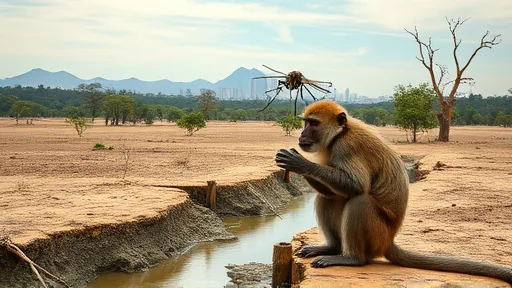
Rosser, Caldwell, and their colleagues built computer models to test two possible behavioral changes. First, they simulated infected primates moving from dry forests into urban areas in search of water. Second, they modeled forest mosquitoes biting hosts more frequently to prevent dehydration. Each behavior alone failed to explain the outbreak’s pattern. Together, they matched almost perfectly.
The simulations that included both animal movement and mosquito biting patterns best explained how the virus spread through Minas Gerais, the Brazilian state where the outbreak began. The finding points to a simple mechanism: dwindling water sources brought forest creatures closer to the city, and yellow fever came with them. The virus did not need to find new hosts - the hosts came to find water.
Nikos Vasilakis, a virologist at the University of Texas Medical Branch at Galveston, called the study “a step in the right direction He noted that the findings provide a framework for researchers to gather additional data from forests and cities to test the simulations’ predictions in the real world. The models offer a starting point, not a final answer.
The outbreak itself was complicated beyond the drought’s role. Low vaccination rates among people and ongoing deforestation created a vulnerable population. “I think of drought as the spark. The setting was there,” said Joelle Rosser, an infectious diseases physician and epidemiologist at Stanford University. The drought ignited a fire that the surrounding conditions had already prepared.
The counterargument that has not yet been refuted
Sadie Ryan, a medical geographer at the University of Florida in Gainesville, found the findings particularly intriguing It was not just that mosquitoes bit more often, she noted. The infected monkeys needed to move toward the city too. Both behaviors had to align for the outbreak to unfold as it did. This dual requirement suggests the outbreak was not a simple event but a perfect storm of animal behavior and environmental stress.
The drought itself was extreme even by regional standards. The El Niño brought dry conditions slightly more extreme than a once-in-a-century drought. That severity matters because it suggests a threshold effect - a point at which normal coping mechanisms fail and animals begin moving into human spaces. Understanding where that threshold lies could help predict future outbreaks.
Drought is already known to raise the risk of some mosquito-borne diseases. West Nile virus, for example, may spread more during dry times because water scarcity concentrates infected birds and mosquitoes around limited water sources. The Brazilian yellow fever outbreak now adds another example to that list, but with a different mechanism. The virus did not concentrate around water - it moved toward it.
The study leaves important questions unanswered. The simulations offer predictions, but real-world data from forests and cities remains scarce. Researchers still need to verify whether the behavioral changes observed in Brazil hold true in other regions and under different drought conditions.
How far the application still has to go
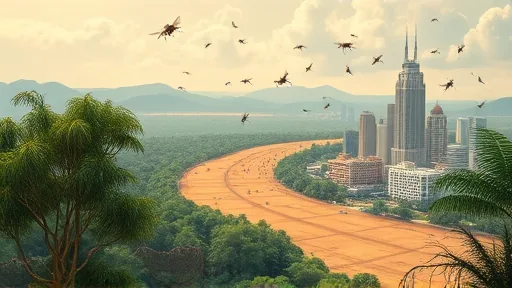
Boosting vaccination rates across the region, along with vector control, helped rein in the outbreak. But that response was reactive - it came after the virus had already reached the cities. The study suggests a more proactive approach is needed, one that monitors forest ecosystems for signs of drought-stressed animals moving toward human settlements before the virus arrives.
Ryan warned that the window for such preparation is shrinking. “What was once in a century will now be four times in a century,” she said. “We’re going to be seeing more scenarios where it gets drought-y enough for long enough that it’s going to promote coincidences.” The once-rare alignment of drought, animal movement, and mosquito behavior is becoming more common.
The researchers acknowledge that their models simplify a complex reality. They captured the role of drought and animal behavior, but other factors - vaccination coverage, land use changes, and the precise ecology of Haemagogus mosquitoes - remain only partially understood. Each of these variables could shift the outbreak dynamics in ways the current models cannot predict.
The simulations offer a starting point for gathering better data. Researchers now know which behaviors to track in the field: monkey movement patterns during dry periods, mosquito biting rates under water stress, and the precise pathways by which forest viruses reach urban areas.