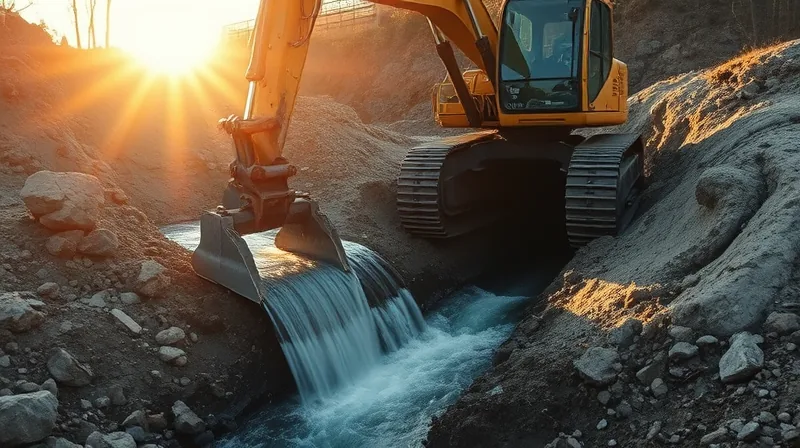
Daylighting Buried Urban Streams for Flood Resilience
For over a century, urban engineers treated streams as obstacles. When a river blocked a street grid, the standard solution was to enclose it in pipes and culverts, burying the waterway beneath concrete and asphalt. This practice, known as stream burial, allowed cities to build continuously across former floodplains. Today, as extreme rainfall events overwhelm aging drainage systems, a growing number of municipalities are reversing that decision through a process called daylighting — excavating buried waterways and restoring them to open channels.
The logic of burying a stream was simple and, at the time, reasonable. A visible river limited where you could build and required bridges, maintenance, and constant attention. An underground pipe, by contrast, allowed the city to expand without interruption. But this convenience came with a hidden cost that is only now becoming clear. The infrastructure that was designed to hide water away is struggling to handle the very weather patterns that cities now face with increasing frequency.
A Hidden Network Under Every Street
Most residents walk over these forgotten waterways every day without knowing it. Beneath the asphalt and sidewalks of many developed cities runs a network of buried streams, some of which have not seen sunlight for more than a century. [3] These streams were not eliminated; they were merely relocated into a system of pipes and culverts designed to carry them away quickly. The original surface channels were filled in, and the land above was repurposed for the growing needs of urban life.
According to the American Society of Civil Engineers, much of the United States’ stormwater infrastructure received a grade of D in the 2021 Infrastructure Report Card, reflecting decades of underinvestment and deferred maintenance. Many buried culverts are now more than a century old and were sized using rainfall records that no longer reflect current climate patterns. When intense storms hit, these undersized pipes back up, causing street flooding and basement backups in neighborhoods that were never designed to handle such volumes.

Daylighting projects have gained momentum as cities search for cost-effective flood mitigation. In Providence, Rhode Island, the Woonasquatucket River daylighting project restored a section of the waterway through a former industrial corridor, creating both flood storage and public parkland. The project, completed in partnership with the city and the Environmental Protection Agency, demonstrated that reopening a buried channel can reduce peak flows while providing community amenities.
The Ethical Choice of Exposing the Water
Bringing a buried stream back to the surface is not merely an engineering project; it is a decision about who benefits from public space and who carries the risk of urban change. When a city chooses to daylight a stream, it must decide which neighborhoods will host the reopened waterway and which will continue to rely on hidden pipes. This is a question of fairness, because the benefits of open water, such as cooler surroundings and green space, are not distributed evenly across a city. The costs of disruption during construction also fall unevenly, often on communities that had no say in the original burial.
The shift toward daylighting also reflects changing professional norms in urban hydrology. Engineers trained in the mid-20th century learned to move water as quickly as possible through pipes. Contemporary practice, shaped by research on green infrastructure, emphasizes slowing water down, allowing it to infiltrate soil, and using vegetation to absorb runoff. This evolution is visible in the design standards adopted by cities like Philadelphia, whose Green City, Clean Waters program integrates open channels and rain gardens into the municipal stormwater system.
The economic case for daylighting is strengthening as replacement costs for buried pipes climb. In 2019, the city of Yonkers, New York, completed the daylighting of Saw Mill River, a project that cost approximately $45 million over a decade. City officials estimated that replacing the buried culvert with a larger pipe would have cost more and provided no public benefit. The restored river now runs through a downtown park, and the project has attracted private investment to surrounding blocks.
What Reopening Changes and What It Leaves Open
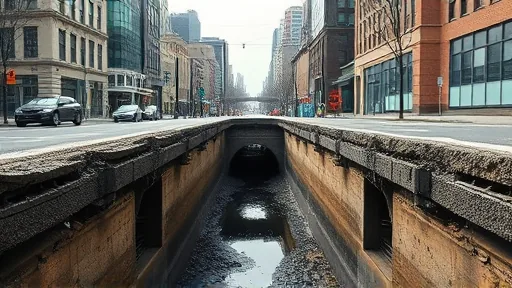
The comparison between the old approach and the new one reveals a fundamental shift in thinking. [2] The old system treated the stream as a single-purpose conduit, designed solely to move water away as quickly as possible. The emerging approach sees the stream as a multi-functional asset that can manage water while also providing public space and improving the urban environment. This is not a minor technical adjustment; it is a change in the very definition of what a city stream is for.
Where full daylighting is impractical, cities are pursuing partial restoration. Some projects open a stream through a park or greenway while leaving it piped beneath adjacent blocks. Others construct bypass channels that carry high flows during storms while maintaining a base flow in the restored section. These hybrid approaches, documented in a 2022 review by the Water Environment Federation, allow cities to capture some ecological and flood-reduction benefits without the full cost of excavation.
The buried streams of the past were engineered responses to real problems of sanitation and urban density. The daylighting movement does not erase those problems; it reconsiders them with better information. As rainfall patterns shift and infrastructure ages, cities are discovering that the water they once hid may be one of the most visible tools they have for adapting to a wetter future. Whether a community chooses full restoration or a partial reopening, the decision now rests on evidence about flood reduction, ecological recovery, and neighborhood benefit — not on the assumption that out of sight means out of mind.