A City of Light, Built by Curiosity
Seen from above, the human brain resembles a city at night — dense clusters of light stitched together by long, expensive roads. That constraint, combined with curiosity, may help drive the emergence of complex cognition.
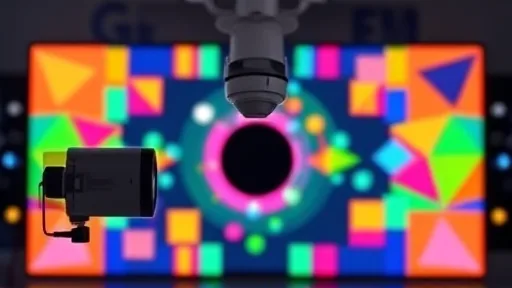
A team at the University of Cambridge has put forward a striking reversal of a long-held assumption. [1] Francesco Poli, a researcher in the university’s psychiatry department, frames the question plainly: curiosity is usually seen as a consequence of having a complex brain. “What if it’s actually helping to shape how the brain is?” The preprint, posted on bioRxiv, argues that two ingredients are sufficient to produce complex cognition — infant-like curiosity and brain-like wiring constraints. [1] The evidence begins with babies. The researchers tracked the eye movements of 275 infants between 8 and 15 months old. [1] Each baby watched sequences of colourful shapes on a screen. The positions were not random; every shape carried a learnable sequence that hinted where the next one would appear. The infants turned out to be finely tuned to how much information each pattern offered. When their rate of learning dipped below average, they disengaged and hunted for something new. A small mind, in other words, is a small scientist — and a restless one.
That behavioural rule became the blueprint for a machine. The team built artificial neural networks with different levels of built-in curiosity and trained them on 20 tasks. High-curiosity models abandoned a task the moment their learning rate fell below a threshold. Low-curiosity models switched at random. All the networks, curious or not, mastered the tasks they were trained on. But on tests they had never seen, the curious ones performed significantly better — the flexible recombination of knowledge that marks complex human thought.
The Cost of Long Wires

The second ingredient is constraint. The researchers embedded their networks in a virtual three-dimensional space modelled on human brain anatomy. Long-distance connections were penalised, mimicking the metabolic price real brains pay for far-flung wiring. Constraint alone did not produce complexity. Constraint plus curiosity did.
Brain-like features appeared. The curious networks organised into a hierarchical, modular structure — tightly interconnected clusters that were themselves linked to one another. Then came something Poli did not expect: the density of connections rose, then fell. “I thought that was weird,” he says. It mirrors human development, where synapses surge during the first year of life before a pruning phase strips away unhelpful links. Poli speculates that curiosity — the drive toward tasks that yield the most information — could be tied to that selection process, deciding what to keep and what to discard.
The team went further and estimated a biological age for each network by mapping the rise and fall of its connection density against a typical human profile. The most curious, most human-like networks sat at roughly 20 years of maturity. Those lacking the combination of curiosity and correct wiring stalled near 9 years. The gap is not a matter of speed. “I think that, even with more training time, they would have stayed pretty much the same,” he says. “Curiosity really changed how the networks learned.”
What a Sceptic Would Need to See
Alireza
Modirshanechi at the University of Göttingen finds the efficiency result unsurprising — curiosity keeps us from wasting time on tasks too easy or too hard. “You try to learn those that are most learnable,” he says. But the emergence of human-like architecture he calls “very surprising.” “If true, it’s a very strong claim.” He proposes giving the non-curious networks more training time to see whether similar features eventually appear.
The findings reach into classrooms and server farms. Poli argues that environments forcing children into one activity for long stretches “might be counterproductive, especially early on.” If we value curiosity and cognition, he suggests, we may need to prioritise giving children a choice of activities, then letting them roam freely within that space. On artificial intelligence, he points out that most research “is just building bigger systems,” consuming ever more data and resources. Building curious machines that learn more like people might be the more fruitful path — evolution’s finite budget, he suggests, is part of what drives clever solutions. \"Sometimes, these constraints are also what help us to excel.\. Modirshanechi is not convinced developers should abandon scaling, since large language models demonstrate it works. But curiosity principles, he concedes, might yield systems that ask enough questions to grasp a user’s intent before answering at length — a machine that listens before it lectures.