
Crew 13 Health Experiments Blood Eyes Piloting
Meta commentary - no external expert source; basis: Nasa.gov (2026-09-25). #MetaScience
When Weightlessness Rewrites the Rules of Flow
In space, the human body is not merely floating — it is running a continuous experiment on itself, and the variables are almost impossible to isolate. Measuring what happens next is harder than it sounds, because every astronaut is also a subject in a dozen other studies at the same time, and every blood draw costs time, comfort, and a small piece of the crew’s limited schedule. That measurement problem is exactly what a new collaboration sets out to solve.
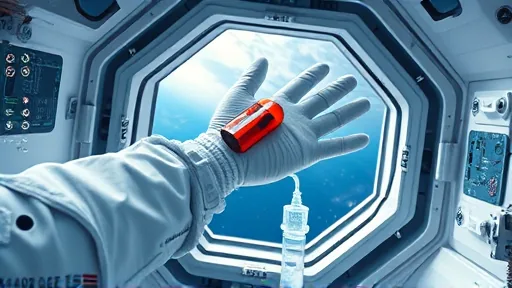
A joint effort between NASA and ESA (European Space Agency), called Venous Haemostasis, builds on earlier work on blood flow in orbit by merging the two agencies’ research programs. [1] The logic is logistical as much as scientific: by coordinating when blood is collected and which physiological data are gathered, researchers can reduce how often astronauts need to be stuck with a needle.
Jason Lytle, one of the study’s principal investigators and a cardiovascular researcher at NASA’s Johnson Space Center in Houston, framed the risk plainly. [1] In space, he said, weightlessness can disrupt normal blood flow in astronauts’ veins, and irregular or slow flow can raise the risk of blood clot formation — a serious health condition. [1] The question Venous Haemostasis is built to answer is not whether such changes happen, but why they appear in some astronauts and not others.
To trace those differences, crew members will undergo MRI scans, jugular vein ultrasounds, blood pressure checks, and blood draws before, during, and after flight. The resulting data should let researchers track shifts in both the movement of blood and its composition. The stated aim is to inform preventative measures for at-risk crew members and to improve health and safety on future missions. Researchers also want to know whether what they learn here could translate into better ways of preventing and treating blood clots on Earth as well as in orbit.

Landing a Vehicle After Months Without Gravity
Long-duration spaceflight does not only change circulation. It also recalibrates the sensory systems that tell a person which way is up, how fast they are moving, and how their own limbs are responding — and those systems matter enormously when the task is manually flying a vehicle down to a lunar surface. A performance study called Manual Piloting uses lunar-landing simulations to test how well astronauts handle challenging landings after extended time in microgravity. The concern is specific: shifts between gravity environments can affect orientation and motion control, and researchers want to know whether those changes degrade piloting performance and decision-making.
The study also tests a countermeasure. Investigators are evaluating whether a short round of refresher training shortly before landing can sharpen capabilities that months in orbit may have dulled. If it works, the implication reaches beyond any single mission — future crews arriving at the Moon or Mars may need a structured warm-up before taking the controls.
A separate investigation targets a different kind of change. The B-Complex study asks whether a daily B-vitamin supplement can reduce or prevent Spaceflight-Associated Neuro-ocular Syndrome, or SANS — a condition that can alter the structure of astronauts’ eyes during long missions. Past research suggests that taking B vitamins daily during spaceflight may help protect against SANS. Participating crew members will undergo vision tests and take the vitamins before, during, and after flight so the supplement’s effectiveness can be assessed. The study also asks whether the B vitamins influence how crew members’ blood vessels function before and after flight.
Three further Human Research Program studies round out the manifest. Standard Measures collects consistent physiological and behavioral data from as many crew members as possible, building baselines for research aimed at countering adverse effects. Spacecraft Occupant Risk characterizes the forces astronauts experience during landing, with the goal of helping NASA refine strategies and hardware to reduce injury risk. Zero T2 compares treadmill users with non-users to help researchers design exercise plans for future Artemis and deep-space missions, where spacecraft size could limit or even eliminate treadmill use.
Sources
Mentioned organisations (context, not sources)
- European Space Agency — Organisation (homepage)