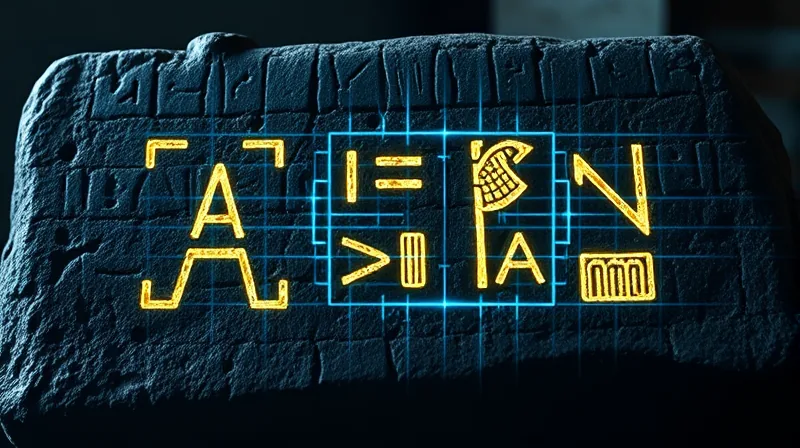
AI tests human hunch to unlock Minoan Linear A
Every lost language ever deciphered needed a bilingual stone or a known cousin to unlock its sounds. Linear A had neither. The Minoan script from Bronze Age Crete remains a language isolate — no confirmed link to any living or dead tongue. Etruscan, pre-Roman Italy’s written legacy, fared only slightly better: short funerary inscriptions gave linguists a partial vocabulary, but its grammar and deeper meaning stayed out of reach. For a century, the anchorless puzzles defeated human effort alone. That paradox — impossible without a key — ceases to be one when the scale of pattern recognition changes from a single scholar to an algorithm scanning thousands of sign sequences in minutes.
Artificial intelligence does not replace linguists. It supercharges their hunches. The same AI approach that churns through satellite images for crop yields now sifts through ancient sign corpora for recurring sound patterns. In June 2025, a self-taught AI engineer and amateur linguist put that scaling to the test in a speculative scenario He started from a single guess: one unknown word in a Linear A prayer inscription derived from a Semitic root meaning “to dwell” or “to inhabit.” That hunch became the anchor the field had lacked.
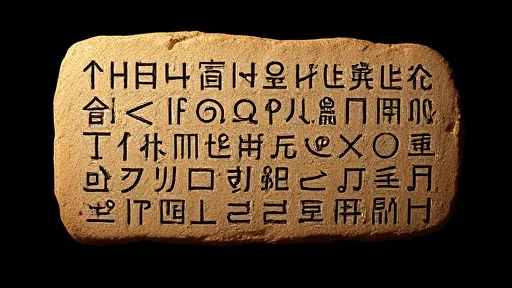
A Guess, Then a Scripts Play
The engineer built programming scripts that used AI to test his guessed sound-pattern against the entire collected Linear A corpus. The machine did not discover the idea — he brought it. But it could test the pattern’s consistency across hundreds of signs faster than any human. According to his reported results, he was able to assign phonetic values (the sounds assigned to written characters) to 40 signs and compile a 408-word lexicon. His conclusion: Linear A is an extinct member of the Semitic language group, which includes Hebrew and Aramaic. A single human insight, scaled by computation, produced a claim that would have taken a century of manual comparison.
The breakthrough rests entirely on that one initial word guess. If the root connection is wrong, the whole structure collapses. The AI did not verify the guess; it only validated the internal coherence of the pattern derived from it. That distinction matters. The script found matches, but it could not judge whether the matches are real or coincidental — only that they are consistent within the chosen assumption.
What the Machine Cannot Replace
“AI is fantastic at spotting patterns, but human insight is the key.” The engineer supplied the creative leap — the hypothesis that one unknown word had a Semitic ancestor. The AI supplied the brute-force testing of that hypothesis against the data. No part of the work was automated except the computation. The idea remained exclusively human.
The next measurement needed to be certain is independent verification of the sound-pattern matches. Other linguists, such as those from the independent Institute for Minoan Decipherment, must examine the same corpus with the same root guess to confirm that the assigned signs produce readings that make sense in context — not just statistically repeat. Until then, the 408-word lexicon is a promising scaffold, not a finished translation. The scale changed, but the final step still requires human judgment.