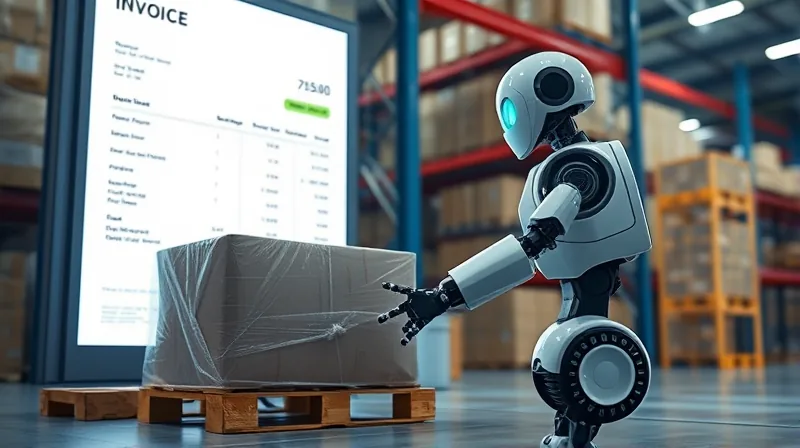
The Invoice That Looks Wrong
A warehouse manager in 2025 runs the numbers on a deployment that has performed exactly as the vendor promised. The robots arrived on schedule. They passed acceptance testing. They move pallets from dock to staging without incident, shift after shift, at a pace that matches the human crew they were meant to supplement. The system works.
Then the invoice arrives, and the cost per pallet moved is higher than the fully loaded wage of the worker whose job the robot was supposed to absorb.
Nothing malfunctioned. No part failed, no software crashed, no safety incident interrupted the line. The machine did everything asked of it. The economics still came out wrong, and the reason has nothing to do with the robot’s intelligence, its dexterity, or the sophistication of its foundation model. It has to do with the hours.
This is the moment physical AI stops being a technology story and becomes a labor story — and it is the moment where the industry’s most confident promises meet their least examined assumption. The promise is that machines will take over the work humans no longer want to do. The assumption is that the work is there to be taken, in the quantities and at the times the machines need it. When that assumption breaks, a functioning robot becomes a superfluous one: not because it cannot do the job, but because doing the job does not pay.
Two Numbers That Cannot Both Be True
Depending on whom you ask, a robot costs $2 an hour, according to a Roland Berger study published earlier this year; $10 to $12, according to JPMorgan; or more than $35, according to reports on early industrial deployments. [1] These figures appear to contradict one another. In fact, they expose the real question facing the physical AI industry: how much useful work can a robot reliably perform?
Enterprises do not need robots that are inexpensive in theory. They need dependable labor in the messy conditions of a factory, warehouse, or distribution center. That distinction will determine whether physical AI remains an expensive collection of pilots or becomes a labor market measured in trillions of dollars.
A robot’s hourly cost is relatively simple to calculate. Divide its purchase or lease cost by the productive hours it works over its life, then add power, maintenance, software, integration, and supervision. The variable that changes everything is productive time.
In Roland Berger’s equation, the $2 an hour covers energy, software, network, and scheduled maintenance. It excludes the purchase or the lease of the machine. This equates to the running cost at volume, not the cost of a deployment. When placed against the average U.S. warehouse human wages, that $2 an hour only wins if the robots are running 60-70% of the time.
Consider a $90,000 industrial robot amortized over five years. At 2,000 working hours per year, the hardware contributes about $9 to each operating hour. Add maintenance and other expenses, and the total might approach $12. But if the robot works only 1,000 hours a year, the hardware cost per productive hour doubles. If it operates only during occasional peaks or spends long periods waiting for a task, the effective cost rises further.
JPMorgan estimates it currently takes about two humanoids to match the output of one human worker. That doubles the effective hourly cost. But productivity per hour improves with software, while cost per hour improves only with hours. The productivity problem is being solved in labs. The utilization problem has to be solved on the floor.
Some describe the marginal cost of running a robot at scale. Others include equipment and integration. Still others reflect early deployments with low utilization and extensive human supervision. The robot’s sticker price matters. Its schedule matters more.
What the Filings Actually Show
The clearest public evidence comes from Agility Robotics’ S-4 filing, submitted ahead of its merger with Churchill Capital Corp XI. [1] Its Digit robots have logged more than 65,000 hours across nine customer sites, including GXO, Schaeffler, and Toyota Motor Manufacturing Canada.
The numbers inside that document are worth sitting with. The filing shows $1.78 million in 2025 net sales against a $140.2 million operating loss, alongside $300 million in milestone-contingent orders from a single customer. A company that has accumulated 65,000 robot-hours — a figure that sounds substantial until you divide it across nine sites and several years — is still booking revenue that covers a fraction of its costs.
More revealing is Agility’s own cost model for its next robot, which the filing lays out at roughly $400,000 over a five-year life. Run one shift of 2,000 hours a year, and that is about $40 an hour. Two shifts bring it close to $20. Because Agility’s fully loaded worker benchmark is $30 an hour, the robot becomes cheaper only after it runs more than 2,700 hours a year.
Read that threshold again. The machine must work more hours annually than a full-time human employee — more than the standard 2,000-hour work year, more than a single shift can supply — before its economics turn favorable. It does not replace a worker by being better than one. It replaces a worker by being busier than one. That is a scheduling problem dressed as a capability problem, and it is where the labor-displacement story inverts: the machine is not taking a human’s job, it is taking a human’s job and then some, or it is not worth deploying at all.
The Demo That Cannot Leave the Lab
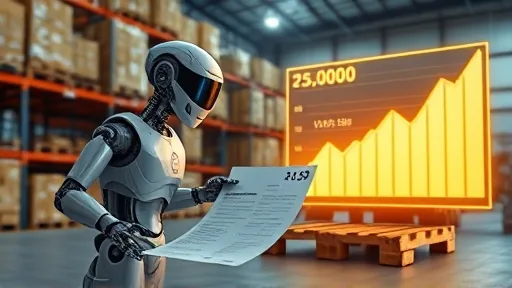
High utilization cannot rescue a robot that fails whenever conditions change.
Robotics has produced impressive demonstrations for decades: robots folding shirts, making coffee, moving boxes, and completing intricate tasks in controlled environments. The trouble begins when they leave the lab.
Factories and warehouses are full of variation. Objects arrive in unexpected positions. Packaging changes. A person steps into an aisle. Equipment gets moved. A task that appeared simple in a demonstration becomes a stream of exceptions. This gap between a perfect demo and dependable production is the central challenge in physical AI.
A robot that requires an engineer every time its environment changes is not autonomous labor. It is an ongoing integration project. The winning companies will therefore be measured by less glamorous questions: Can their systems perform useful work consistently? Can they move between tasks without expensive reintegration? Can they operate for enough hours to deliver an attractive cost per completed job?
Those questions point to a different business model. Under a Labor-as-a-Service model, the customer is not primarily buying equipment. The customer is buying an outcome: pallets moved, trailers unloaded, parts delivered to an assembly line, or packages sorted.
Instead of asking an operations leader to make a large capital bet on unfamiliar technology, a provider can price its service against the work performed. The provider assumes greater responsibility for deployment, maintenance, software, and uptime. The customer pays for productive capacity.
This model forces robotics companies to confront utilization directly. A vendor paid for completed work cannot hide behind a successful pilot or an ambitious unit forecast. Its economics depend on keeping the machines productive.
For customers, the relevant comparison is not a robot’s theoretical hourly cost versus a worker’s wage. It is the cost and reliability of the complete service versus the fully loaded cost of getting the work done today — including overtime, turnover, vacancies, safety incidents, and lost output.
This is especially significant in manufacturing and logistics, where labor shortages already constrain production.
One of the authors of the Fortune analysis argued in March that the winners in physical AI would be the most operationally disciplined companies rather than the most visible ones. [1] That claim was intuition, but the cost figures above provide the proof.
The Narrow Wedge Beats the Generalist
The industry’s most visible ambition is a general-purpose humanoid capable of doing almost anything. That vision may eventually be realized, but it is not the most credible route to near-term scale.
A better strategy is to start with a narrow wedge: a recurring problem in an environment structured enough to support reliable operation, yet complex enough to create a defensible advantage. Warehousing, automotive manufacturing, food processing, and industrial material movement are promising not because they produce the best videos, but because the work is repetitive, demand is persistent, and many facilities operate across multiple shifts.
A company might begin by automating pallet movement rather than attempting every task on the factory floor. If it performs that job reliably, it generates something more valuable than a demonstration: real-world data.
Every deployment exposes the system to variations a laboratory cannot reproduce. That data improves the models. Better models handle more exceptions. Greater reliability opens adjacent tasks. More tasks increase the hours each system can work, improving utilization and lowering the effective cost.
Greater capability creates more work.
Capturing even a small share would create enormous companies. But the opportunity will not be won by putting more robots into pilots. It will be won by turning machines into dependable labor capacity.
The leaders will focus first on repetitive, necessary work that exists across multiple shifts. They will enter through a narrow operational wedge, learn from real production environments, and expand as their systems become more capable. They will combine hardware, intelligence, deployment, and service into a reliable unit of work.
The physical AI revolution will not be defined by how many robots companies sell. It will be defined by how much useful work those robots complete.
The Skill That Stops Mattering
Here is where the superfluousness cuts deepest, and it is not the warehouse associate’s job that disappears first.
The role that physical AI renders redundant, in the current economics, is the one the industry has spent the most money training: the generalist. The robot that can do anything, in the marketing materials, is the robot that has not been optimized for the hours of anything in particular. A machine that folds a shirt in a demo and moves a pallet in a pilot and sorts a package in a press release accumulates impressive footage and almost no billable time. Its versatility is precisely what prevents it from reaching the utilization threshold where the math turns favorable.
The narrow specialist — the arm that moves pallets, and only pallets, across three shifts in a facility that has moved pallets the same way for a decade — is the one that clears 2,700 hours. It is the one whose cost per completed job undercuts the fully loaded human wage. It is the one that makes a human role superfluous, not by being more capable, but by being more scheduled.
This inverts the standard displacement narrative. The fear has always been that machines would learn to do everything and thereby render human versatility obsolete. The current evidence suggests something stranger: the machine renders a specific human task obsolete only when it stops trying to do everything, and the human skill that loses its market value first is not the ability to perform a task but the ability to perform it intermittently. The worker who fills in, who covers the peak, who handles the exceptions — that worker’s economic position is the one the robot’s cost curve attacks. The robot cannot replace the person who does the job for two hours when demand spikes. It replaces the person who does the job for eight hours because the demand is steady. Steadiness, not skill, is what the machine buys.
The Exception Handler Who Remains
What survives, then, is the work that cannot be scheduled — the judgment calls, the exception handling, the moments when the environment changes and someone has to decide what the changed environment means.
Many of the strongest initial applications are the dull, dirty, and dangerous tasks that go unfilled, contribute to injuries, and pull people away from higher-value judgment and exception handling. That framing is generous to the human, and it is also the economic logic that keeps the human in the building. It eliminates the routine portion of the role, and the routine portion is where the hours were. What remains is the portion that cannot be amortized over a five-year life because it cannot be predicted in advance.
The worker who remains is not the worker who was there before, doing less of the same. The worker who remains is the one whose value is measured in decisions per shift rather than units per hour — and that worker’s cost, unlike the robot’s, does not improve with utilization. It improves with the opposite: with the rarity of the moments that require a human. The more reliably the robot handles the routine, the fewer exceptions reach the human, and the more expensive each human decision becomes relative to the machine hours around it. The human becomes the costly exception in a system optimized for the predictable.
The Photograph at the End
Picture the loading dock at the end of a quarter. The robots have run their shifts. The pallets have moved. The utilization report shows a number that finally clears the threshold, and the cost per completed job has dipped below the fully loaded wage of the crew that used to work this dock.
In the corner of the frame, one person stands at a terminal, reviewing the exceptions the machines flagged — the damaged pallet, the mislabeled shipment, the aisle blocked by a forklift that someone parked in the wrong place. That person is not doing the work the robots do. That person is doing the work the robots cannot schedule, and there is not enough of it to fill a shift.
The image summarizes the problem better than any cost model. The machine did not take the job. The machine took the hours, and the hours were the job. What is left is a role that exists only in the gaps between what can be predicted and what can be automated — a role that is real, necessary, and, by the logic of the same cost curve that made the robots viable, too small to be measured in the units the industry uses to count its victories.