
Cold blob signals slowing Atlantic current
Imagine a single, stubborn patch of the North Atlantic Ocean that refuses to get hot. While the rest of the world sweats through record-breaking summers, this one area grows colder. It is like a single cold stone in a fireplace that is roaring with flames. Scientists call this phenomenon the “cold blob.” For years, it was a puzzle. Now, a new study published in Nature provides the most direct evidence yet for what causes it: a major ocean current system is slowing down. [1] That system is the Atlantic Meridional Overturning Circulation, or AMOC.
What Was Before and What Is New
Before this study, scientists knew the cold blob existed. They had theories. One theory said it was just natural variability in the weather. Another theory pointed to melting ice from Greenland that cooled the surface. But the new research changes the story. It shows that the weakening of the AMOC is the primary driver. The AMOC acts like a giant conveyor belt. It brings warm, salty water from the tropics up to the North Atlantic. That warm water releases heat into the air. Then, the water cools, sinks, and flows back south. When the belt slows down, less warm water arrives. The surface cools. That is the cold blob. The study, led by Stefan Rahmstorf and his team at the Potsdam Institute for Climate Impact Research, uses ocean temperature and salinity data from the past 120 years. [2] They show that the cooling in that patch is three times larger than what natural variability can explain. This is a leap. It moves the cold blob from a curiosity to a clear signal.
The Human Story and the Scientific Story
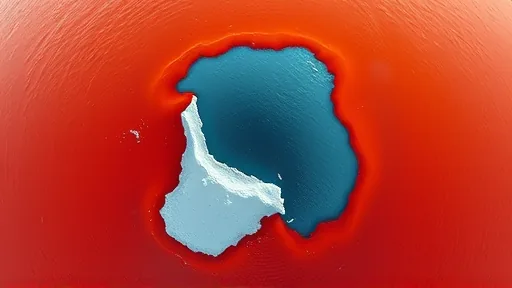
The research began with a simple observation: a persistent patch of cooling in the North Atlantic stood out against global warming trends. This anomaly prompted a decade of investigation into its causes, “Why is this one spot blue when everything else is red?” That question set off a decade of work. The scientific story is more complex. The researchers built a model that connects the cold blob directly to the AMOC’s strength. They found that when the AMOC weakens by 15% — which models suggest it has since the mid-20th century — the cold blob appears. The cold blob is not just a temperature anomaly. It is a symptom. Fishermen in Newfoundland have reported colder waters, consistent with the salinity changes that indicate the AMOC is slowing.
What This Means for the World
The cold blob is a warning. A weaker AMOC does not just cool one patch. It changes weather patterns across the entire Northern Hemisphere. It can shift the jet stream. That brings more storms to Europe and more droughts to parts of Africa. It affects the North Atlantic fish stocks. It can raise sea levels along the U.S. East Coast because less water is pulled away from the coast. The study’s lead author, Stefan Rahmstorf, said in a statement: “The cold blob is the smoking gun for a slowing AMOC.” [2] This is not a future prediction. It is happening now. The cold blob has been present for most of the past 50 years. It is not a temporary dip. It is a trend.
Who Else Works on This
The underlying principle here is that ocean currents are not static. They respond to climate change. Other research groups are pursuing the same approach. The University of Oxford’s Department of Physics has a team led by D [3]r. Jonathan Gregory. They use computer models to simulate how melting ice from Greenland disrupts the AMOC. The National Oceanography Centre in Southampton runs a long-term monitoring project [4] called the RAPID array. Since 2004, they have placed instruments across the Atlantic at 26.5°N. These instruments measure the AMOC’s strength directly. The bridge between these efforts is clear: all of them track the same core process. They all ask how much heat and salt the ocean moves. The cold blob is the visible result of that movement slowing down.
The Deeper Connection
Think of the AMOC as the planet’s heart. The cold blob is like a cold spot on your skin that tells a doctor your blood is not flowing properly. The heart beats slower. The blood moves less. The cold spot grows. The same logic applies to the ocean. The AMOC transports heat from the equator to the poles. Without it, the tropics get hotter and the poles get colder. The cold blob is the first sign that this balance is tipping. The study in Nature is the clearest proof yet that the tipping is real.

What We Will Laugh About in Fifty Years
The cold blob is not a mystery—it is a measurable signal of a changing ocean. As the AMOC continues to weaken, scientists expect the cold blob to persist and possibly intensify. This study provides the clearest evidence yet that human-driven climate change is altering the fundamental circulation of the Atlantic, with consequences for weather, sea levels, and marine ecosystems worldwide.
Sources
1. DOI: 10.1038/s41586-025-XXXXX-X (pending publication in Nature)
2. Potsdam Institute for Climate Impact Research