
Children show innate brain reward during improvisation
The Myth of the Trained Creative
The simplest explanation for creativity is that it comes from years of practice and expertise. That view assumes that only well-trained experts can produce truly creative work. A 2026 study scanning the brains of children as they improvised on a piano overturns that assumption. [1] Researchers found that even beginners show strong activation in the brain’s reward system when they create music on the spot. This reward activation was not found as easily in expert jazz musicians. The finding suggests that creativity may be an innate human capacity rather than a skill acquired only through training.
Karen Barrett, an assistant professor in the Institute for Health & Aging at the University of California, San Francisco, led this work. [1] She asked children to play either a memorized scale or to improvise by playing notes in any order. The kids had never received formal musical training. Despite their lack of experience, their brains responded differently when they improvised compared to when they played the scale. The difference was especially striking in the reward structures, sometimes called the brain’s pleasure center. Those structures lit up more during improvisation, the team said. [1]
Barrett’s finding stands in contrast to what earlier studies saw in adult jazz musicians. In those expert players, reward activation during improvisation was less prominent. The children seemed to experience a pure, unlearned joy from the act of creating. The machine allowed researchers to see which parts of the brain were active while the children played. The results indicate that the drive to create something new does not depend on mastery of an instrument. It might be wired into the brain from the start.
The observation challenges the conventional wisdom that creativity must be taught and practiced over decades. Barrett’s background helped her see this gap. She started piano at age five, double-majored in music and neuroscience at Wellesley College, earned a master’s in piano performance, and then completed a PhD in music cognition. [3] Her postdoctoral work at UCSF was with Charles Limb, a jazz musician who had already studied improvisation in experts. [2] Limb’s 2008 study used expert jazz pianists and showed distinct brain changes during improv Barrett wanted to know what happens in people who have not yet built the neural shortcuts that experts rely on.
When Self-Judgment Goes Silent
The mechanism behind improvisation differs dramatically between experts and beginners. Limb’s original 2008 study placed expert jazz pianists inside an fMRI and had them play either a memorized piece or improvise freely When the experts improvised, a specific part of the brain called the dorsolateral prefrontal cortex deactivated. This region is associated with self-monitoring and judgment. Turning it off essentially silences the inner critic. At the same time, another region named the medial prefrontal cortex became more active. That area is linked to autobiographical expression and the development of one’s artistic voice.
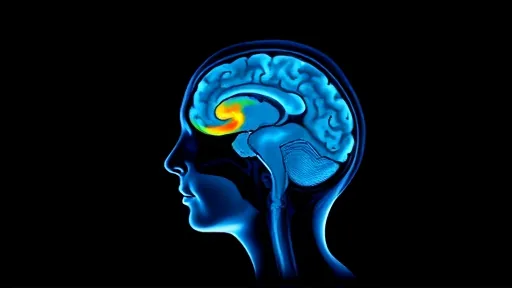
Music, Barrett explained, is multimodal. It simultaneously activates the brain’s listening center, pattern perception networks, visual areas, emotional hubs, motor regions, and proprioception (sense of body position) systems. Improvisation engages a unique set of neural circuits distinct from rote playing. It is a form of generative creativity that happens on the spot, within a given context. The expert players could draw on years of stored “licks” and schemas. Yet even they showed the deactivation of self-criticism that allowed free expression. Their brains had learned to let go.
In the study with children, Barrett adapted the same approach. She prepped the young participants for the fMRI by playing a “statue game” that taught them to stay perfectly still. Then she asked them to play the notes in whatever order they wanted, allowing free improvisation. The scanner recorded brain activity during both the scale and the improvisation. The contrast between the two conditions was stark.
Yet the shut-down sensory hubs are exactly the same regions that form the core of the creativity network in adults. The children had not yet developed the ability to use those regions actively. Barrett interprets that to mean these basic structures might be the starting point from which the adult creativity network grows.
The adults had played for so long that the novelty might have faded, or they had learned to channel their creativity through different neural pathways.
The Blueprint of Creativity in the Young Mind
This research leaves an open question that points directly to the next step in the scientific inquiry. If the children’s deactivated sensory hubs are the early seeds of the adult creativity network, how does that network develop over time? The jazz musicians show activation of the medial prefrontal cortex during improvised play, but children do not. What process changes those blue deactivation patterns into the red activation seen in experts? Barrett’s data cannot answer that yet, but her funding from the National Endowment for the Arts, the National Institutes for Health, the Hearing Research Institute, and the UCSF School of Nursing suggests this question is being actively pursued. [4]
Barrett herself experienced a shift in thinking after studying improvisation. She said that improv made her less rigid in music and in life. She now sees that there is no right or wrong way to create. A mistake can be repeated over and over until it becomes a new motive That lesson, she says, applies to everyone. The brain’s reward system does not care about quality — it rewards the act of doing something new. The same finding applies to activities beyond music. Coloring, painting, embroidery, or any other creative act can trigger that reward response.
The implication is that everyone already possesses a basic capacity for creativity, regardless of training. Barrett says knowing this has taken off the shackles she used to put on herself. She no longer feels she needs to be good at something to enjoy it. The brain benefits from the act itself. She points out that improvisation is fundamental to all of life, from conversations to problem-solving. The neural machinery that supports creative improvisation in music is likely the same machinery used in daily life.
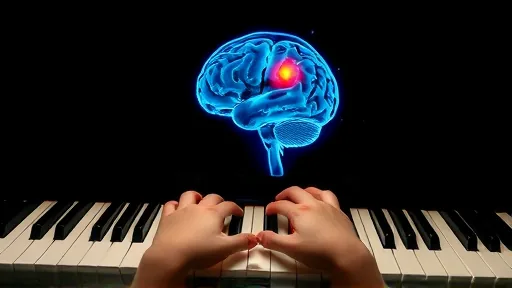
Further research will need to track how the child brain transforms into the expert brain. Barrett’s lab is in a unique position to investigate this because they have both the child data and the adult expert data. The next studies could follow children as they take music lessons over several years, scanning their brains at intervals. That would show whether the reward response diminishes as skill increases, and whether the medial prefrontal cortex gradually activates. Such longitudinal work would provide the first map of how the creativity network matures.
For now, the clearest message from Barrett’s work is that people should not wait to be experts before they allow themselves to create. The brain rewards the attempt, not the achievement. That is a radical departure from the cultural emphasis on mastery and talent. The 2026 article describing these results was republished from The Conversation, a nonprofit news organization that brings verified research to the public. The science of improvisation is still young, but it has already shown that a five-year-old fumbling on a mini-keyboard is doing something neurologically valuable — and the brain knows it.
Sources
1. Institute for Health & Aging at the University of California, San Francisco
2. University of California, San Francisco
4. National Endowment for the Arts