
AI Use Has a Sweet Spot for Creativity
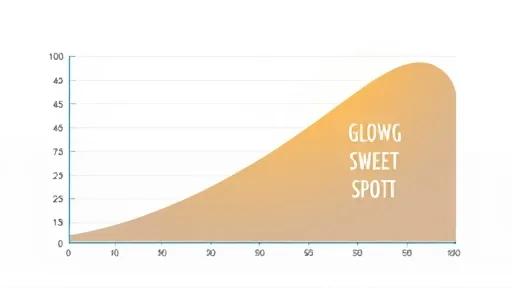
The paradox is plain: artificial intelligence can generate a thousand story ideas in seconds, yet the more prompts a person feeds the machine, the less original their final work becomes. For a single task, the relationship between human and machine appears straightforward — more AI input means more output. But scale up to a full creative project, and the curve inverts. Too little engagement with AI leaves the thinker trapped in their own familiar ruts; too much engagement produces a kind of intellectual apathy, where the human stops thinking and the machine’s averaged responses take over. The sweet spot, researchers have now shown, lies in the middle — a Goldilocks zone where AI acts as a sparring partner rather than a replacement.
The question of whether machines can enhance human creativity is not new. For decades, cognitive scientists have known that human thinking is constrained by experience; each person carries assumptions that channel their thoughts down well-worn paths. This is why diverse teams often outperform solitary geniuses — different perspectives break the logjam. The arrival of large language models offered a new kind of collaborator, one that could surface ideas a single human would never consider. But the technology also brought a warning. LLMs, being statistical tools, tend to produce “average responses” to questions, lacking the idiosyncratic leaps of the human brain. Worse, they can absorb biases from their training data and, when used heavily, undermine the user’s own sense of competence. The question was never whether AI could help — it was how much help was too much.
Grace Liu at Carnegie Mellon University in Pennsylvania and her colleagues have shown, in a study currently under peer review, that people who rely heavily on AI quickly become dependent on the technology and less persistent when it is unavailable. [1] This finding does not claim the change is permanent, but it raises a practical concern for anyone who outsources their thinking regularly. The study suggests that the very tool designed to amplify creativity may, at high doses, erode the mental muscles needed to generate ideas without assistance. The next phase will need to examine how long this dependency lasts and whether it can be reversed with targeted training.
The Goldilocks Zone of Human-Machine Collaboration
Hsuan-Che Brad Huang, during his PhD at the University of British Columbia in Canada, designed a series of experiments to test whether moderation in AI use could enhance creativity. [2] His hypothesis drew on a classic observation: human creativity is often limited by the thinker’s own experience, and hearing from other perspectives can break those constraints. AI, he reasoned, could serve as that alternative viewpoint — but only if used sparingly enough that the human remains the primary driver of the work.
The first experiment involved roughly 150 participants who were asked to help a fictional student named Mike come up with an impromptu business idea, starting with just ten dollars of seed funding. Participants were told to generate multiple ideas first, then send Mike a detailed email with their best proposal. During the task, some participants were encouraged to use ChatGPT only once. Others were told to use it between four and six times. The remaining group was instructed to use the AI at least nine times — a very high level of engagement for a fifteen-minute task. All participants used AI at some point. Expert human judges then evaluated the final ideas on novelty, utility, and business value.
The results matched Huang’s prediction exactly. Participants in the middle group — those who used ChatGPT four to six times — scored higher on average than both the low-use and high-use groups. To confirm the finding, Huang ran a second experiment with 319 additional participants and found the same pattern. The Goldilocks zone was real: too little AI failed to expand the thinker’s mental horizon, while too much AI drowned out the human’s own creative contribution.
From Controlled Experiments to Professional Creative Work
Huang did not stop with laboratory tasks. He extended the investigation to real-world professionals by surveying fashion designers, visual artists, authors, animators, technologists, and influencers. Each participant rated statements such as “I use artificial intelligence to carry out most of my job functions” on a scale from one (strongly disagree) to seven (strongly agree). Their bosses then assessed the creativity of their work.
The survey confirmed what the experiments had suggested. Professionals who reported moderate AI use — around four or five on the seven-point scale — received the highest creativity ratings from their supervisors. Those who used AI very little or very heavily scored lower. The finding held across multiple creative fields, suggesting that the principle of moderation is not limited to a single type of task or industry. The study provides evidence that the Goldilocks zone applies broadly to human-machine collaboration in creative work.
This finding carries implications for how creative professionals might integrate AI into their workflows. The data suggests that the tool works best as a catalyst for human thought, not as a substitute for it. When the machine does too much of the work, the human stops contributing original ideas, and the final product reflects the statistical average of the AI’s training data rather than the unique perspective of the individual creator. The challenge, then, is to calibrate the level of AI engagement so that it expands the thinker’s possibilities without overwhelming their agency.
The Price of Outsourcing Thought
The experiments and survey results point to a clear benefit of moderate AI use: it helps people generate ideas they would not have considered on their own. But the research also hints at a cost. When the machine handles too much of the cognitive load, the human loses something essential — the feeling of their own mind working, the surprise of unexpected connections emerging from personal experience, the sense of ownership over the finished work. These are not measurable in a creativity score, but they matter for the long-term development of the thinker.
Grace Liu’s ongoing work at Carnegie Mellon University adds a further dimension. Her study, currently under peer review, shows that people who become dependent on AI show less persistence when the technology is taken away. This is not a permanent change, but it suggests that heavy AI use can train the brain to expect easy answers. The creative process, by contrast, often requires sustained effort, frustration, and the willingness to push through dead ends. If AI removes that friction entirely, the user may lose the ability to generate ideas without external assistance.
The question is not whether AI can enhance creativity — the evidence shows it can, in the right doses. The question is whether the tool can be used without stunting the user’s own creative growth. Huang’s research suggests that moderation is the key, but it does not yet answer how individuals can monitor their own engagement levels to stay in the Goldilocks zone. That remains an open problem for future study, one that will determine whether AI becomes a genuine partner in human creativity or a crutch that weakens the very muscle it was meant to strengthen. .